For Alan (Yi-Lun), chess was initially as unremarkable as an unnoticed pebble on a bustling street. His journey with chess began unexpectedly in high school when he discovered the “Chess Titans” app on a computer within the quiet serenity of the top floor of his father’s clinic. This sparked a curiosity that soon evolved into a deep interest in the game. Since then, his passion for chess has propelled him to significant achievements, including becoming the gold medalist of the 2016 Prince Edward Island YCA Chess Tournament and the 2017 Prince Edward Island Provincial Chess Challenge. In addition to chess, Alan has developed a strong passion for the French language. He’s specializing in French, a language for which he harbors deep love. Beyond academics, he puts his French skills into practice, serving as a translator for a food company and a French teacher at an educational center. When he’s not playing chess or working on French, Alan can also be found obsessively playing Chopin’s ballades. As the Fundraiser, Alan aims to utilize his passions to expand the influence of HHCC. He is committed to securing the resources necessary to create a more inclusive chess community, ensuring that the beauty of the game is accessible to all.
Eric is a third-year student pursuing a double major in computer science and mathematics. He learned the rules of chess at the age of 5, but only played casually for many years. In high school, he became one of the leaders of his school’s chess club and organized club events for his fellow students. Eric found out about the Hart House Chess Club in his first year via the club’s Discord server. Thanks to the club’s events, he played his first classical tournament and made many new friends. As the club’s treasurer, Eric is responsible for managing the club’s revenue and expenses, as well as the club’s budget. With this role, he hopes to make future events enjoyable to help new members make the same great memories he did. In his free time when not playing chess, Eric can also be found watching YouTube, browsing Reddit, or playing piano pieces by Frédéric Chopin.
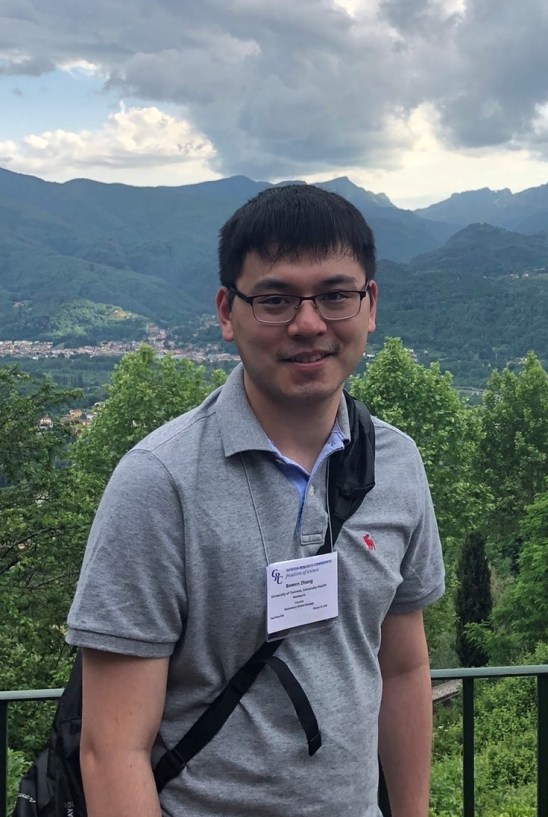
Bowen is a 4th year Medical Biophysics PhD candidate studying human mammary metabolism using organoid models. He initially started learning chess in grade 6 with the goal of defeating a rival at the school chess club. However, over time he was captivated by how the game blurs the boundaries between strategic problem solving and artistic creativity as well as the game’s rich history. In high school, he served as the president of the school chess club where he not only led the competitive chess team in inter-school tournaments, but also focused on promoting the game to the greater student body. Despite a hiatus from competing in tournaments during his undergraduate studies at Western University, Bowen continued to spread his passion for the game as the volunteer coordinator of the London branch of Chess in the Library, which aims to allow more people, particularly kids, to learn and enjoy chess.
Bowen has joined the Hart House Chess Club (HHCC) executive team with the overarching goal of generating a vibrant, inclusive environment where the beautiful game may be shared with the U of T community and beyond. As the Events Director, Bowen is in charge of running chess events and organizing important tournaments.
Yixiao(Isabelle) is in her third year specializing in neuroscience at UofT St. George campus. She started to play chess at the age of seven, along with various other hobbies like piano and swimming.
Before Yixiao came to Toronto for her post-secondary studies, she was a chess player in China actively participating in competitive chess tournaments until the pandemic. Yixiao is excited to return to chess again after several chess events in Canada, and she is looking forward to generating a welcoming environment in Hart House Chess Club to endeavor to make chess accessible to everyone. As a co-communication representative, she is primarily responsible for updating the Club’s website and managing emails.
Grace is a third year specializing in Environment & Toxicology and minoring in Statistics. She believes that the true beauty of chess is not only in the game, but in the connections we form as a community.
Falling into the chess vortex during the pandemic, Grace experienced first-hand how chess builds a web of unorthodox friendships and is forever grateful to have blundered those first pieces. Her current responsibilities include managing the club Instagram and Facebook, as well as helping out with Discord and other ad hoc graphics work. As a relatively new player, she hopes to emphasize inclusivity for novice players, women, and those in the BIPOC community to build a welcoming and safe environment, just as she has experienced at HHCC.
Matthew is a third-year PhD student in Musicology who currently teaches intermediate lessons at the Hart House Chess Club. He played in his first rated tournament at the age of eight and traveled extensively across the United States to compete in tournaments over the next decade. During this time, Matthew diversified his involvement in the chess scene, serving as a U.S. Chess Federation Tournament Director and Certified Chess Coach.
Matthew took a long break from all chess-related activities while he pursued his undergraduate education, but he is thrilled to have found a new chess home in Toronto at the HHCC. He represented UofT at the 2023 Pan-Ams and is looking forward to becoming more involved in the HHCC community through teaching.
The 3rd Ivy League Challenge was hosted from March 5th – 6th, 2021. Due to the COVID-19 pandemic, the results of the tournament were never documented other than via the Discord server that was used.
Event Recap by Tanner McNamara, then Events Coordinator.
The Hart House Holidays Open kicks off tomorrow night with Round 1 at 6:30 pm at the Great Hall of Hart House at the University of Toronto. For tournament details, see the original post.
Those participating are asked to bring chess sets and clocks (if possible), as HHCC will only have a limited supply of boards and clocks.
As of 7PM, December 8th, the pre-registration is as follows:
Pre-Registered
Crown
15
U2200
24
U1900
37
U1600
57
U1300
38
U1000
42
Grand Total
213
Registration totals pre-event
With a capacity for a maximum of 200 players, the Great Hall will be used for the majority of sections. The Reading Room on Friday, and the East Common Room on Sat/Sun may be used for the overflow boards.
Onsite registration will be available from 4 PM to 5:30 PM tomorrow. The fee will be $100, with discounts applicable to UofT students and unrated players. Our registration booth will be set up outside of the Great Hall.
Playing up: the current registration pages reflect all players and their appropriate sections prior to playing up. To play up, plan to show up at 5:30 PM to pay the $20 play up fee. Else, you will be paired into a section based on your rating for the tournament.
Arbiters: NA Alex Ferreira
Spectators: Spectators and students are encouraged to come watch the tournament!
Tournament Website: detailed standings, pairings, photos, and more will be posted on our official tournament website.
Merchandise: HHCC merchandise will be available to purchase via our booth outside of the Great Hall. More information can be found here.
The Greater Toronto Chess League (GTCL) team competition between clubs within the GTCL consists of two championship tournaments: League (regular chess) and Cup (rapid chess). These rules are for the League championship.
Teams
A person can be associated with at most one (1) team (as player or Team Captain).
Each team should have a minimum of four (4) team players
May have any number of additional players as substitutes.
Players may be a member of at most one team.
Players must be members of the same chess club.
Players must be members of the CFC for the duration of the tournament.
Each chess club may have more than one team (but cannot share players or captains).
Each team must designate one of its players as the Team Captain.
Team Captains are responsible for assembling players for each match.
Team Captains are responsible for reporting game results to the tournament coordinators.
Team Captains are on the Appeal Committee (see below).
Team Captains may delegate his/her responsibilities to another team player for a match if he/she cannot attend.
Each Team Captain must provide the team roster to the tournament coordinators.
The roster is an ordered list of team players.
The roster determines which player plays on which board in a match.
The roster should order players as follows:
According to the CFC rating list available on chess.ca on Dec 31.
Ideally, the order should be highest rated to lowest rated to unrated.
The order may be rearranged as long as no player comes after another player that is rated more than 200 points lower.
Unrated players may be inserted in any order.
The tournament coordinator may disallow any re-ordering if he/she believes it is being done to gain an unfair advantage.
The roster must be provided as soon as possible but changes (add, remove, re-order) will be accepted up to 24 hours before the start of round 1.
If a roster is not provided, the tournament coordinators will set a roster based on CFC rating and names (alphabetically).
The roster may not be changed after 24 hours before the start of round 1
The roster should remain fixed throughout the tournament.
Only under very exceptional circumstances will changes be accepted by the tournament coordinator at his/her sole discretion.
Registration
By December 31, 2022, at 11:59 pm ET, all teams must pre-register.
A maximum of 20 teams may pre-register for the tournament.
Teams should pre-register early to reserve one of the 20 places.
Teams should provide their initial roster (ordered list of names).
By January 9th, 2023, at 7:00 pm (24 hours before Round 1):
All changes to rosters (add, remove, reorder players) must be received by the tournament coordinator via email at hhchess@utoronto.ca
Matches & Games
This is a CFC-rated single round-robin tournament of team matches.
Team pairings for all rounds will be announced before the first round.
Only the team pairings, not the players, will be announced.
Chess sets and clocks will be provided.
Each match consists of four (4) games on four (4) boards.
Team Captains must assign players to boards no later than 5 minutes before the start of each match (7:05 pm). Doors to the tournament hall open at 6:00 pm.
If an assigned player does not appear, the game is forfeited. Teams need to be disciplined enough to handle their no-shows by 7:05 pm.
Players are assigned to boards in the order of their team’s roster.
A team member who appears after another team member on the roster cannot play on a board before that other team member. Teams must ensure the correct assignment of players to boards (arbiter can award forfeits or reasonable penalties).
If fewer than four players are available, the first boards must be assigned players and the latter boards left empty (and forfeited). If both teams leave a board empty, both teams will forfeit (score zero).
Team Captains (or delegates) are responsible for recording which player plays on which board. This is important for correctly rating the games.
May be reported on the forms provided at the match.
Is played at a time control of game in 90 minutes + 30 seconds per move with chess notation required for every move.
The pairings assign a colour to each team. Team players will play that colour on boards 1 and 3 and the opposite colour on boards 2 and 4.
The game is forfeited after 60 minutes or 8:10 pm. This extra time is allowed for Toronto’s unpredictable rush hour traffic. Both forfeit if both do not appear.
Scoring:
Each game is awarded one game point for a win, ½ game point for a draw, and zero game points for a loss or forfeit.
The winner of a match is the team with the most game points.
Each match is awarded 2 match points for a win, 1 match point for a tie, and zero match points for a loss.
Cheating: All participants must act in ways to prevent the possibility of cheating and, equally important, the suspicion of cheating.
Cheating is VERY serious and will be handled as such.
It is highly recommended that you do NOT bring your electronic devices into the playing venue. Leave them in your car or at home.
If you do bring an electronic device into the playing venue, turn the power off. Your game will be forfeited if your phone rings near ANY chessboard.
If you must use your electronic device for an unavoidable non-chess purpose, notify the arbiter. The arbiter must be present at any time the electronic device is powered on and/or away from the game table (especially outside the playing, hallways, washrooms, etc.).
If the arbiter is not available, find another impartial witness.
Tournament Tiebreaks
During the Qualification Stage (applied in the following order, eliminating as you go):
Team with the most match points.
Team with the most game points in all matches.
Team with the most match points with all other tied teams.
Team with the most game points with all other tied teams.
Team with the most game points on boards 1, 2, and 3 with all other tied teams.
Team with the most game points on boards 1 and 2 with all other tied teams.
Team with the most game points on board 1 with all other tied teams.
Highest rated team. If still tied (extremely unlikely), flip a coin.
For the Finals Stage (applied in the following order, eliminating as you go):
Team with the most match points.
Team with the most game points in all matches.
Team with the most match points with all other tied teams.
Team with the most game points with all other tied teams.
Team with the higher place in qualification stage.
Team with the most match points in qualification stage.
Team with the most game points in qualification stage.
Highest rated team.
The trophy is awarded to one team, the winner, after tiebreaks (if necessary).
Appeals Committee
The Appeals Committee will consist of all the Team Captains.
For each appeal, any Team Captain(s) who have a direct interest in the outcome of the appeal will be excluded from voting.
The committee will be responsible for decisions on appeals to the arbiter’s decisions, complaints, exceptions to posted rules, and any other appropriate rulings.
For any tied votes, the arbiter will cast the deciding vote.
Both unrated players and seasoned masters compete at tournaments held at the Hart House Chess Club
Playing in your first chess tournament, or need a refresher before you play? This is the comprehensive guide to playing in your first chess tournament at the Hart House Chess Club (HHCC) and in Canada in general. Most tournaments in Canada will follow these guidelines but check the tournament page for tournament-specific rules. Generally, tournaments will follow the most up to date International Chess Federation (FIDE) Laws of Chess. Most tournaments hosted by HHCC will be Chess Federation of Canada (CFC) rated and follow their Handbook.
Please remember that these guidelines are to prepare unrated and players requiring a refresher before tournaments. It should not be taken as the tournament’s official rules, simply as guidelines. Please reach out to the organizers before the tournament to confirm the rules of the respective tournament.
CHESS TERMS
Time Controls: Most CFC-rated classical tournaments will follow a time control of 90 minutes plus 30 seconds increment – any game played with 60 minutes per side (including increment based on 60 moves) is considered classical. Players have 90 minutes at the start of the game, with 30 seconds added following each move. There may be slight adjustments to this time control based on tournaments. CFC active-rated tournaments will also follow different time controls.
Touch Move: Most tournaments will have touch moves in force. Any touch of a piece requires you to move that piece unless you cannot move that piece (for instance, in check). You must say “I adjust” or “J’adoubé” (in French) to adjust your pieces during your turn. Players are not allowed to adjust during their opponent’s time.
Notation: Chess notation is required for all moves, even if low on time, when there is a 30-second increment per move. All HHCC classical rated tournaments will required notation of all moves. Paper scoresheets (to record moves) will be provided by organizers. Carbon-copy papers may be used to allow organizers/arbiters the ability to keep a record of games. Tournaments will indicate if this rule is not in effect. Generally, CFC-Active rated events do not require notation.
Ratings: Tournaments will either be rated or unrated. Rated tournaments will result in an “Elo rating.” Unrated tournaments do not require a CFC membership, while CFC-rated tournaments do, unless tournaments are junior-only. Some tournaments will also be FIDE rated. FIDE-rated events do not require membership for participants. CFC-Active ratings are often used for quicker-timed tournaments.
Tournament Format: Most new-to-chess participants will play in a Swiss format in individual chess tournaments. A swiss format means that you are not eliminated after your first match. If you lose your first match, you will most likely be paired with someone else who also loses their first match. You will be paired based on your cumulative score after each round. There are very few chess tournaments worldwide that use a knockout format. The other format commonly seen in smaller, restricted, or team-based tournaments is the Round Robin format. This format means that everyone plays each other once, and most likely, your pairings will be known beforehand.
Chess Variants: Most tournaments will be played in the standard chess set-up. Tournaments will state if it uses a variant, such as Fischer Random (Chess 960), Bughouse, or Duck Chess.
Byes: Sometimes a conflicting event happens during a tournament. Instead of not playing entirely, you can request a “bye”. Byes should be requested before the tournament. This allows you to still compete in the tournament and still get points. You won’t be paired for that round but will be paired in subsequent rounds. At HHCC, 1/2 point byes are only given if requested by Round 1 and not in the final 2 rounds. If requested mid-tournament, they will be 0-point.
GENERAL CHESS ETIQUETTE
Playing in your first chess tournament will often be different in places around the world. In the above photo, HHCC teams play at the 2019 World Prestigious University Chess Invitational Championship
Eating: Food is not allowed in the playing hall of HHCC tournaments. Water stations will usually be provided.
Washrooms: When it is your opponent’s turn, you should not tell your opponent that you are leaving to use the washroom or fill your water bottle. This is considered a distraction and is not needed. You also do not need to tell the arbiter that you are leaving to use the washroom. It is expected that participants stay within the tournament halls, which will be defined by the tournament organizers before the tournament. You are not allowed to leave your own board when it is your turn.
Phone use: Any electronic device that could be used to transmit or receive information related to chess or to calculate potential moves, such as smartphones, tablets, computers and smartwatches, are not allowed in the tournament playing area (the tournament director and TD’s support staff are excluded). Further, no such devices can be in the immediate possession of a player, regardless of the player’s location, during a game in progress. Violating this rule by a player will result in the player’s immediate forfeit of a game in progress.
Disputes: When there are disputes about a game, pause the clock and get the arbiter’s attention. There is not much that can be done when the match is over.
Illegal Moves: When a player makes an illegal move, it will be penalized with a 2 minute addition to the opponent’s clock. The second illegal move is a forfeit (loss). This rule follows the FIDE handbook.
Withdrawals: When unable to finish a tournament, you must tell the arbiter or organizers. A “forfeit” is awarded for no-shows, and may prevent you from playing in future tournaments. Participants should also consider “byes”, which allow players to skip rounds and return.
Communicating with others: During the game, participants are not allowed to communicate with others regarding their game, regardless of whether in-person or online. This is considered cheating.
Leaving the board: Players can only leave their board during their opponent’s turn. Players should not tell their opponent or the arbiter before doing so.
Dress: The North American amateur chess community has no dress code to follow. Higher levels of chess will require stricter dress requirements.
Spectators: Generally, spectators are allowed at chess tournaments. Major chess events will provide seating and screens/demonstration boards to allow spectators to follow the top boards. Players playing a concurrent game are generally also allowed to spectate other ongoing matches.
Grandmaster Andrew Tang (Princeton) at the 2019 Ivy League Challenge hosted at Hart House. It’s important to remember that Grandmasters were once unrated players!