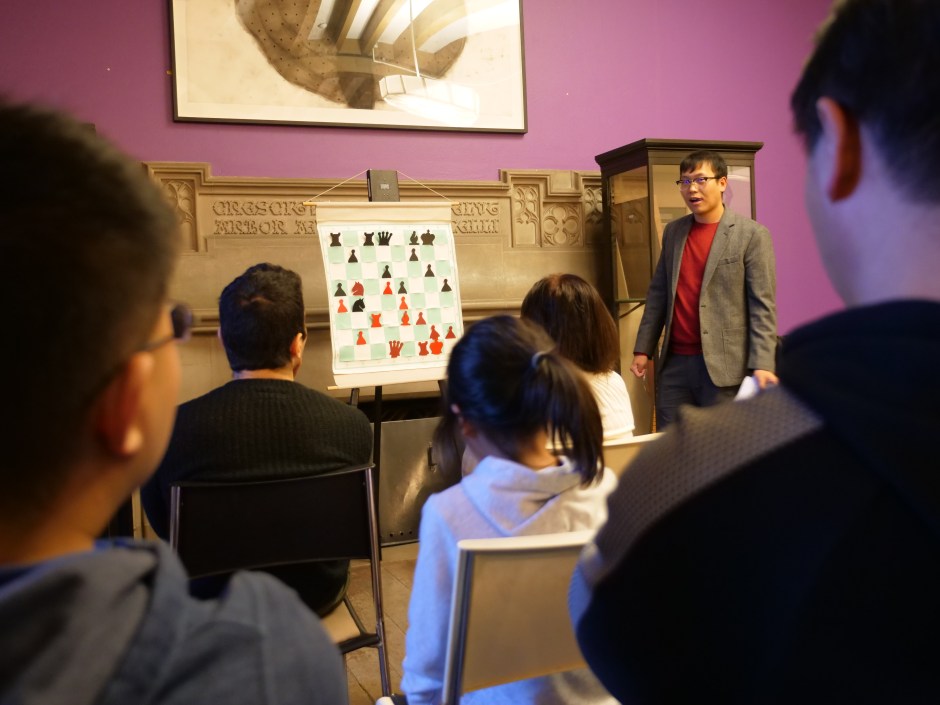
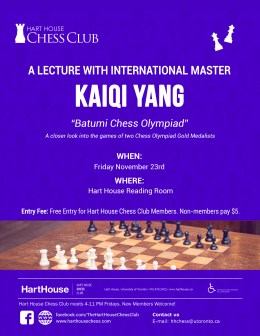
An exciting lecture took place at the Hart House Reading Room on November 23rd, featuring International Master (and Grand Master elect) Kaiqi Yang as the guest lecturer. Kaiqi was a passionate and engaging speaker who analyzed several games from the recent chess Olympiad in Batumi, Georgia. Being a close friend of many members of the two Chinese Teams (men’s and women’s), both of which were the gold medalists in the Olympiad, Kaiqi was able to share plenty of inside stories from this top level competition, as well as to present several key elements to their success.
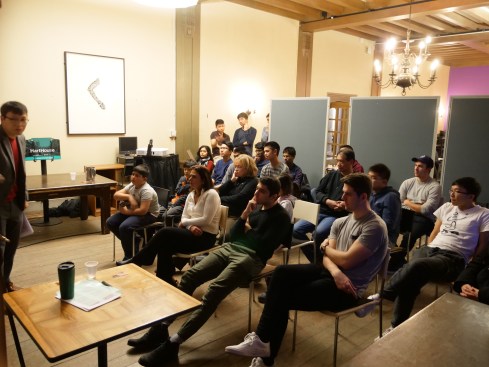
The event was open to all members of the Hart House Chess Club and more than 30 people took advantage of this rare opportunity to learn from Kaiqi and pose questions to one of the top IMs in Canada. The lecture lasted for about an hour and it was followed by a lively Q&A session. There was even a slideshow to show the Chinese Chess Olympiad Team in action!
Overall, Kaiqi was a very friendly and cheerful speaker who delivered an illuminating lecture to an enthusiastic crowd of intrigued guests of various skill levels. Our club would like to thank International Master Kaiqi Yang for his lecture and we are looking forward to inviting him again for more lectures in the future.
On Saturday, November 17th, several chess enthusiasts enjoyed an opportunity to face Zehn Nasir, a Hart House Chess Club executive and a National Chess Master, in an exciting simultaneous chess exhibition in the South Dining Room. Having South American family himself, Zehn made an inspiring presentation on why it is important to raise funds for Brazilian youth, inviting people to show altruism for a good cause (raising funds for impoverished youth in Rio de Janeiro, Brazil).
In the end, a mixture of the simul and the online campaign raised “more funds than expected, but slightly less than the target.” Chess.com bughouse star, helmsknight even made a guest appearance to add to the excitement! We would like to extend our thanks to National Master Zehn Nasir and to everyone who came out to play in the simul! The Hart House Chess Club always works to promote an equitable environment and hopes that its contribution in Rio will make a meaningful change in a less fortunate child’s life.
When it was announced that the 2018 Pan-Am Intercollegiate Chess Championship would be hosted in San Francisco, California, many North-Eastern Universities heard the news with mixed feelings. On one hand, who would not welcome a December trip from the Narnian lands of New England to the warm and sunny West Coast? However, securing enough funds for long flights and expensive hotels is not the easiest thing in the world for University chess clubs, which are usually on a budget. To give the reader a sense of the numbers, to send just one team of four players to this year’s Pan-Am, our chess club from Toronto would have to spend over 4,000 USD, a significant amount which, most clubs don’t have easy access to. We had to look for more affordable alternatives. We had to become creative.
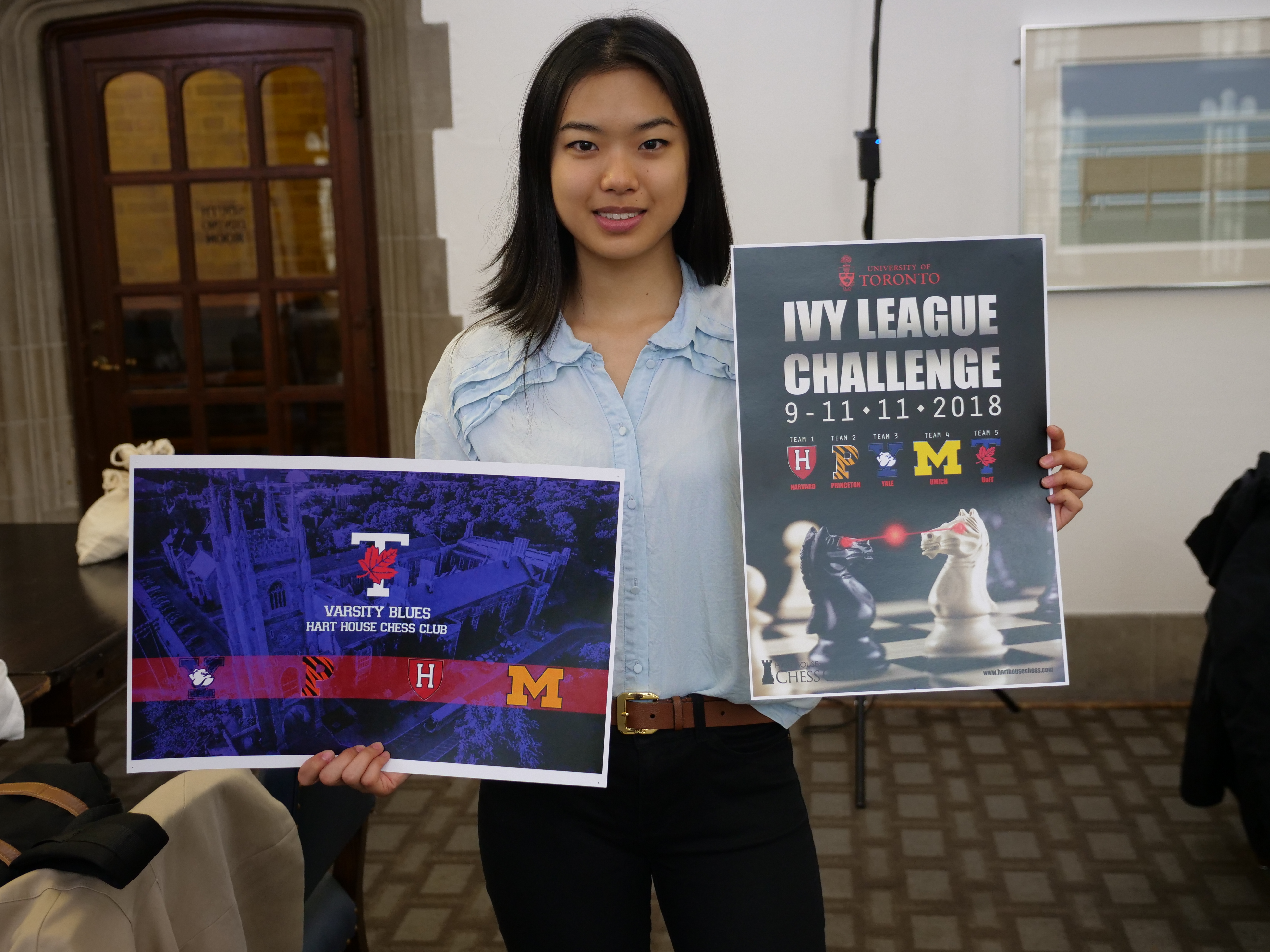
The official Tournament Poster was designed by Loukia Tzortzopoulou
And then came the Ivy League Challenge
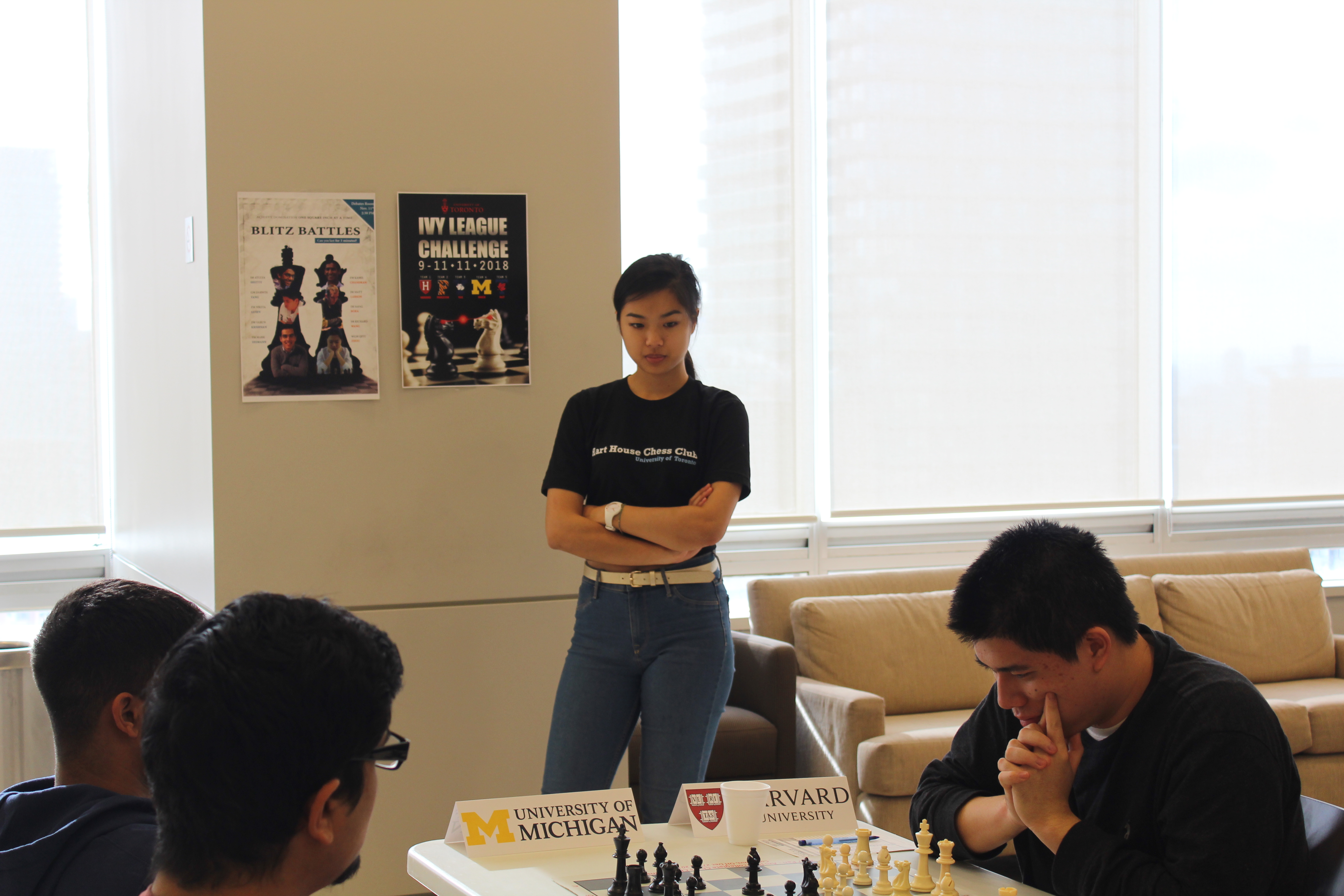
For the above-mentioned reason, it was a special honor for me to be a part of the Inaugural Ivy League Challenge, an invitational University Team Chess Competition, which welcomed to the vibrant city of Toronto six teams from five very strong non-chess scholarship Canadian and US Universities in the North East: Harvard, Yale, Princeton, University of Michigan and University of Toronto. I’ve had the privilege of having a fabulous vantage point for the tournament as its proud Director and I’d be happy to share some inside stories from the event. To begin with, the organizers had set the bar very high by promising to host the second strongest University Team Chess Competition in the Continent (the first being the PanAms along with its “Final Four” leg) and they certainly came very close to fulfilling their promise.
As you will find a tournament table in this article, there is no need to list all the participants. You will probably agree, though, that it was a field that any North American tournament would have been very proud of. A fine blend of titled players, bright students from top-rank Universities, former Junior World Champions, Olympic Chess Players and, simply put, accomplished individuals, joined the event to support their Universities; in short a company of people which I felt pretty uneasy to Direct. Add to that my companion for the tournament, a group of ultra-dedicated students and Alumni from the University of Toronto – all of them incredibly hard-working and driven volunteers – and you can understand what my experience was like in Toronto!
Arrival and Forecasts
The guest teams arrived in Toronto in the evening of the 8thof November and they were accommodated at the Manulife Center, a beautiful 51-floor residential tower, conveniently located 5 minutes away from UofT’s Main Campus and connected by a retail complex on the main floor and basement. The building offered unbeatable amenities to its residents, including indoor access to two subway stations, grocery stores, movie theatres and an entire shopping mall. In an act of generous hospitality, UofT covered the expenses for the accommodation of the guest teams, while the players of the invited Universities, in the spirit of solidarity, paid for their trips to Ontario. As I happen to have had a student affiliation with three of the five invited Universities, I can hardly overstate my excitement when I saw them all playing together, especially considering that this was a tournament from which each of them had a chance to emerge victorious.
The Manulife Center proved very accommodating for the players and the organizers
To say that they all had a shot to win the tournament does not, of course, mean that their winning chances were equal. With an average rating of 2328 FIDE, Harvard seemed to be the clear favorite for first place, whereas Michigan and Princeton followed very closely with an average rating of 2264 and 2241 respectively. Toronto B also looked dangerous with its 2164 average rating while the lower ranks of the starting list were occupied by Yale (1842) and Toronto A (1765). As the Tournament Director, I was required to be unbiased but, as an avid chess fan I could not resist the temptation of making a forecast as to who would be the winner of the Inaugural Ivy League Challenge.
For a long time, I assumed, perhaps a bit romantically and naively, that there was some sort of team chemistry that shined during University Team Chess Competitions, those very unique events in which players are not only representing themselves, but also their Academic Institutions. Players who decide to play in these tournaments are often boosted by an immense amount of pride that is not present in other events, and perhaps even a certain encouragement to bring their A-game. It is already hard enough to lose a game, but to disappoint your teammates and your University is a much bigger blow. Thus, my rather unconventional guess was that the proudest and most closely-knit team would become the winner of the first Ivy League Challenge.
Hart House Chess Club’s beautiful home!
Day 1: Michigan takes the lead!
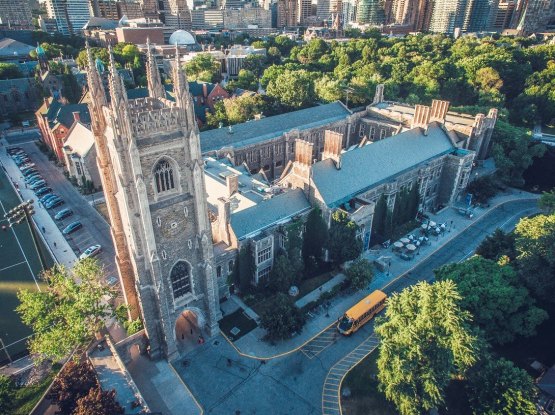
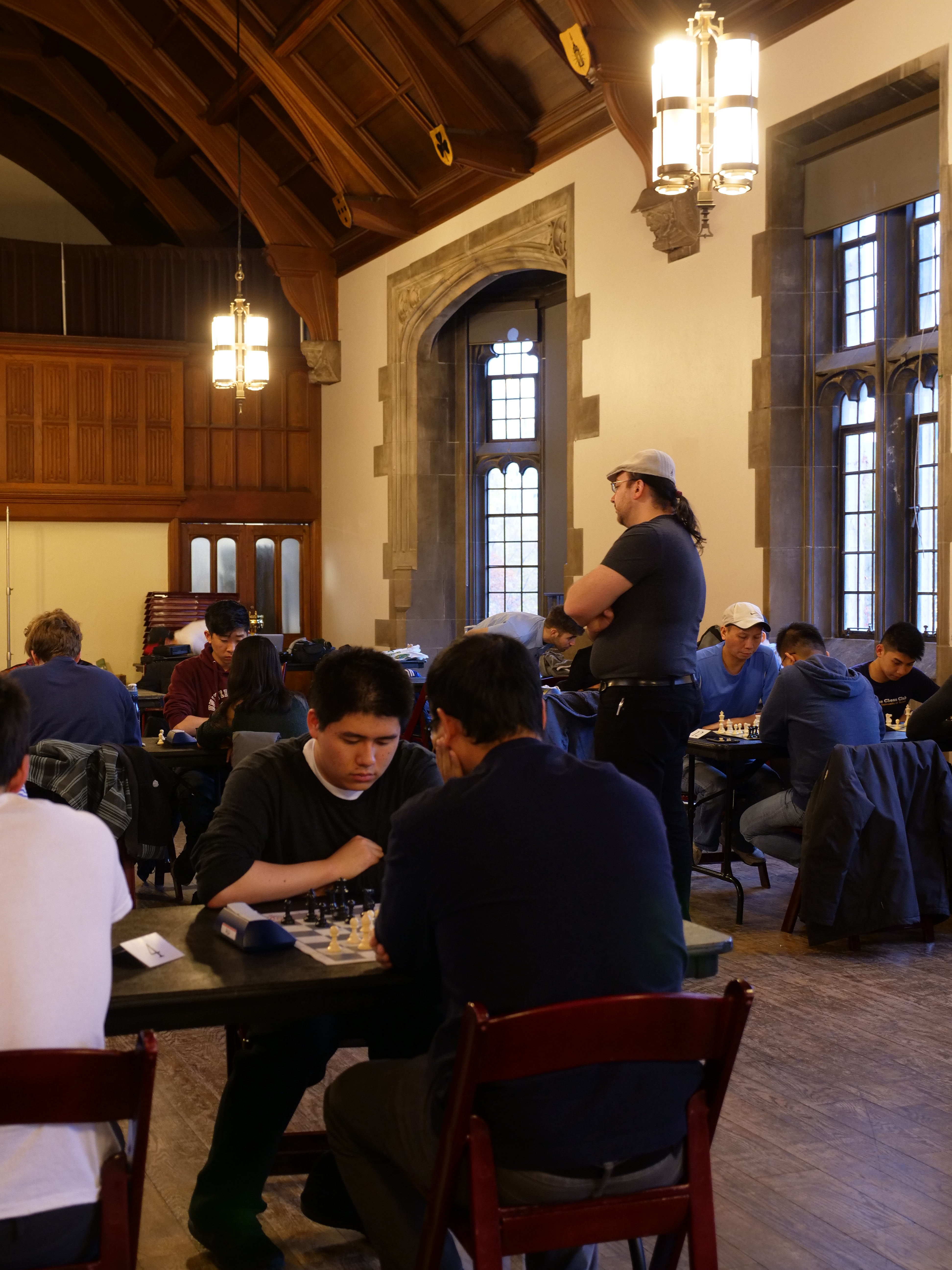
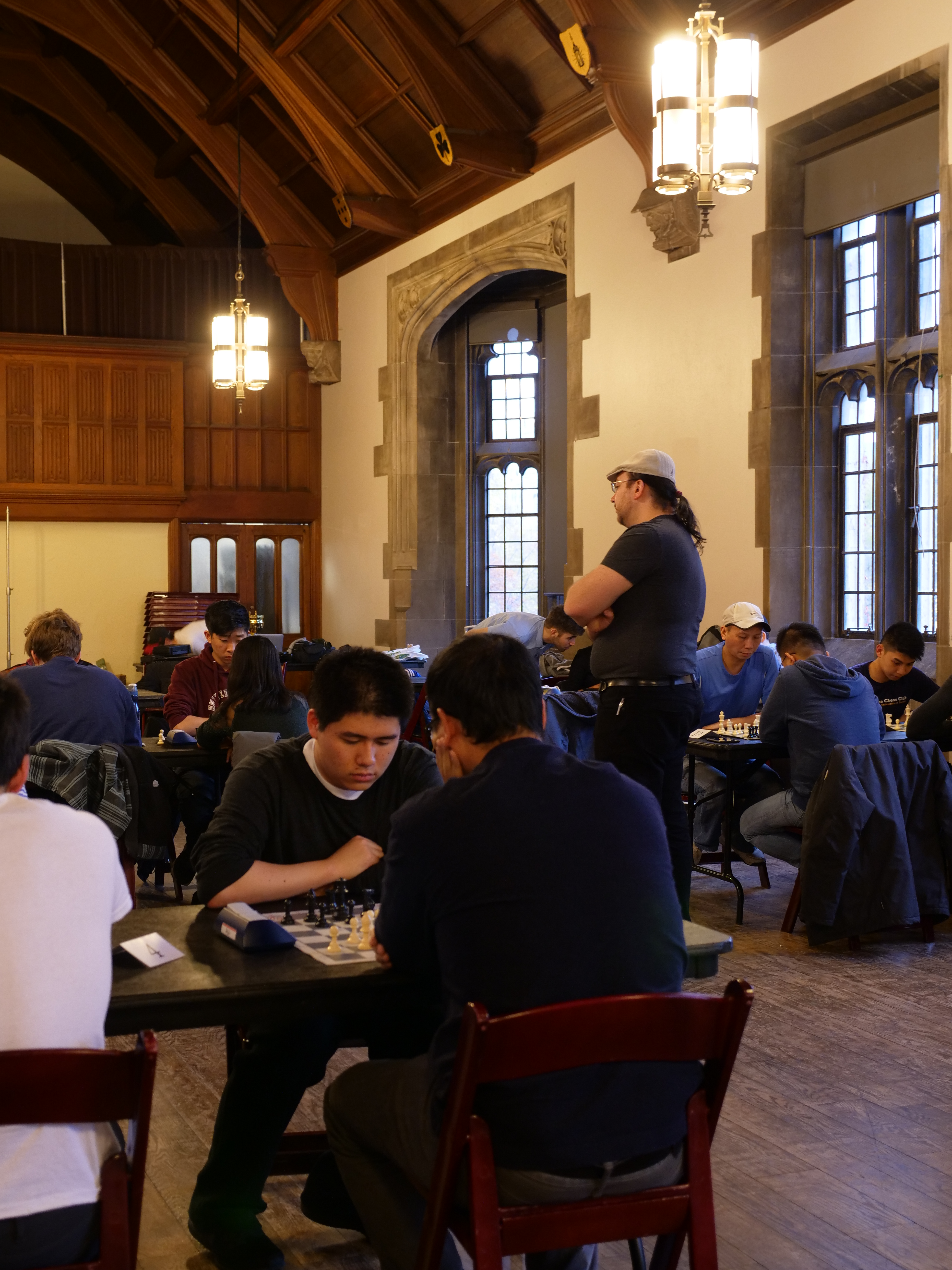
On the first day of the event the games were held in the Hart House, a Collegiate Gothic-revival complex, established in 1919 and celebrating its 100 years in the next year. Originally conceived as a place for cultural, intellectual and recreational function, Hart House quickly became University of Toronto’s main student activity center, featuring a wealth of facilities, including an art gallery, a theatre, a library, reading and sitting rooms, lounges and reception areas, several music rooms and even a gymnasium with a swimming pool! First-time visitors, especially those who are on the young side, tend to confuse its interior with Hogwarts, thanks to the college symbols on the brown walls, the horizontal lines, the stress placed on masses rather than silhouettes and the reduction of picturesque motifs to a minimum. The overall design acquires a high degree of stylistic unity through the calm, monumental impression it creates.
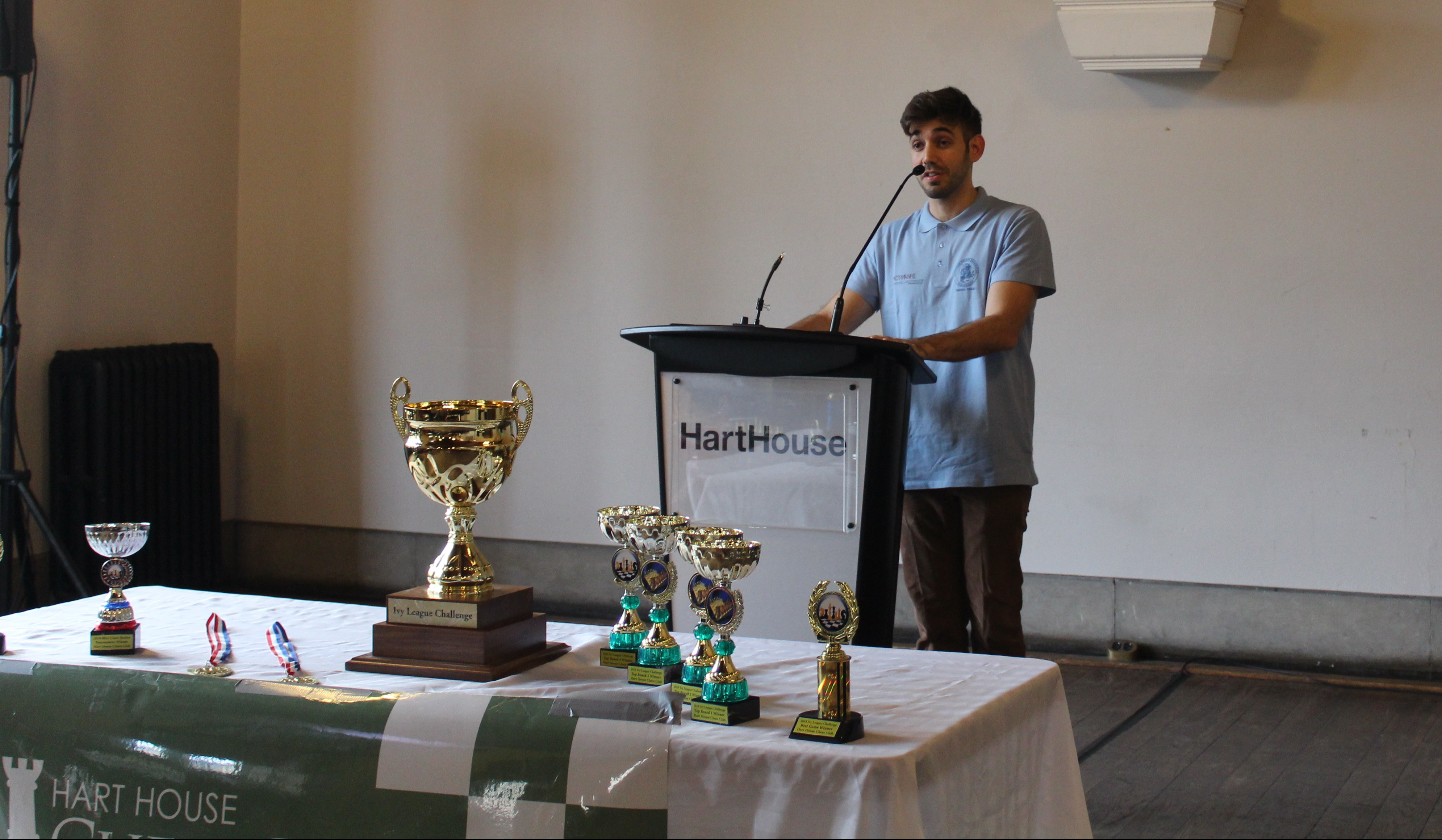
Panagiotis Tsialas delivered the welcome address. Most people call him just Panos and stop writing his name after five letters because of the chaos that ensues around letter number 9.
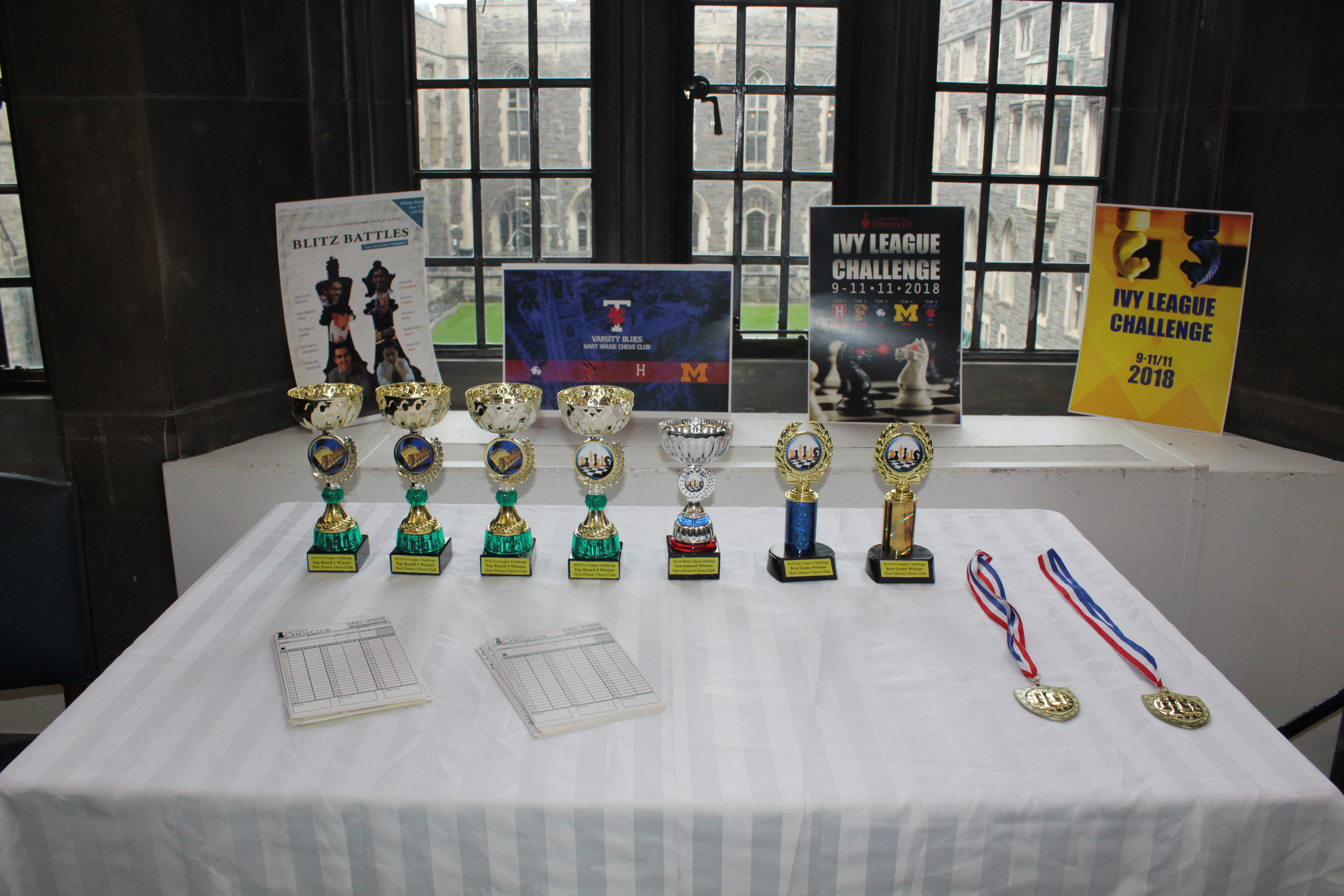
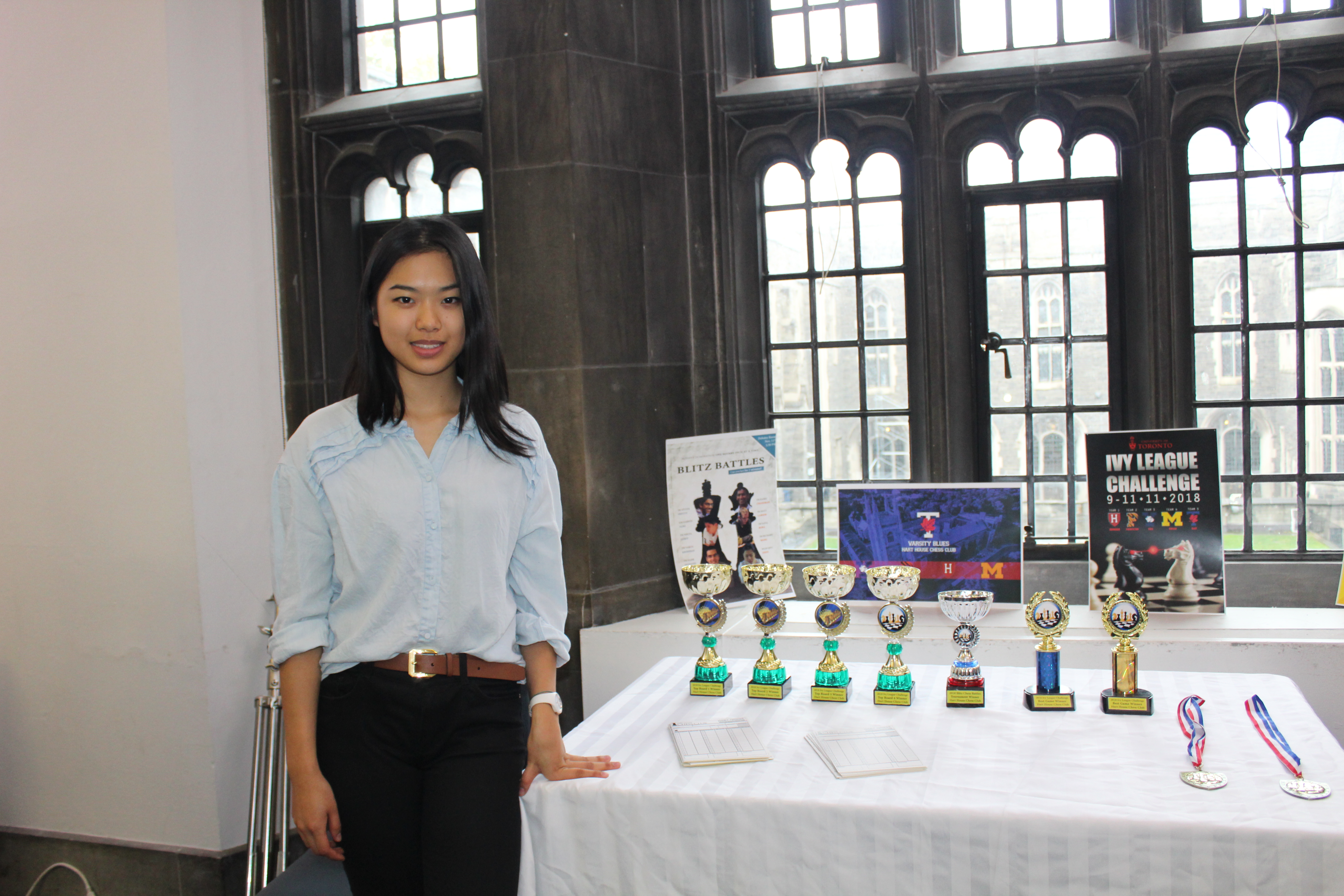
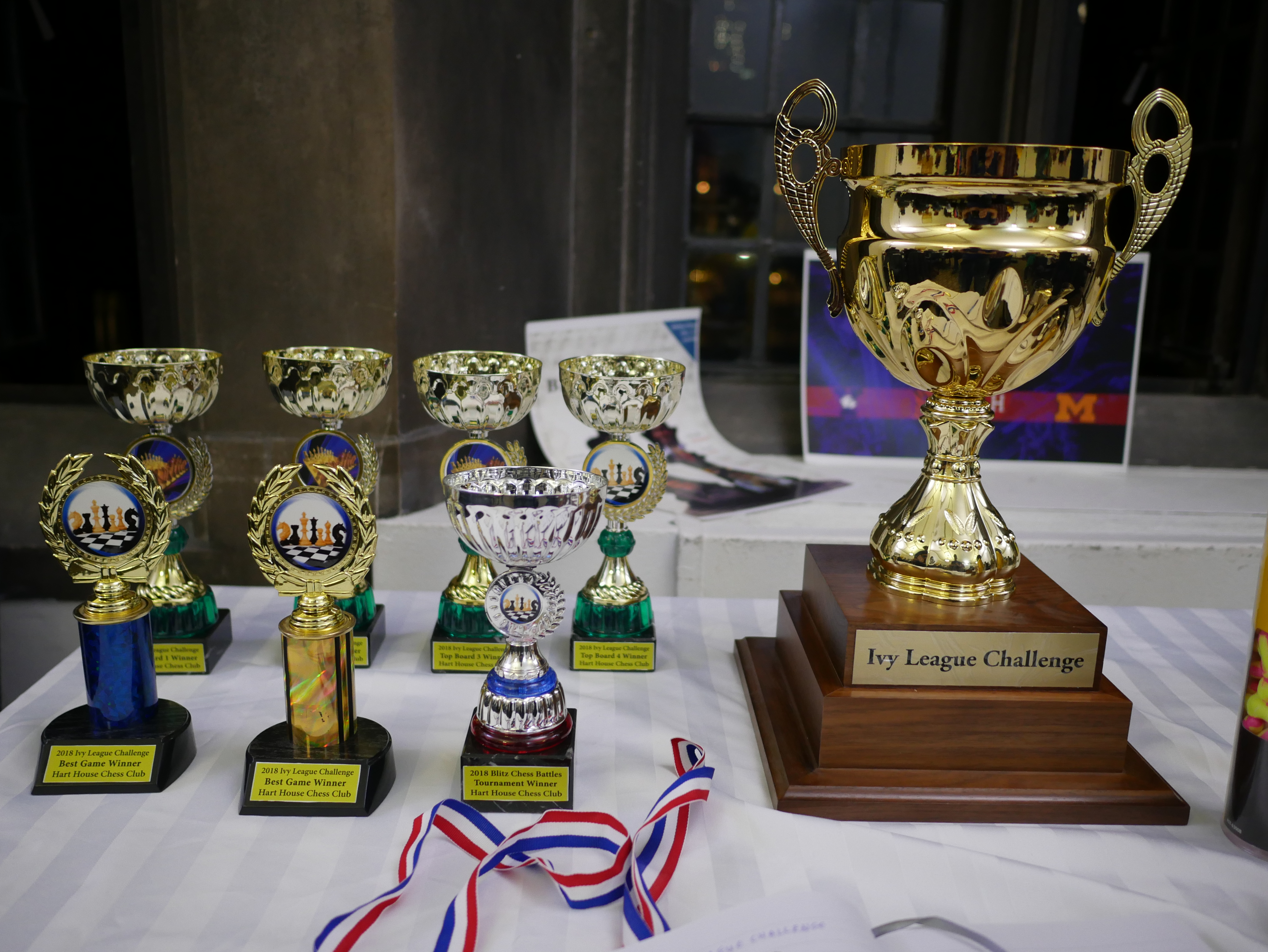
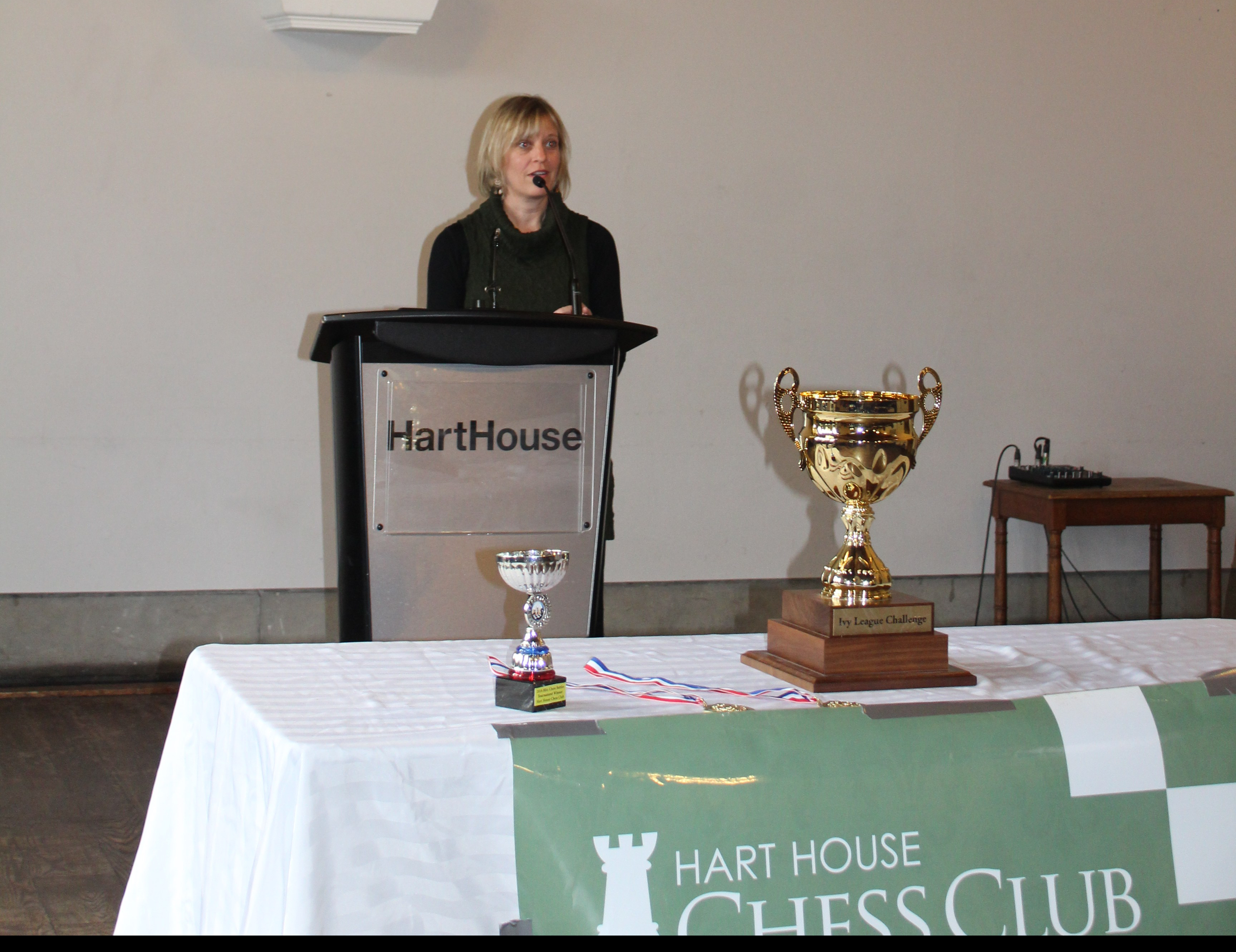
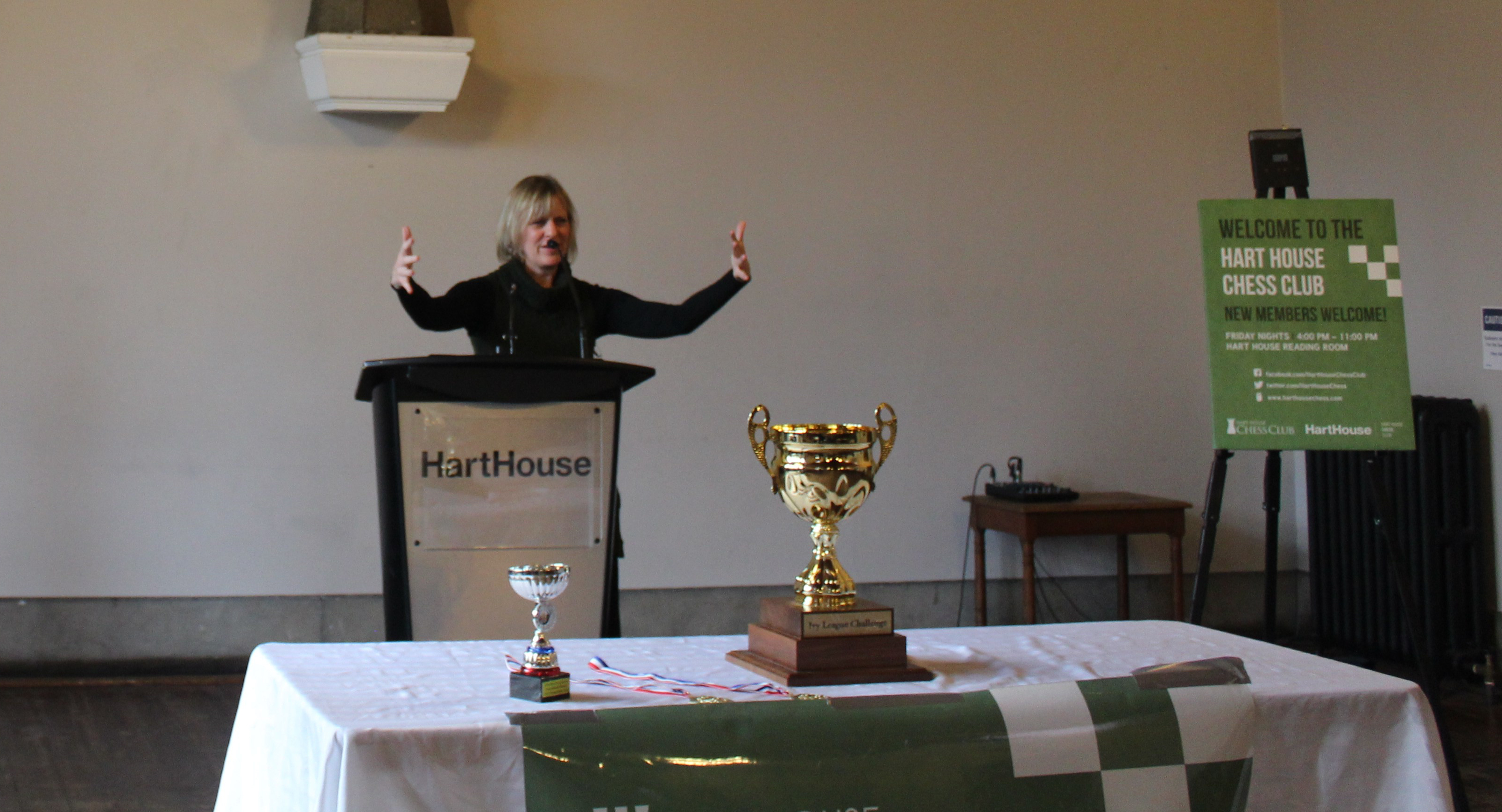
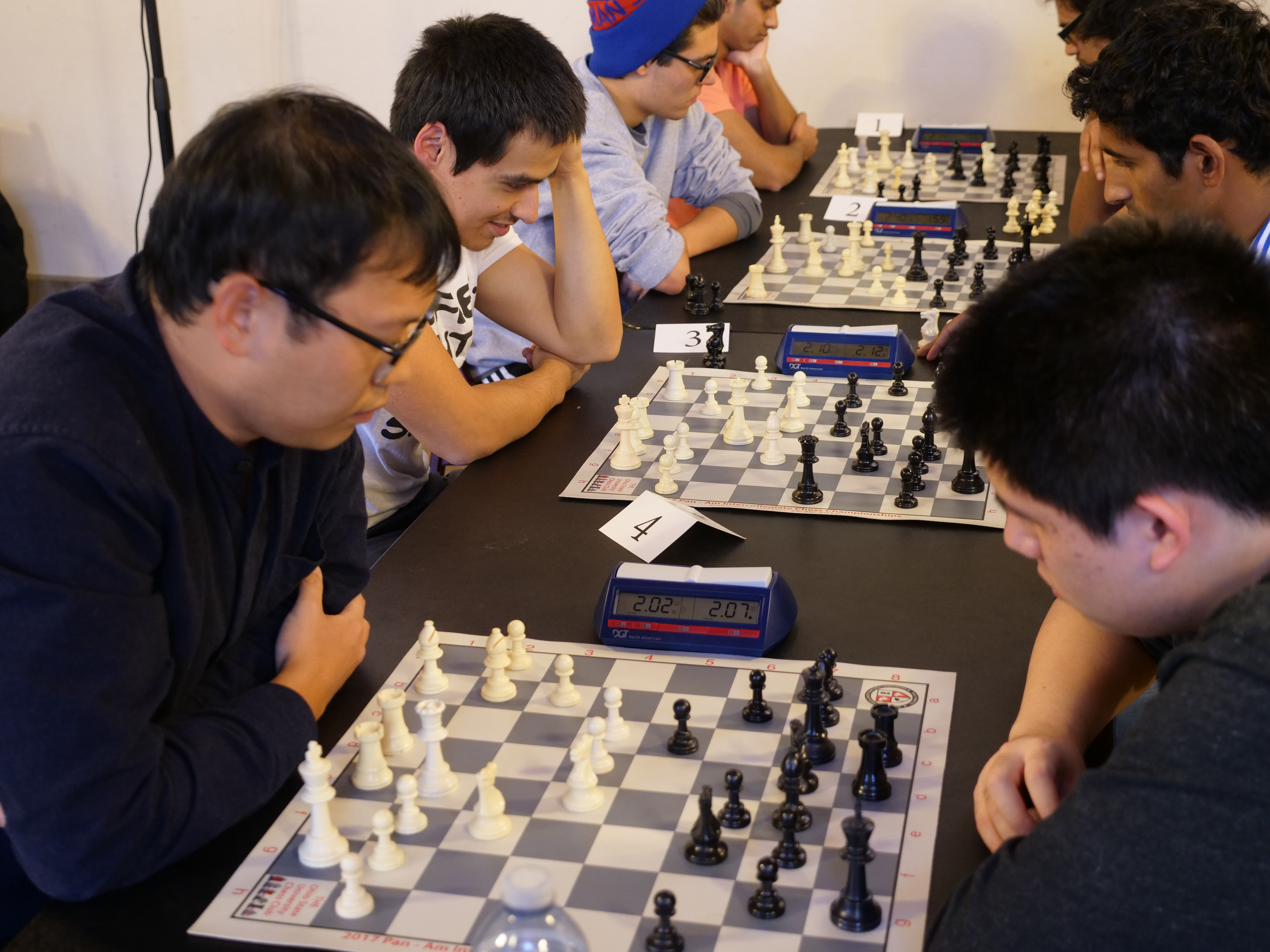
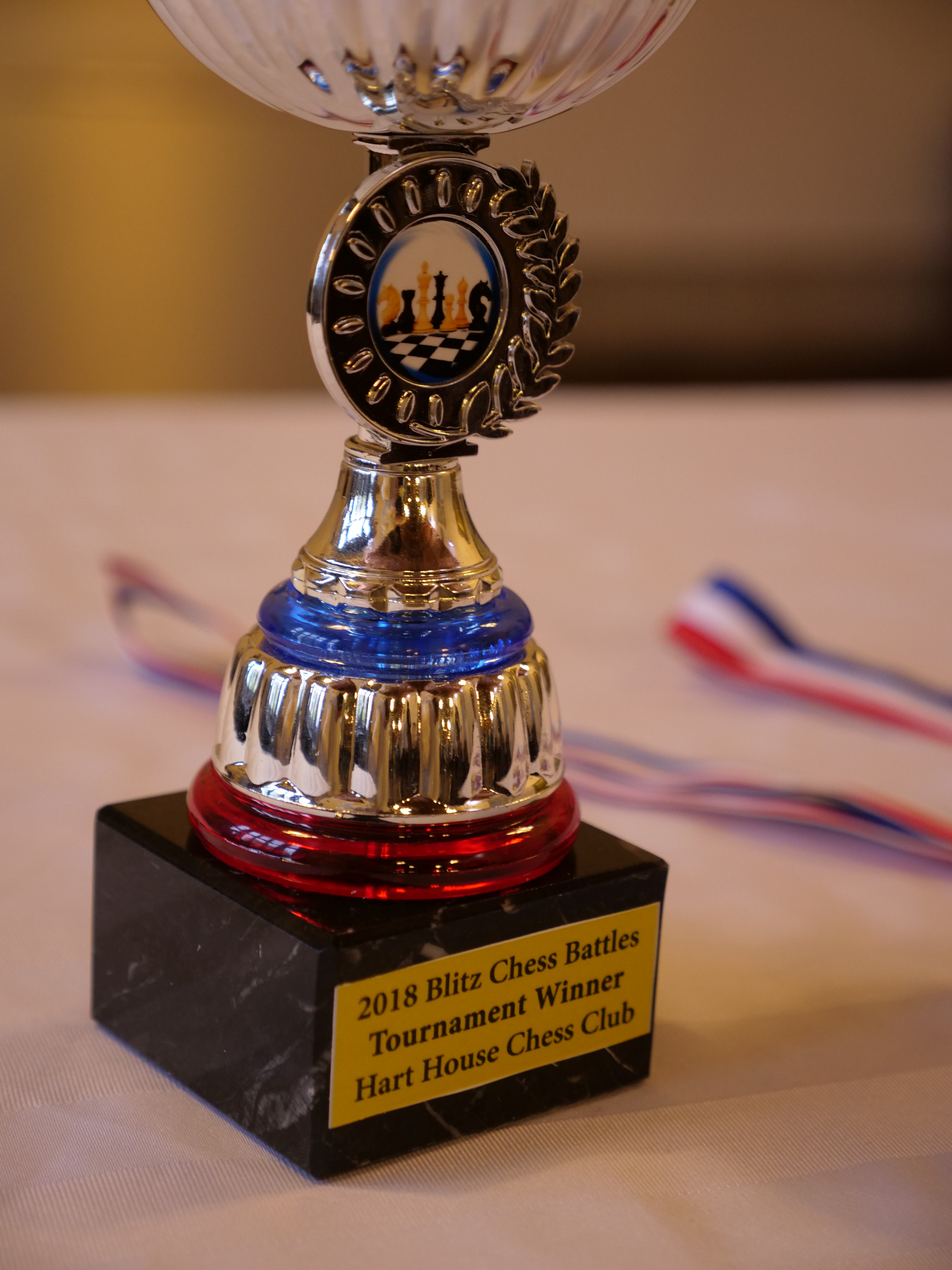
The opening ceremony was brief and simple with yours truly welcoming the teams and introducing each of the tournament staff to the players. After observing a minute of silence in solidarity with the Remembrance Day services, happening in front of Hart House, the microphone was turned over to the Arbiters, Weiwen Leung and Alex Ferreira, who announced the tournament rules with special emphasis on the tie-breakers. While they were delivering their speech, I found myself staring at the ten shiny trophies and medals, which had been carefully placed in the most prominent spot of the playing hall, almost beckoning to the players “get me if you can”!
Who’s going to win the precious?
Much to my amazement, the first round started right on time with a couple more pleasant surprises to follow. Despite the (perfectly understandable, given their price) lack of Digital Chess Boards, all Round 1 games were broadcast live on the club’s website thanks to the tireless efforts of three UofT students who volunteered to transfer the moves to a livechess platform manually! And though the live-streaming was not repeated in later rounds, as it was deemed potentially distracting to the players, the hard work that was put into the project showed the high level of commitment, displayed by the tournament volunteers. The latter, kept broadcasting the results live throughout the tournament, not to mention that they went out of their way to post all the tournament games, within minutes after the end of each round.
Hart House Chess Club Execs Leslie Tang and Sahan Karunaratne did a remarkable job in broadcasting the games
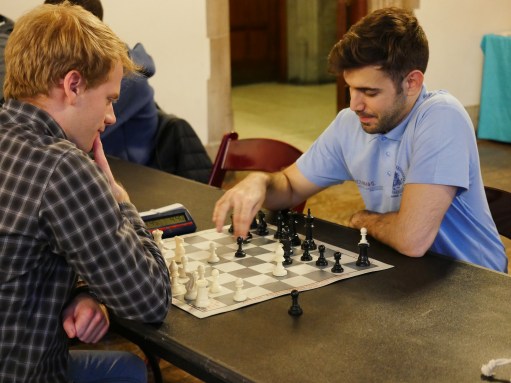
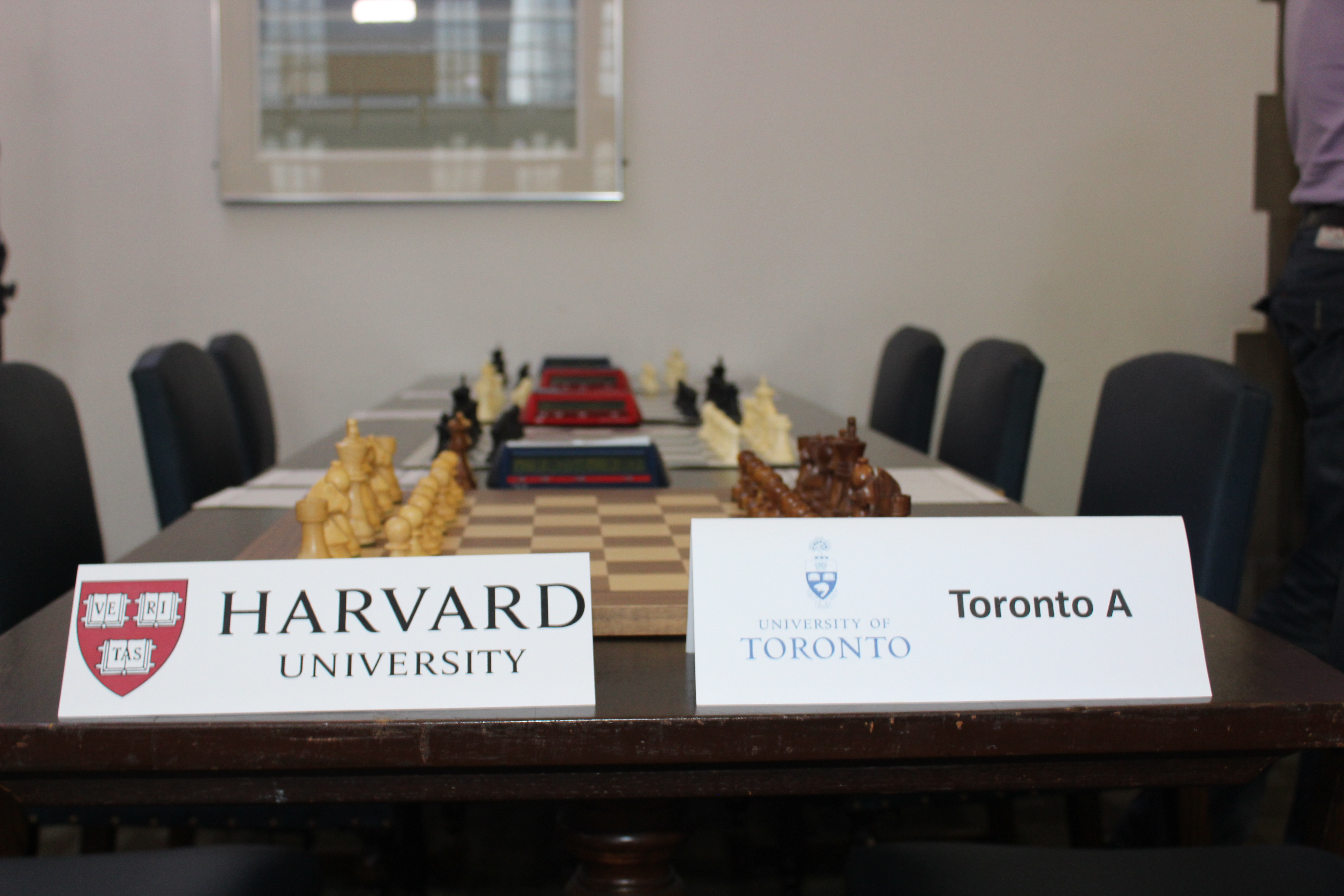
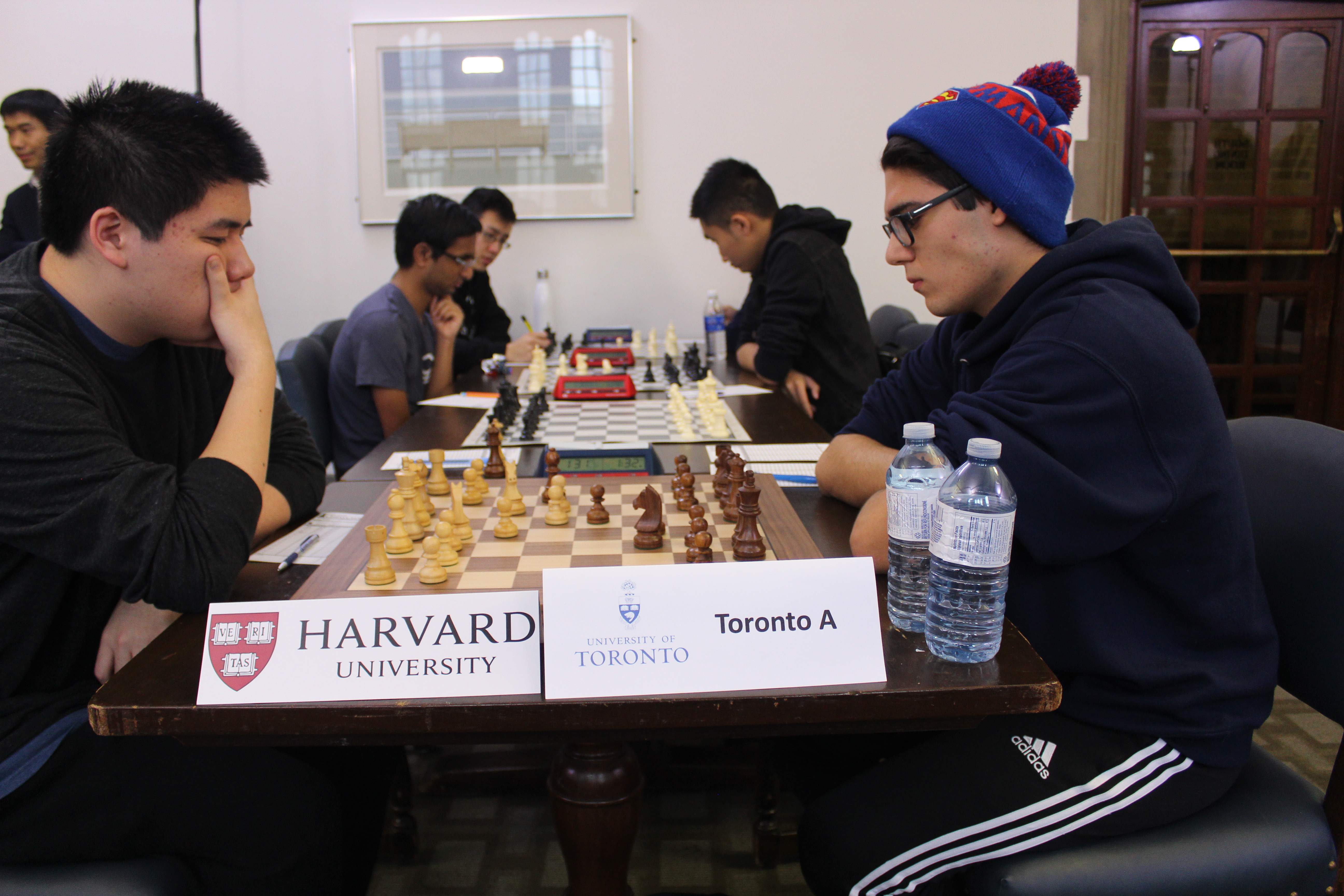
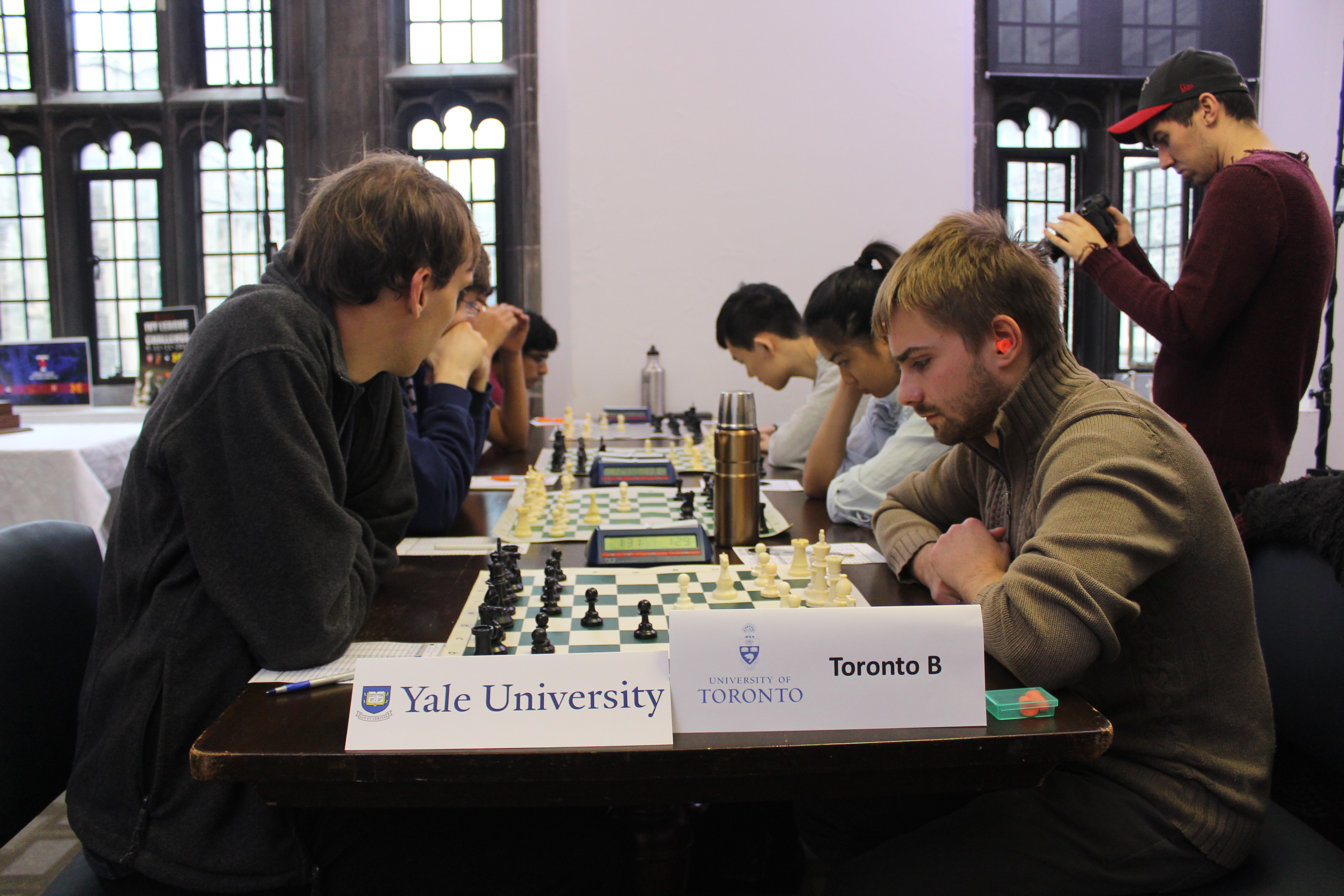
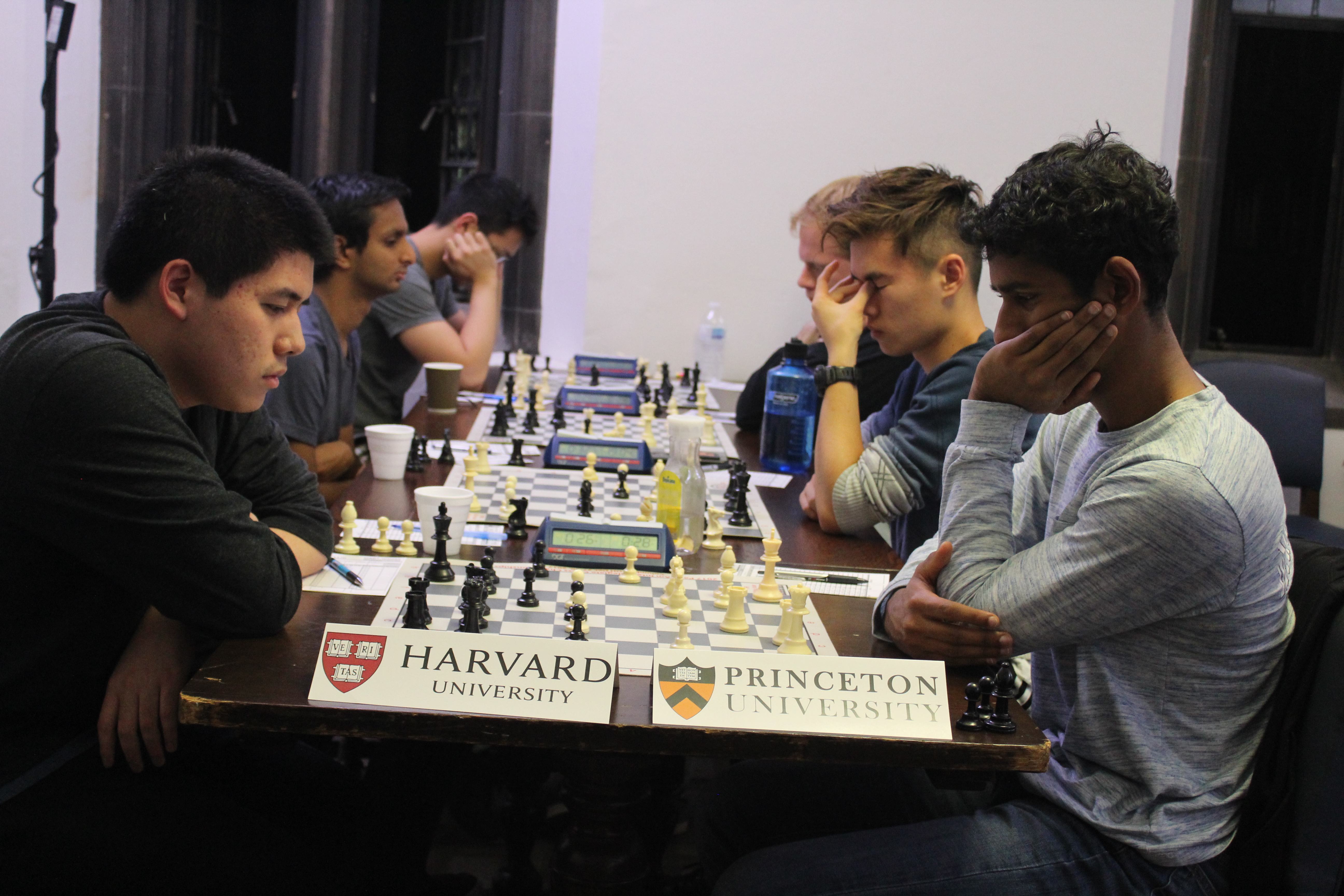
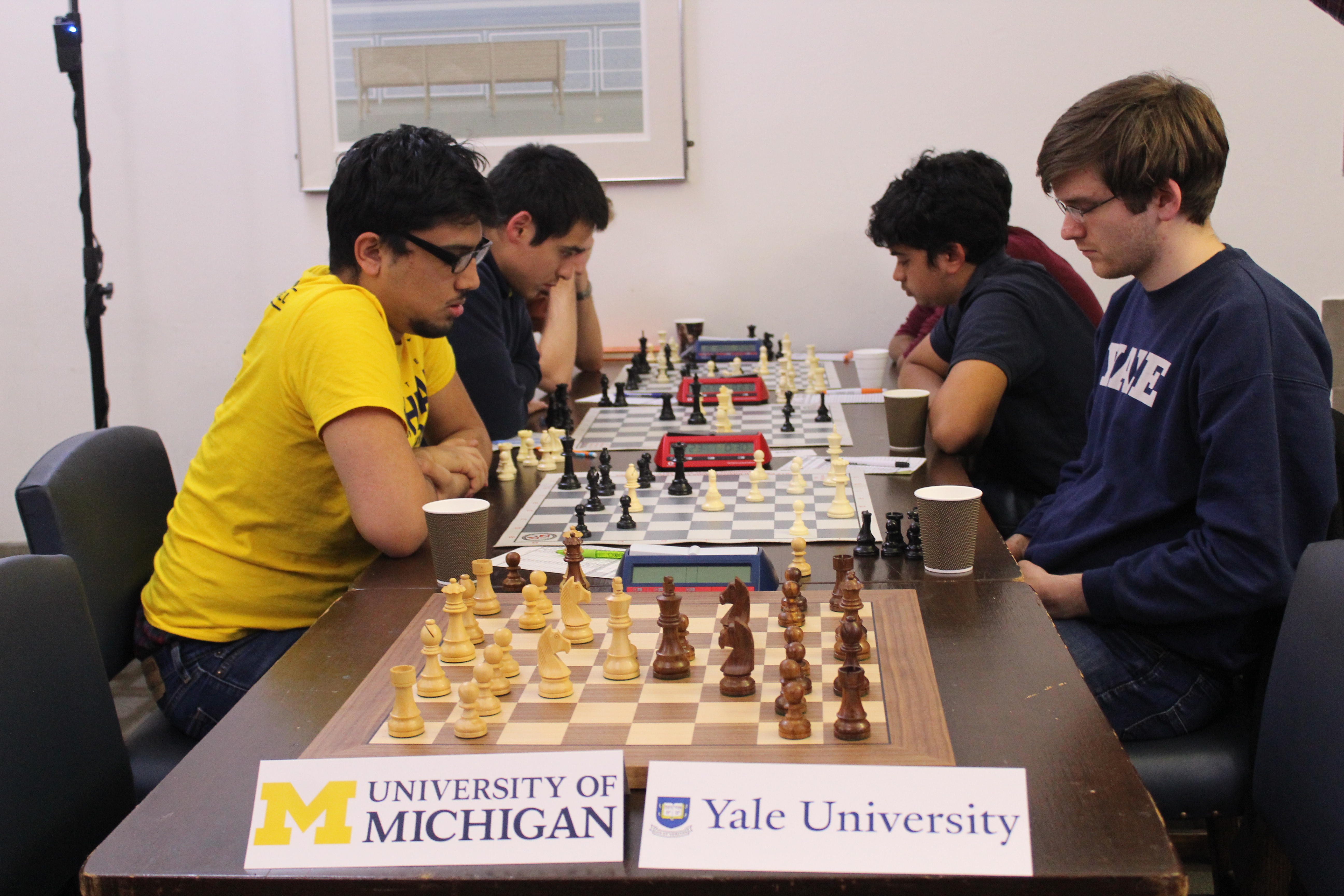
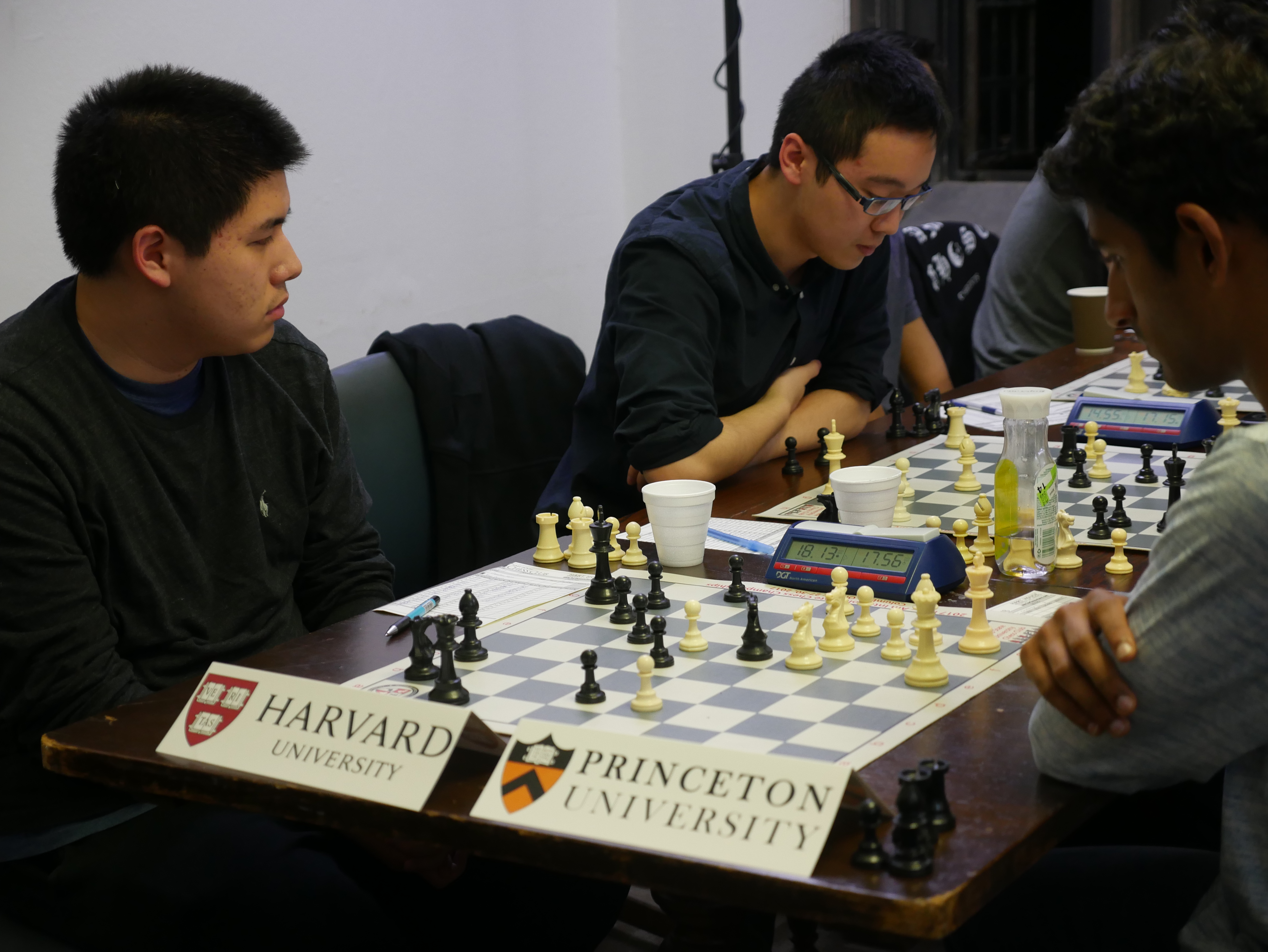
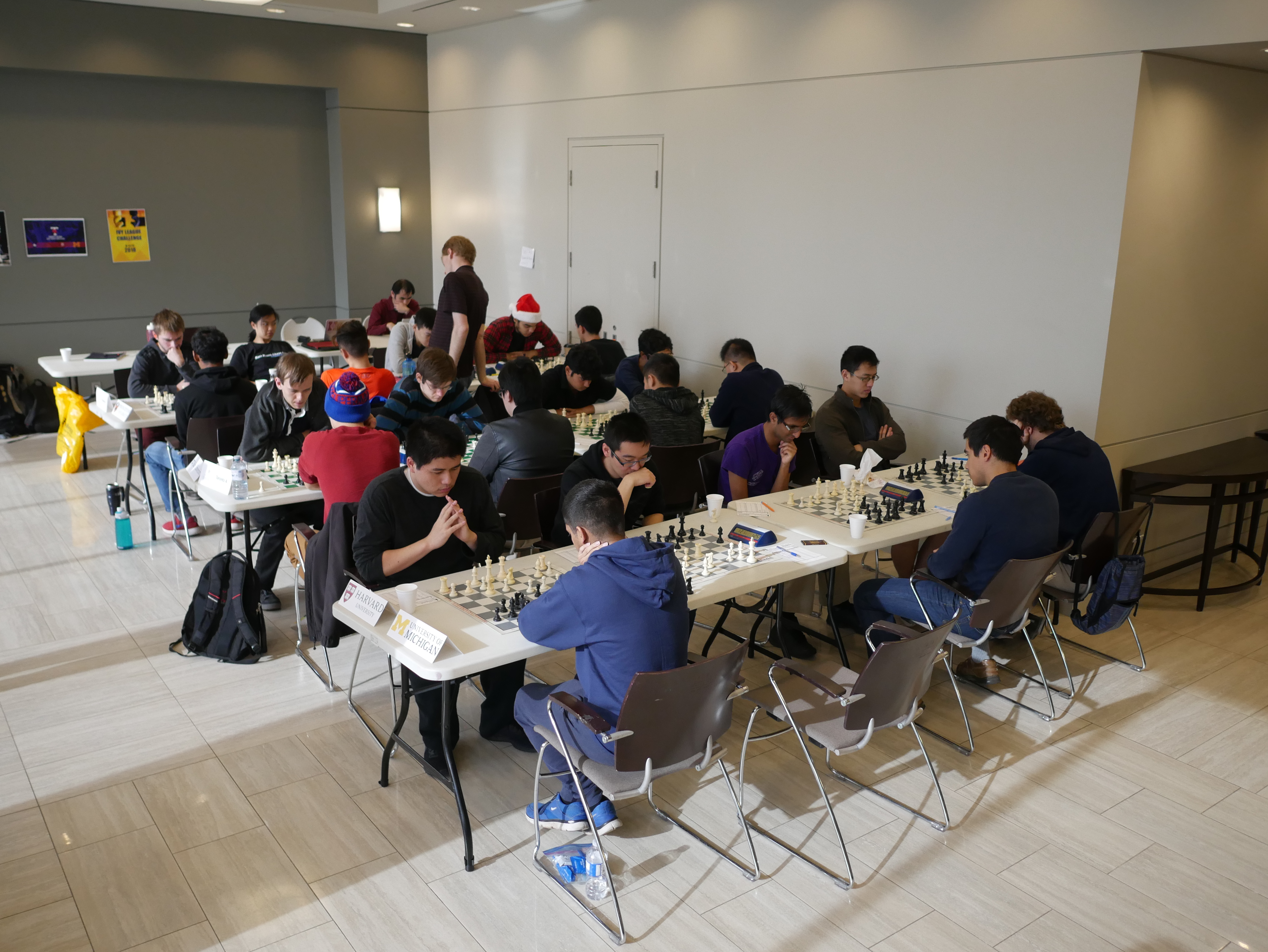
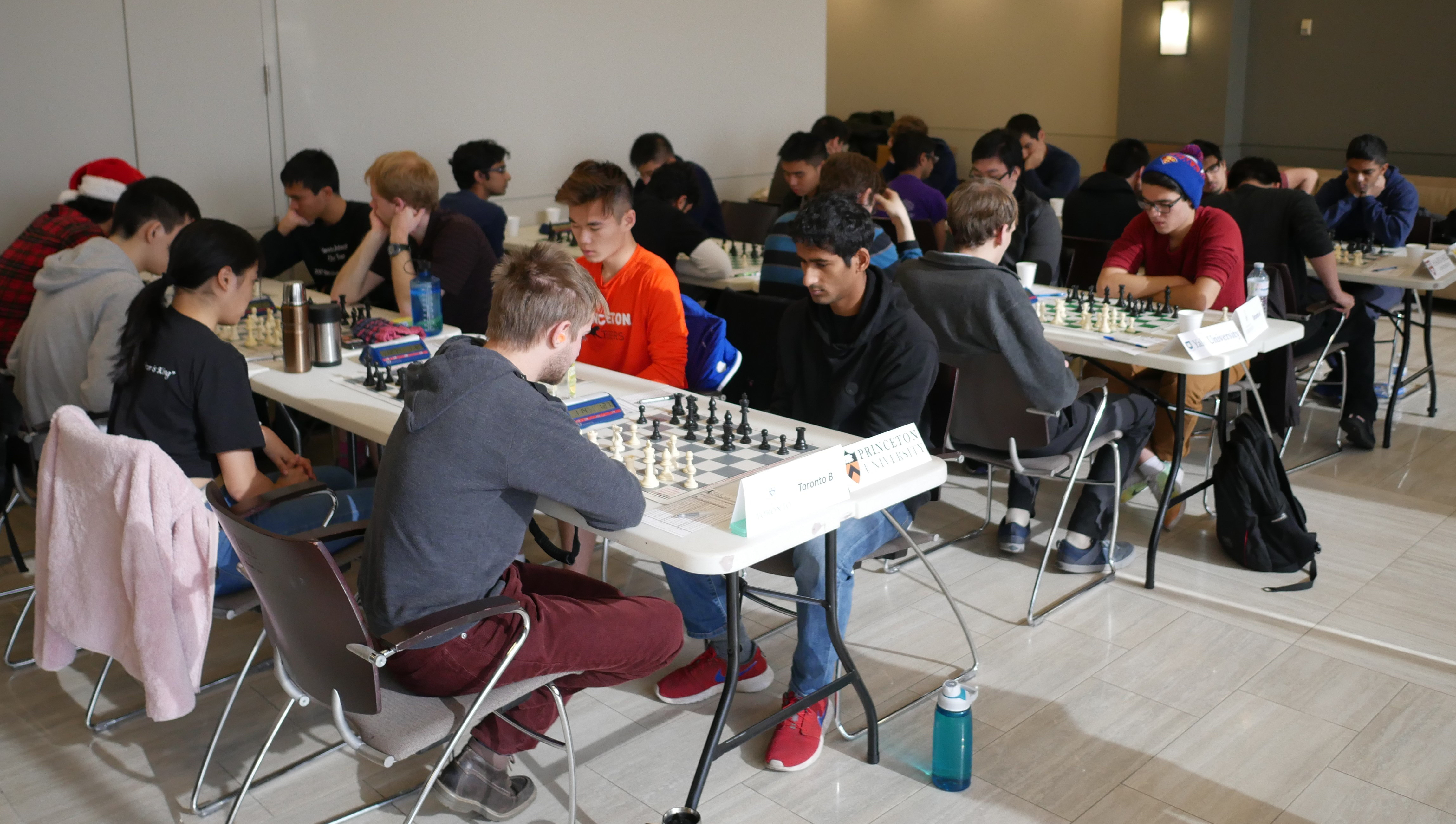
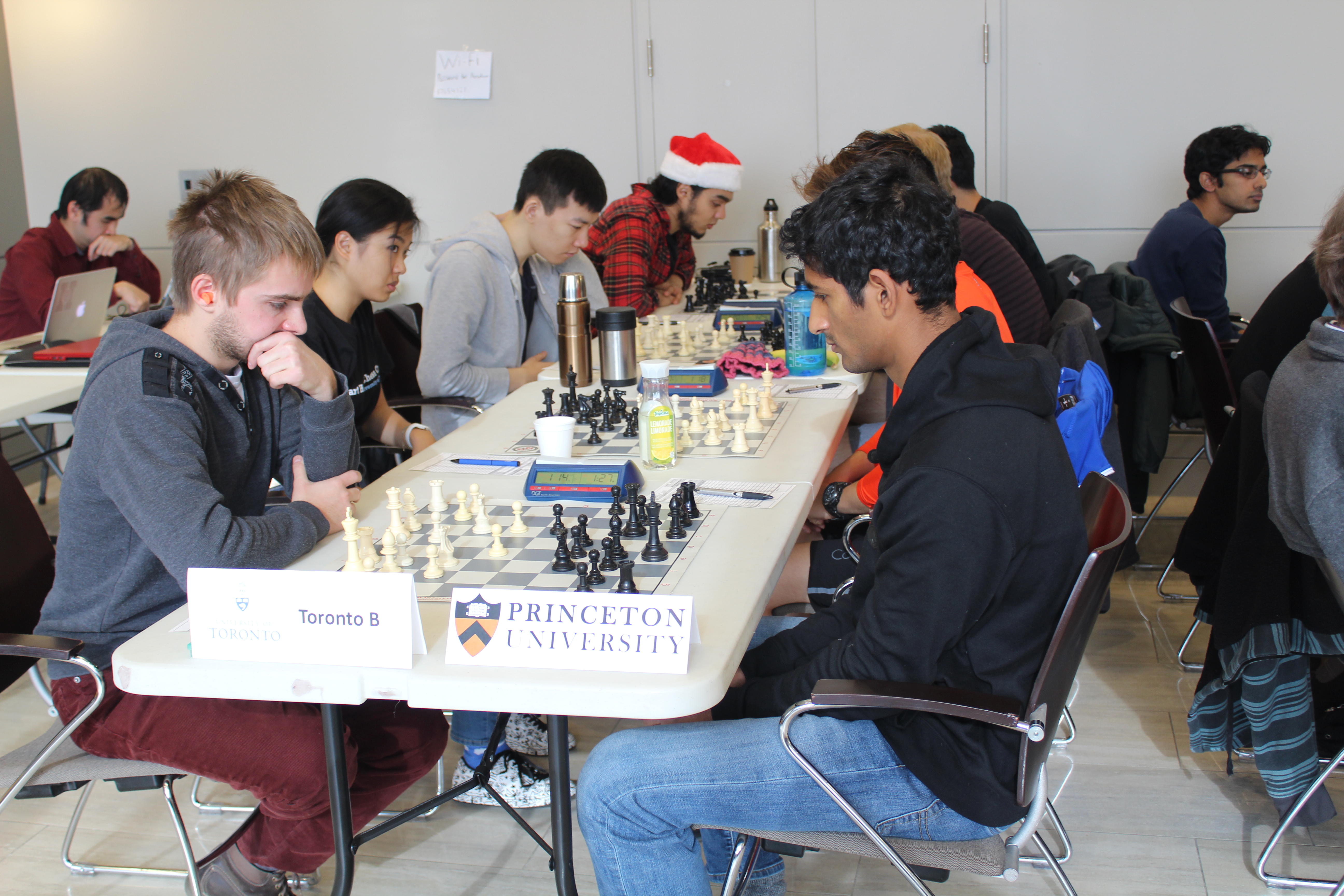
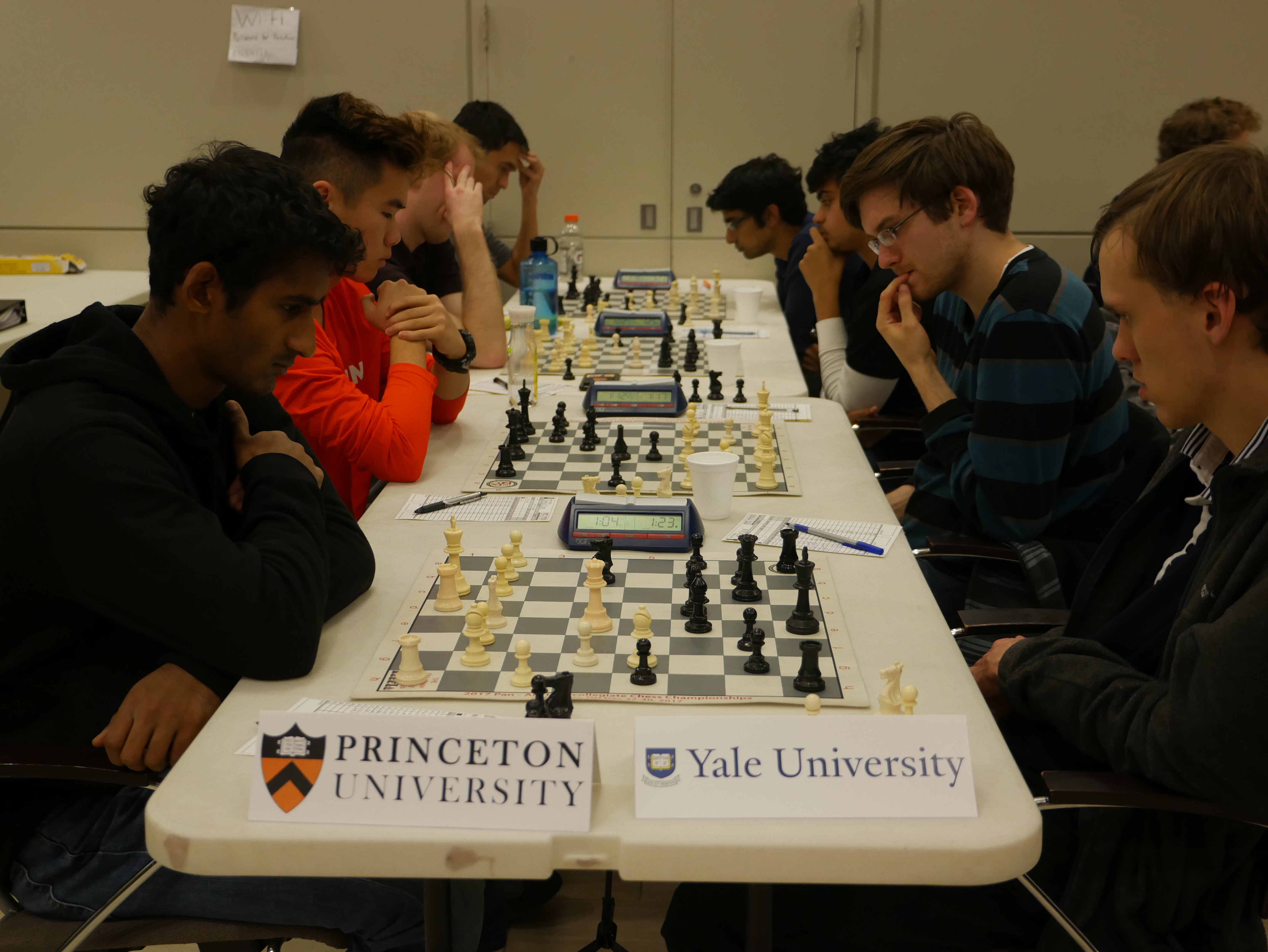
Going back to the actual games, however – which, by the way, you can view here – Day 1 saw Michigan University winning both its matches against Princeton and Yale by the closest of margins (2.5 – 1.5) and climbing up to the place of the sole tournament leader. Harvard defeated Toronto A relatively comfortably but lost to Princeton in a glorious Round 2 match, whereas Toronto B and Yale also scored one victory and one loss, joining Harvard and Pricenton in tying for second place.
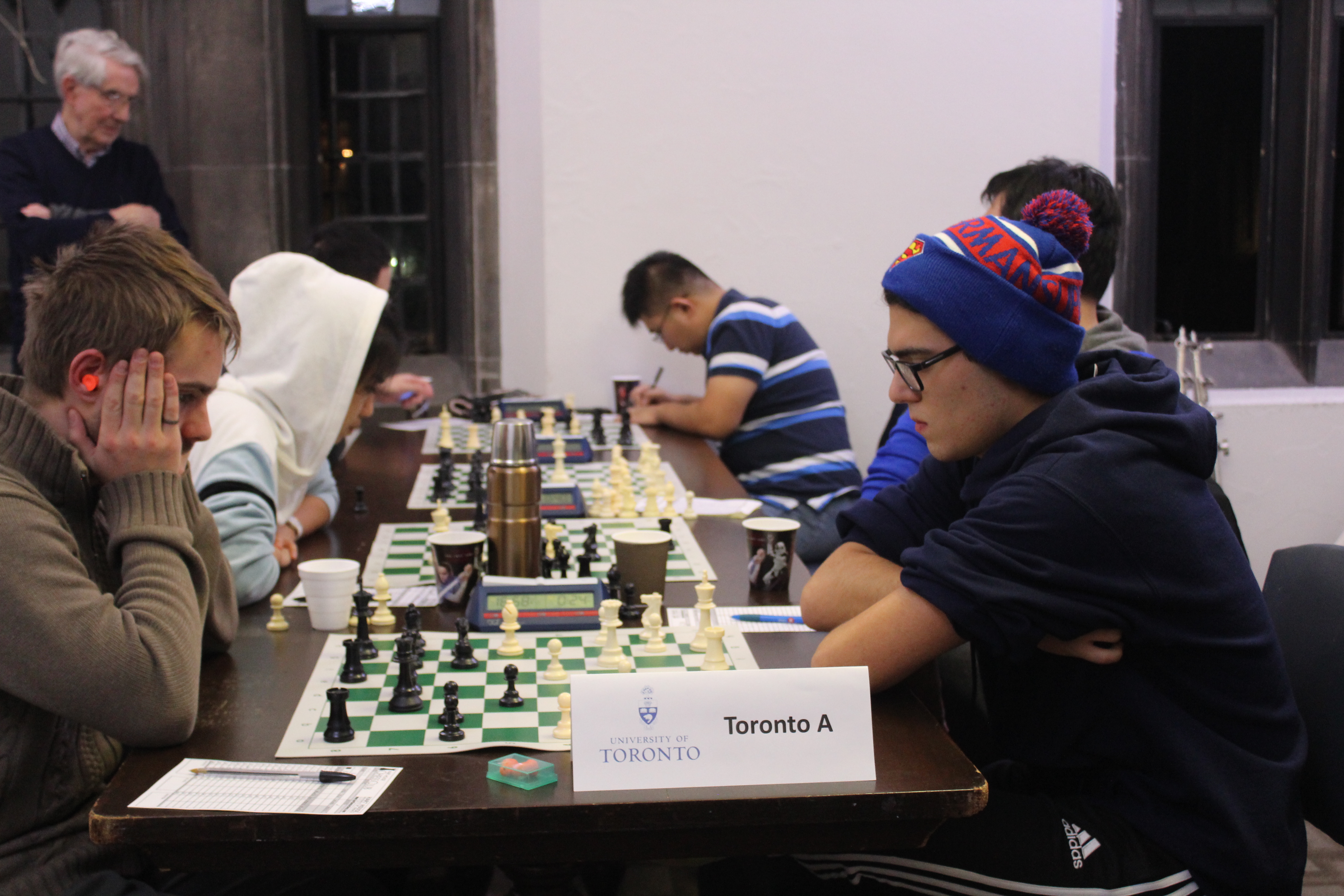
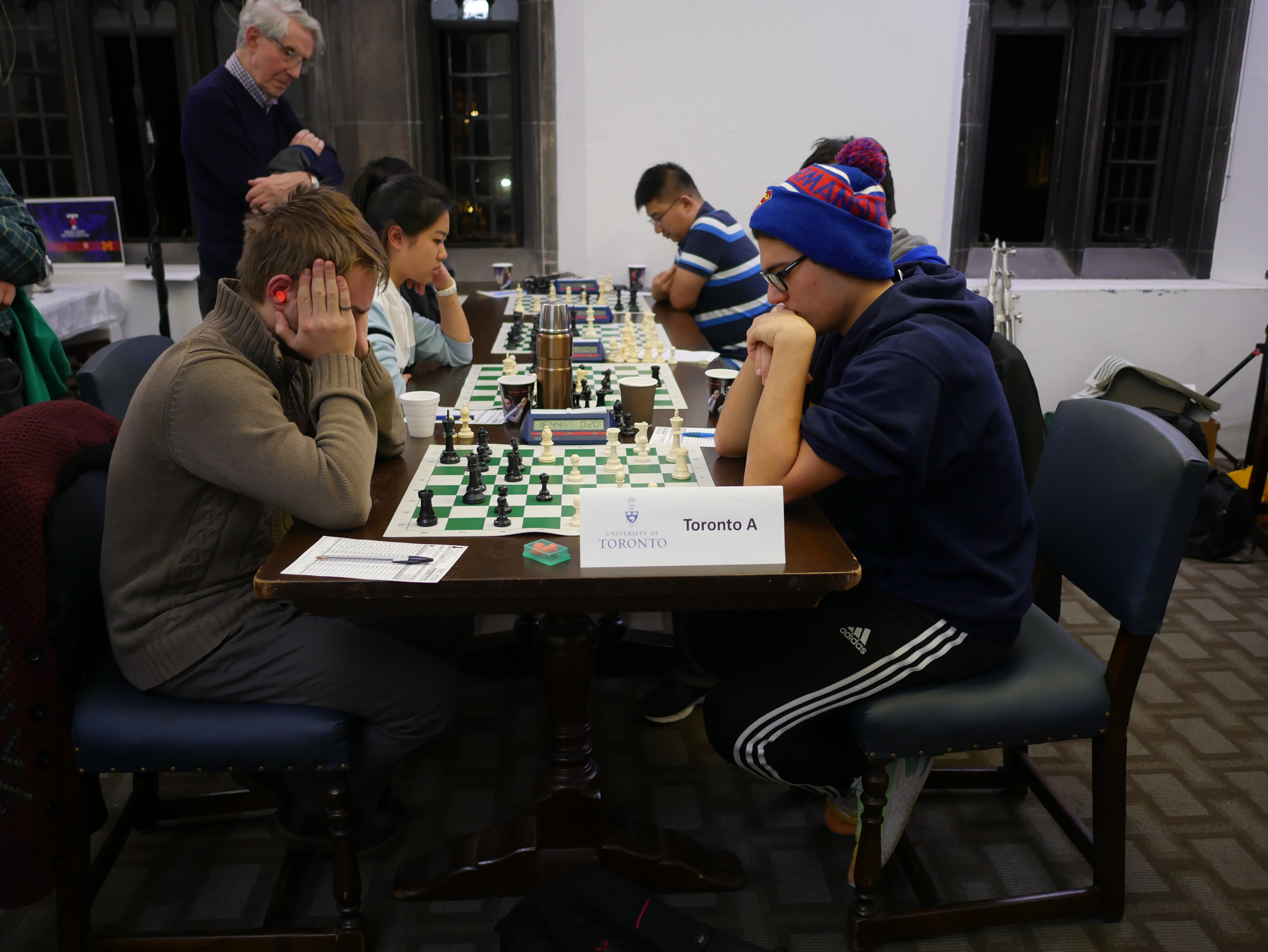
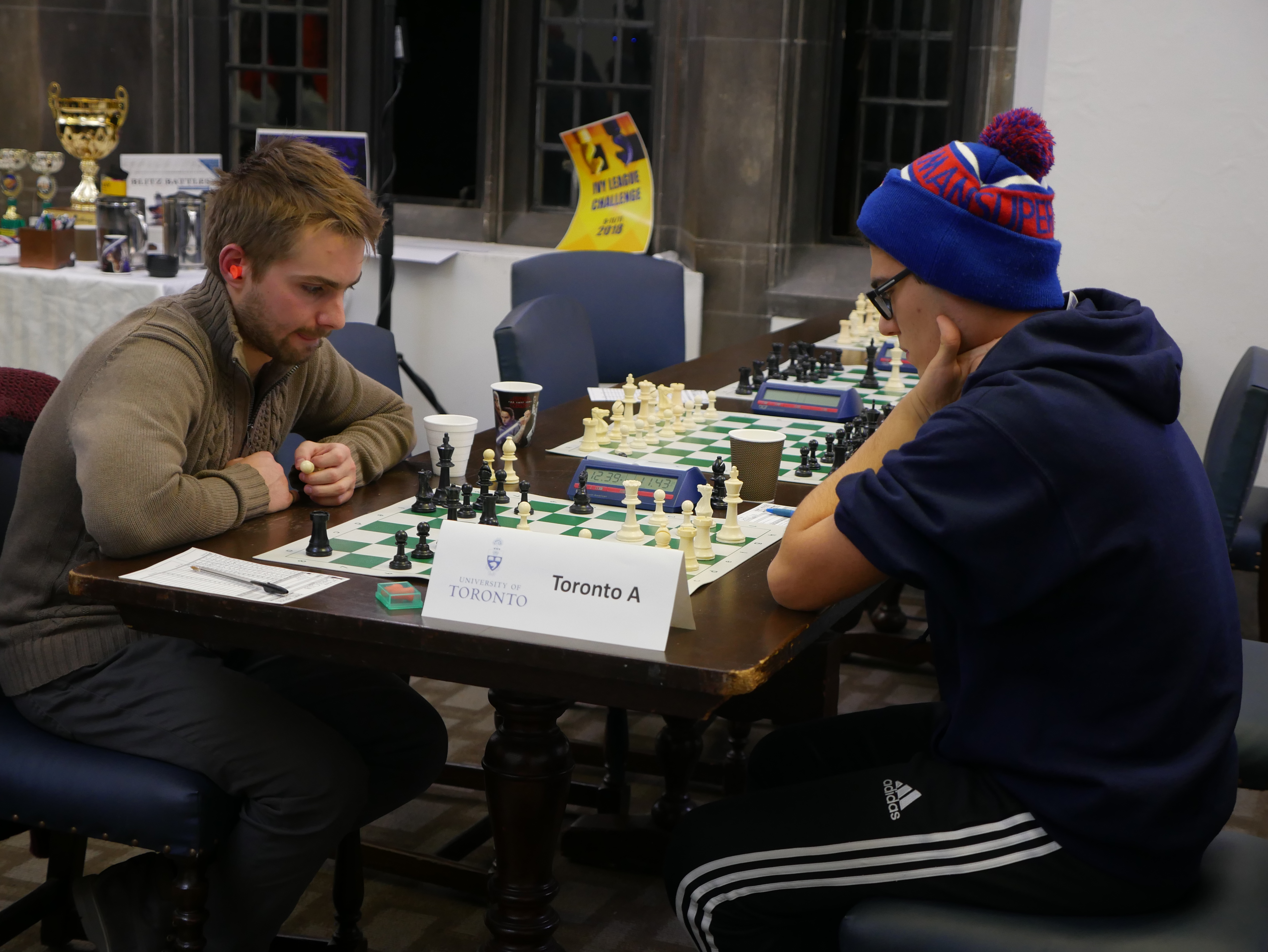
The unavoidable civil war between Toronto A and Toronto B took place in Round 2 of the tournament
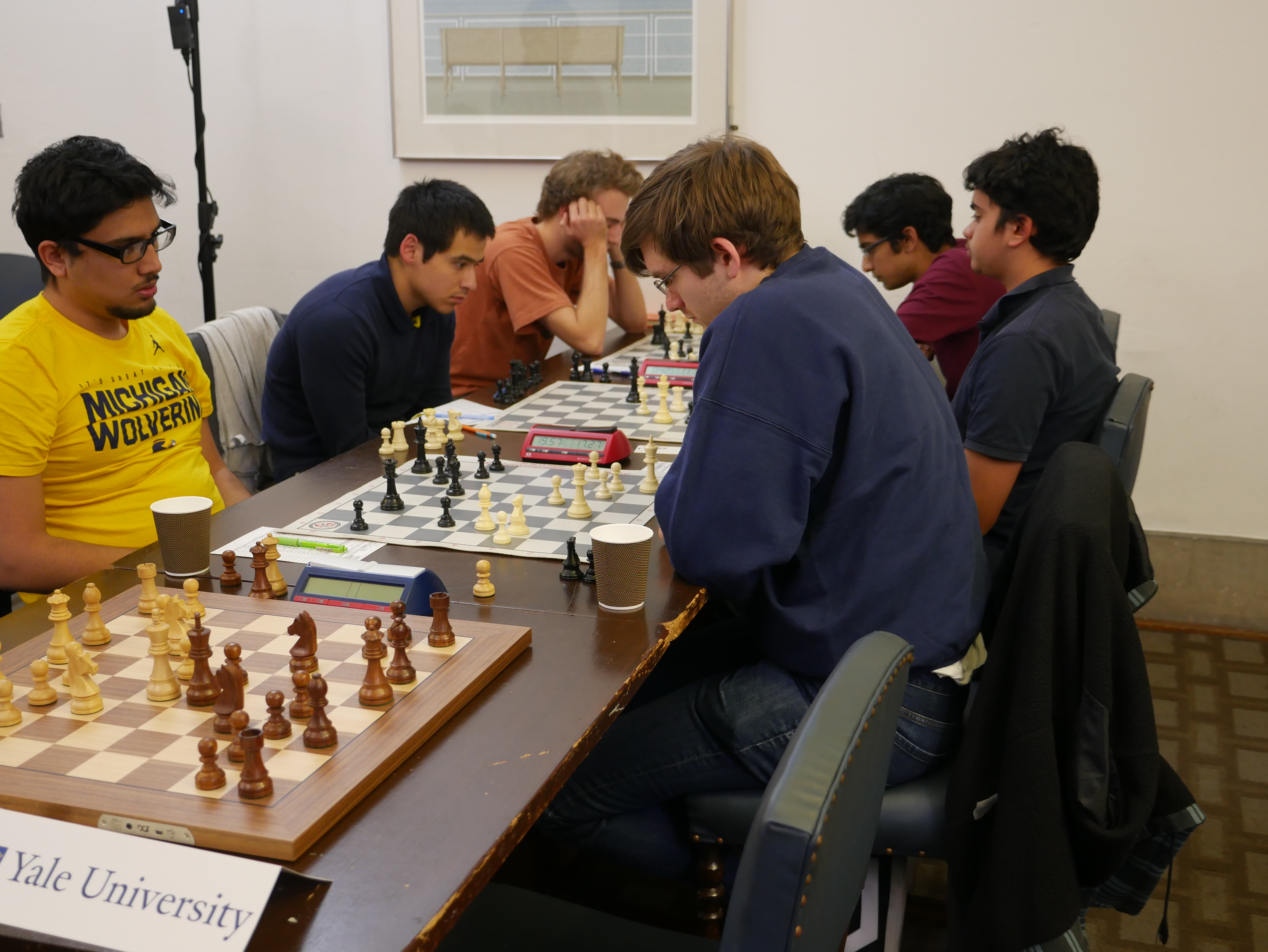
Yale’s performance deserves some special praise here, not only because it defeated the higher rated Toronto B in Round 1 but, most importantly, because it boasts a very active and capable chess club which, sadly, has not in recent years received enough funding by the University to play in the PanAms; and yet, under the superb captainship of IM Matt Larson, they decided to come out and play in the Ivy League Challenge.
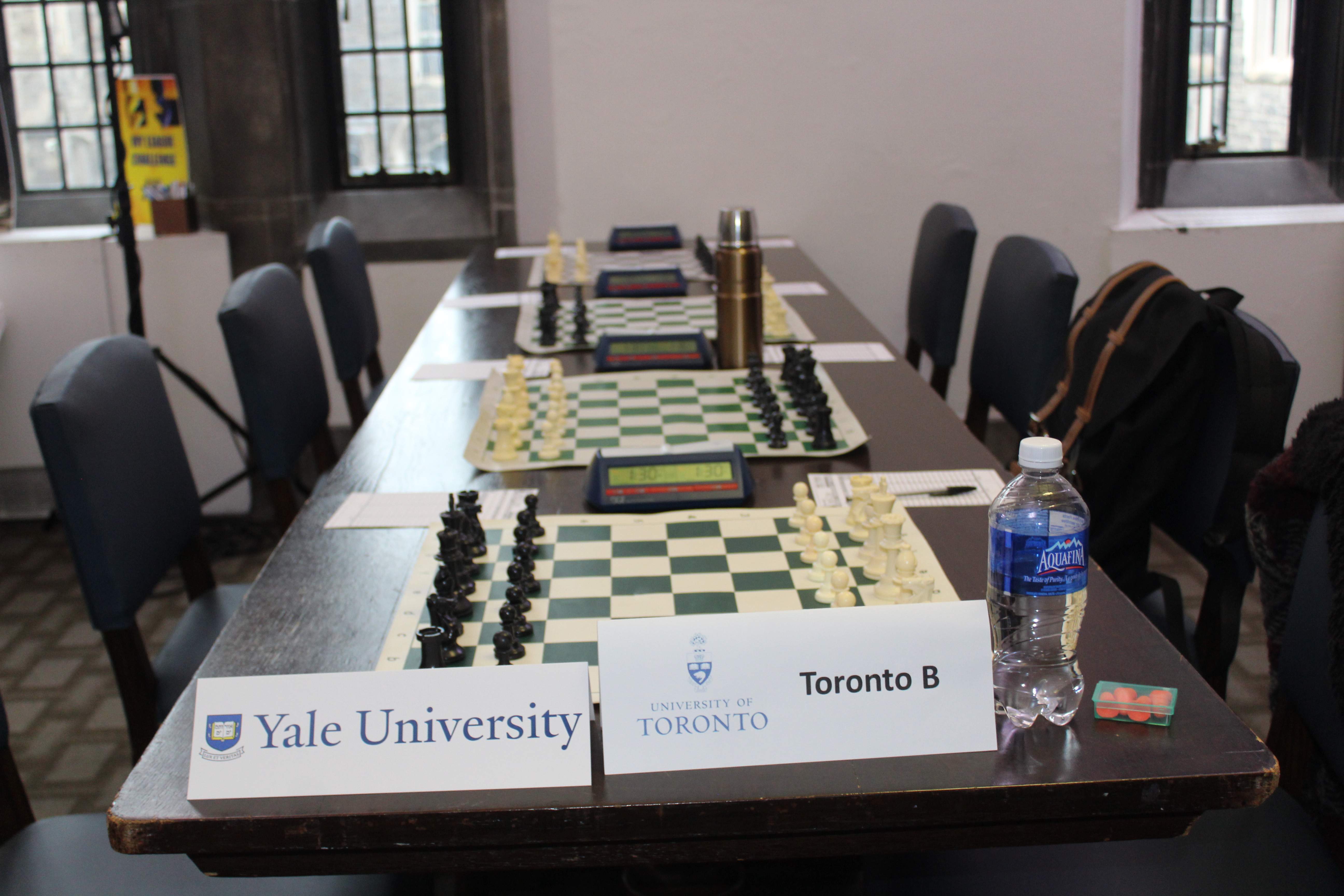
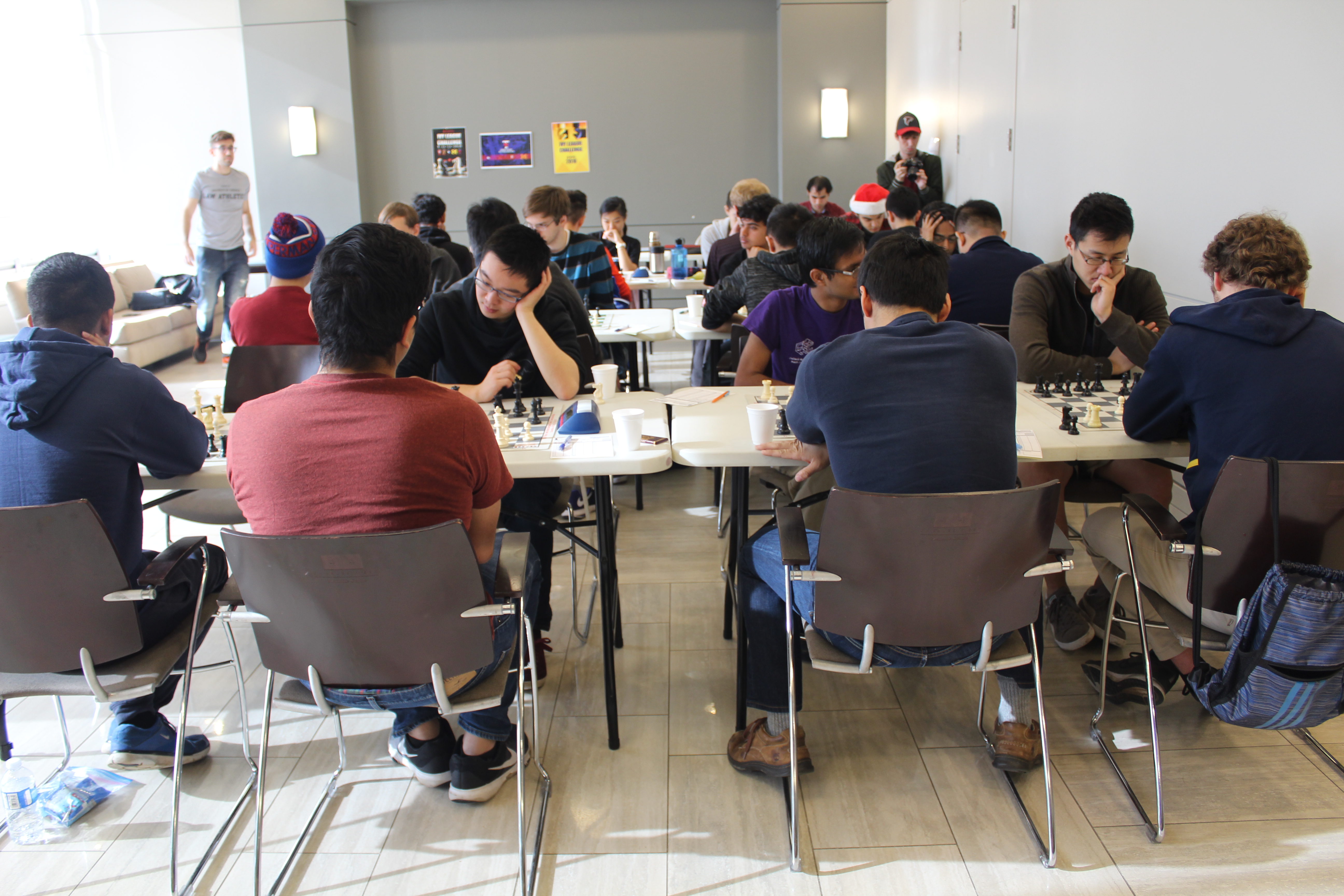
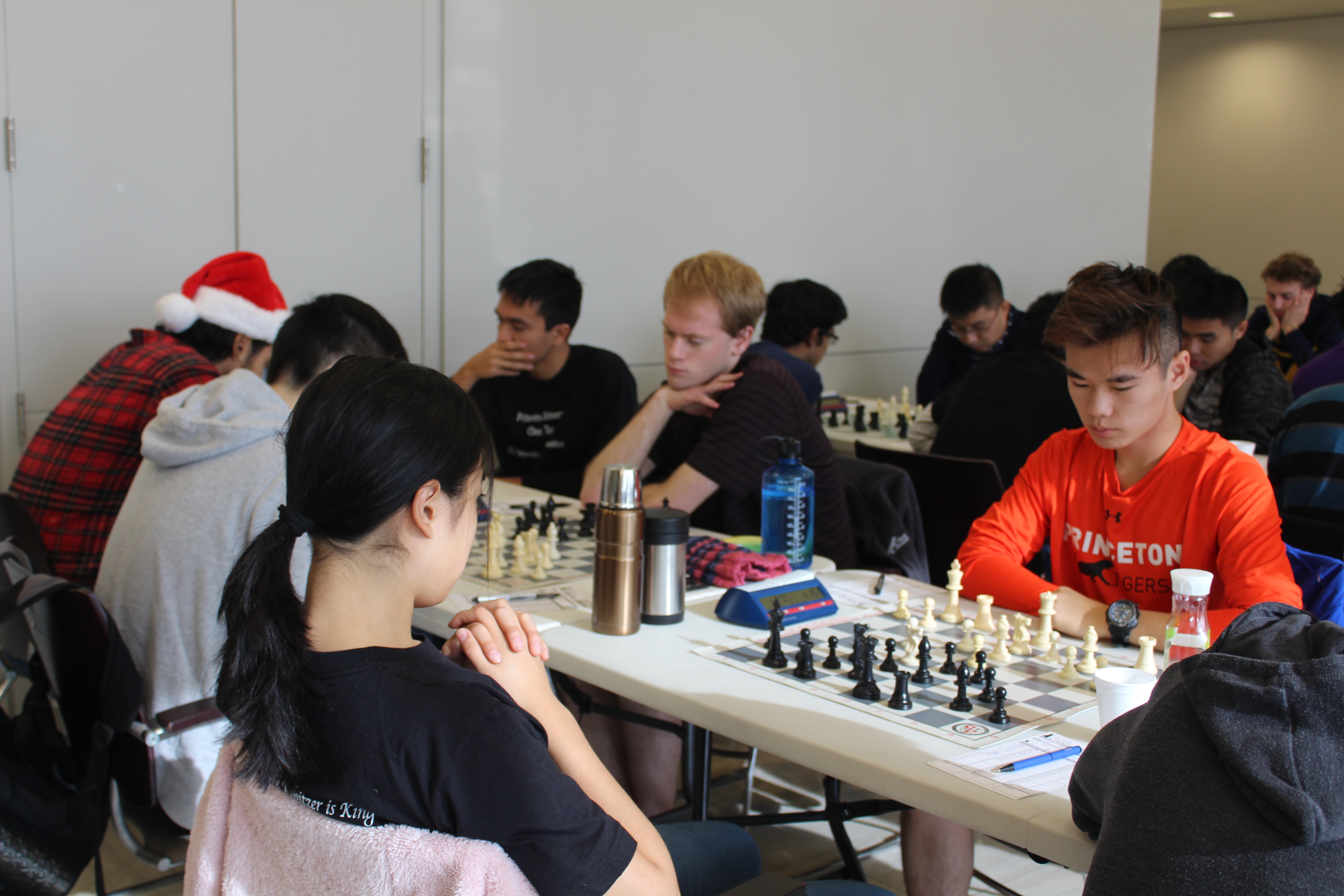
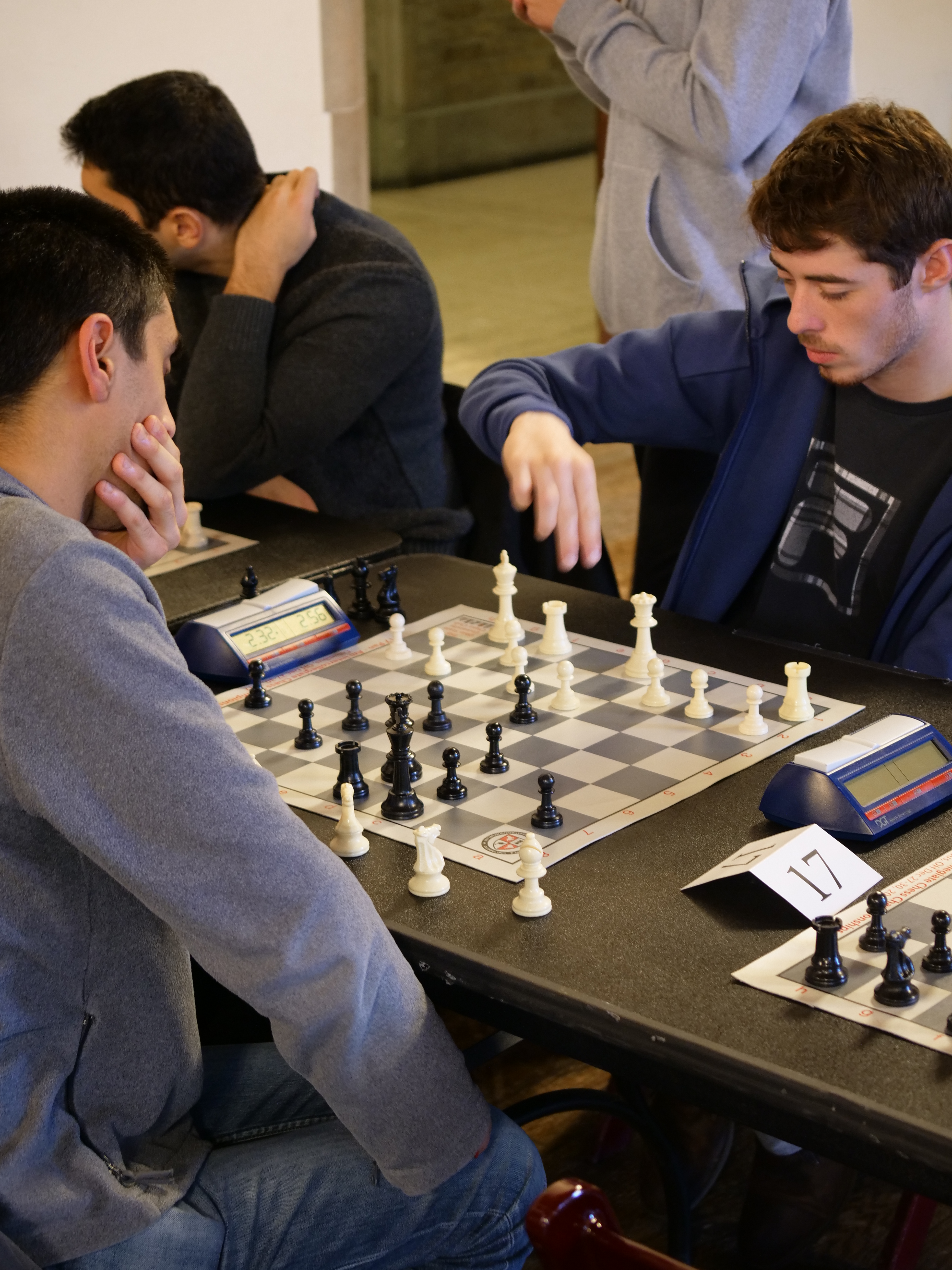
Round 1 of the Ivy League Challenge is on!
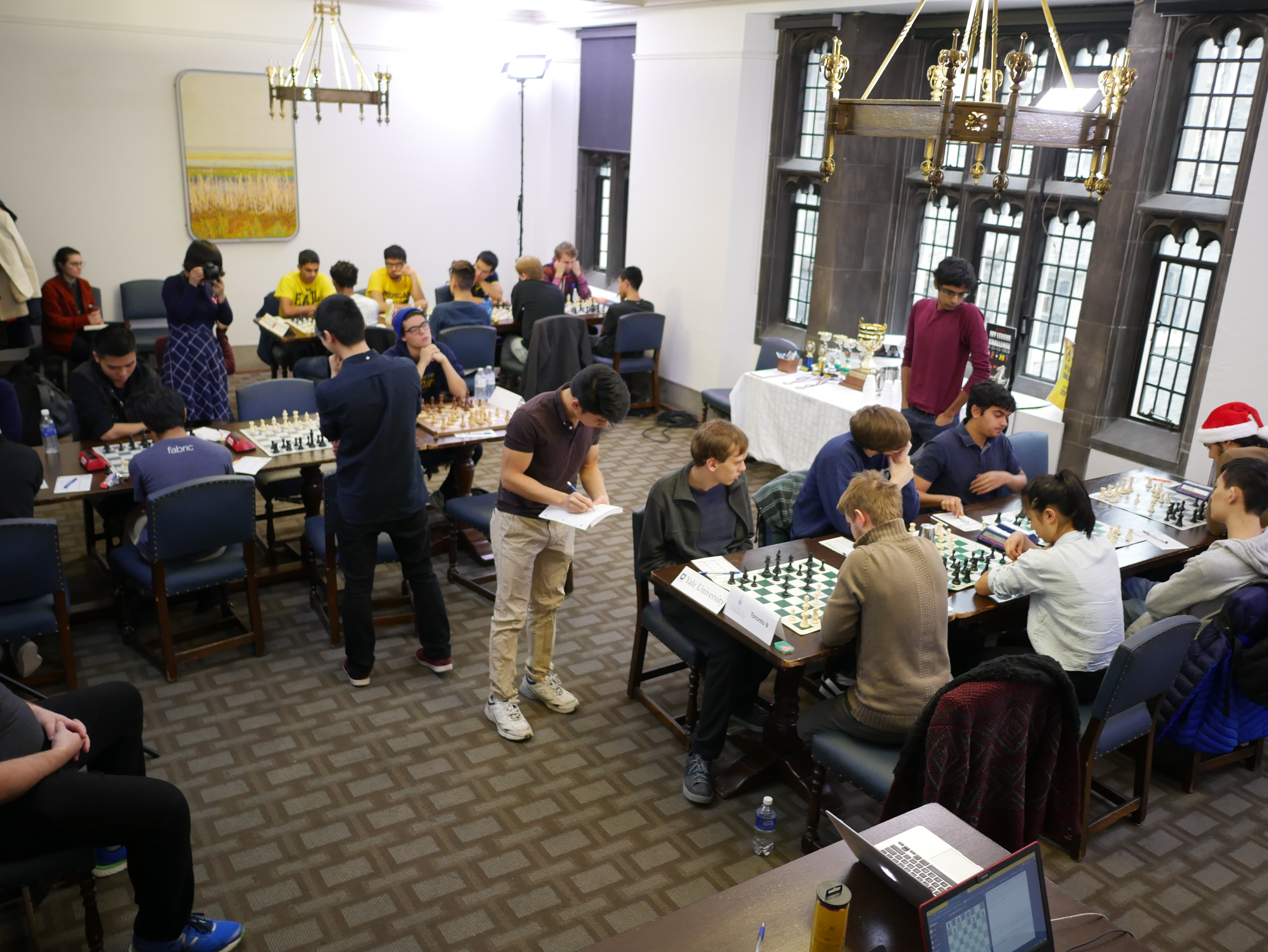
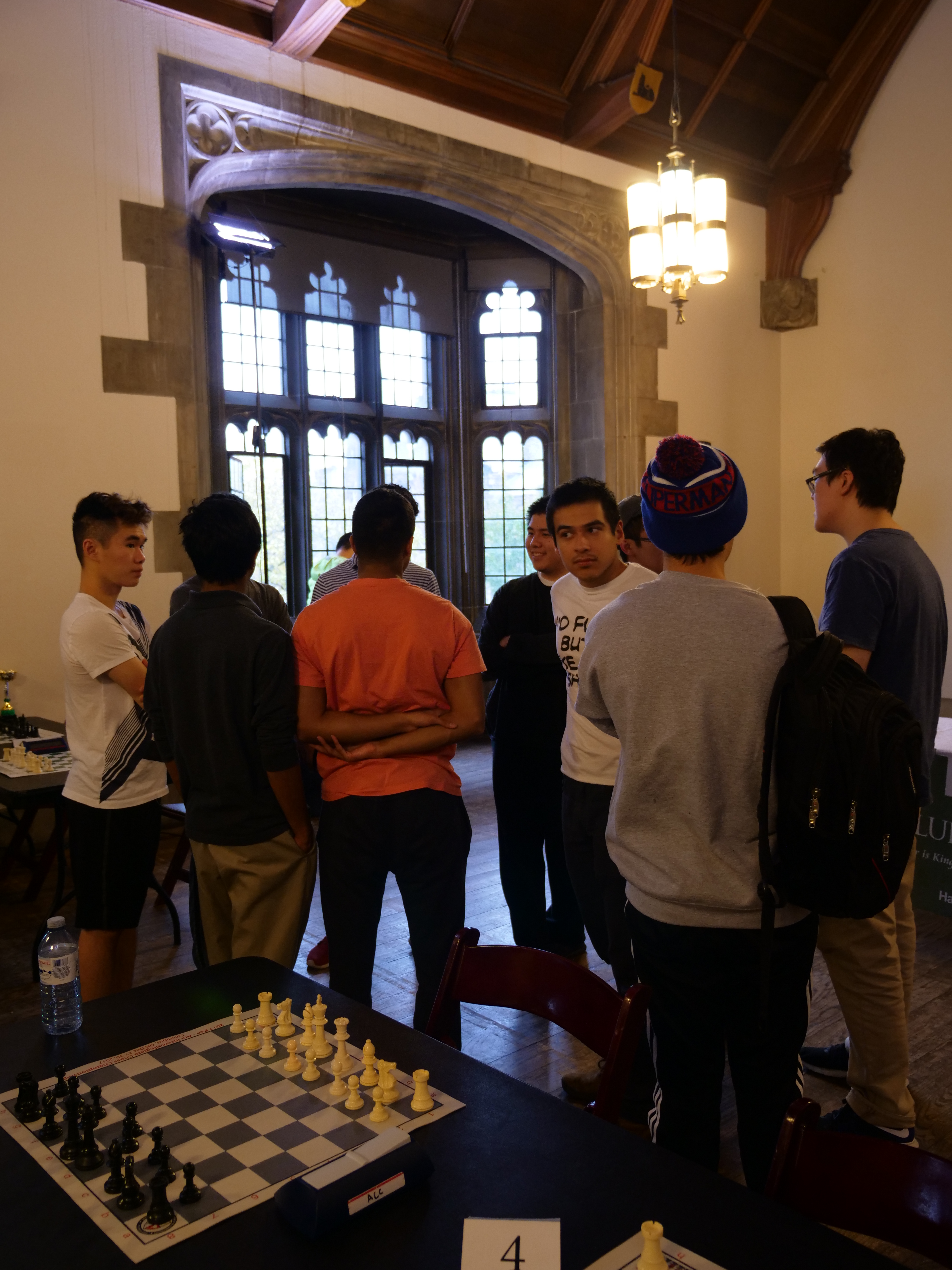
I can’t recall any other surprises on Day 1, except for an unforseen and slightly embarrassing incident during the evening Round. Anticipating that the Hart House bell was scheduled to briefly play a couple of Remembrance melodies during the evening, I must have felt really smart when I made a special room booking for the games of Round 2. Located in a quiet side of the building and almost totally insulated from the bell noise, the Hart House South Dining Room truly presented the perfect location for a chess tournament. Thanks to my genius call the players wouldn’t even notice that there was a bell ringing in the distance. Like a true chess player, I was thinking several moves ahead and loving it. Now imagine my surprise when a separate building, adjacent to the South Dining Room, started ringing its own separate bell. And, boy, it was LOUD! I quickly closed all the windows, I provided earplugs to the players and I started biting my nails, hoping that the bell-ringing would end soon. I was so desperate that I almost prayed for help to the souls of our ancestors, who fell for Canada’s liberty.
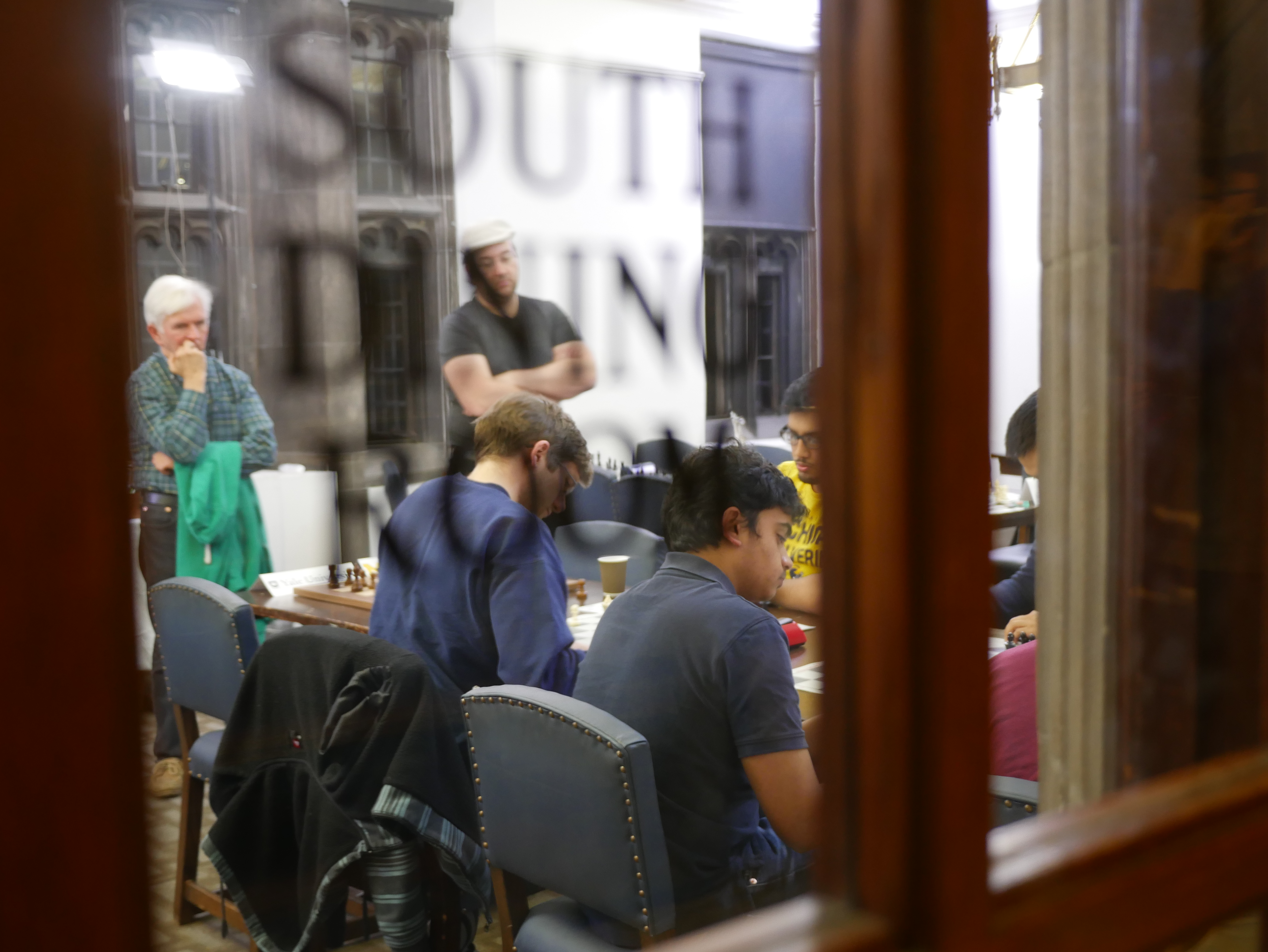
South Dining Room: Elegant but not as quiet as we had wanted it to be
Alas, the annoying sound, coming from a totally different direction, kept going for almost one hour, which, to me, felt like a century. During these uncomfortable moments, I began to empathize with Elmer Fudd the not so smart hunter who thinks he has trapped Bugs Bunny, but, while he’s proudly pointing his double-barreled shotgun to the rabbit hole, that “scwewy wabbit” simply takes the other exit and comes back to mock him. In any event, I did not notice any major blunders in any of the games during the time the bell was ringing and that was, in fact, my only consolation.
Day 2: A rally for three!
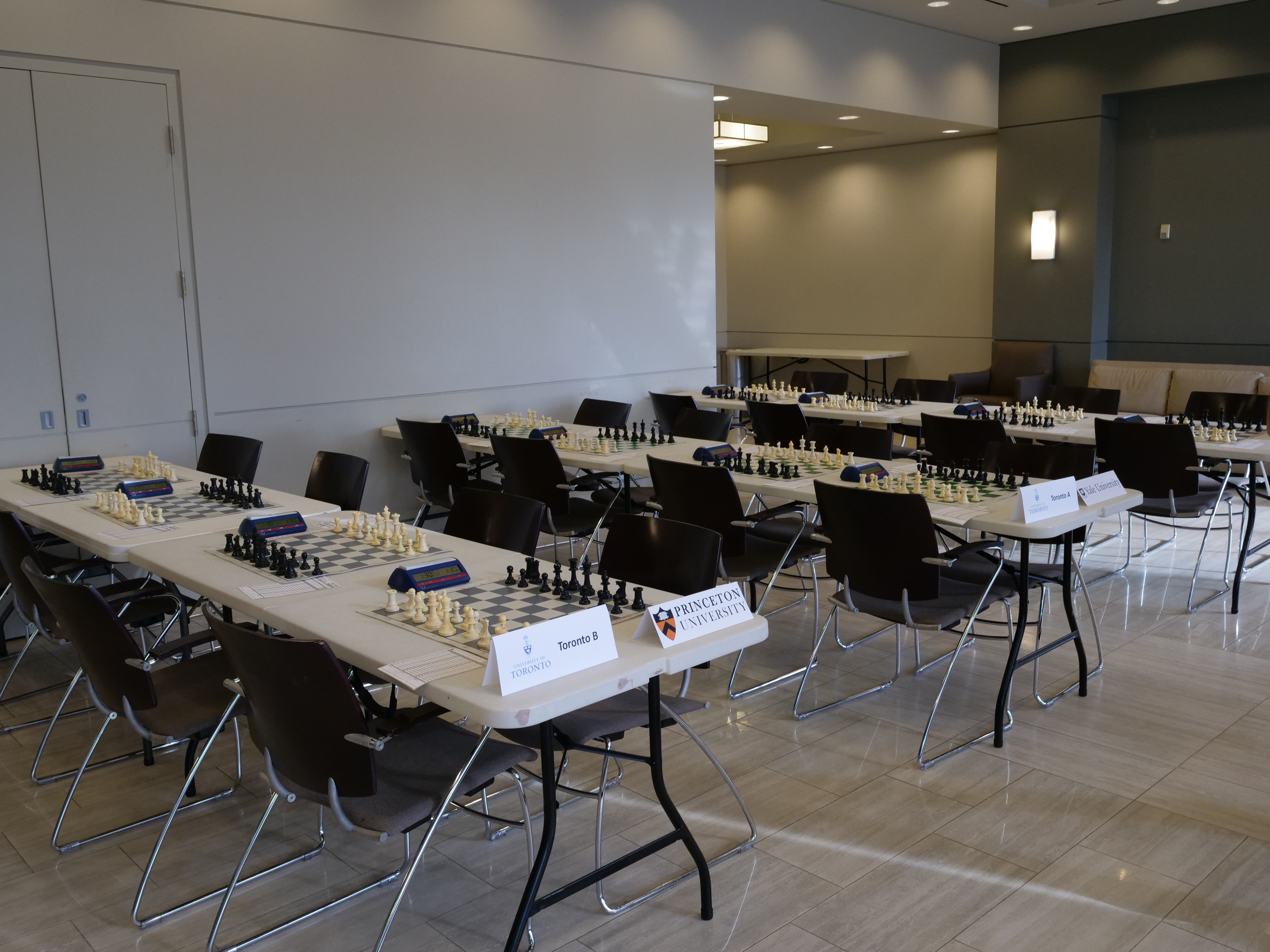
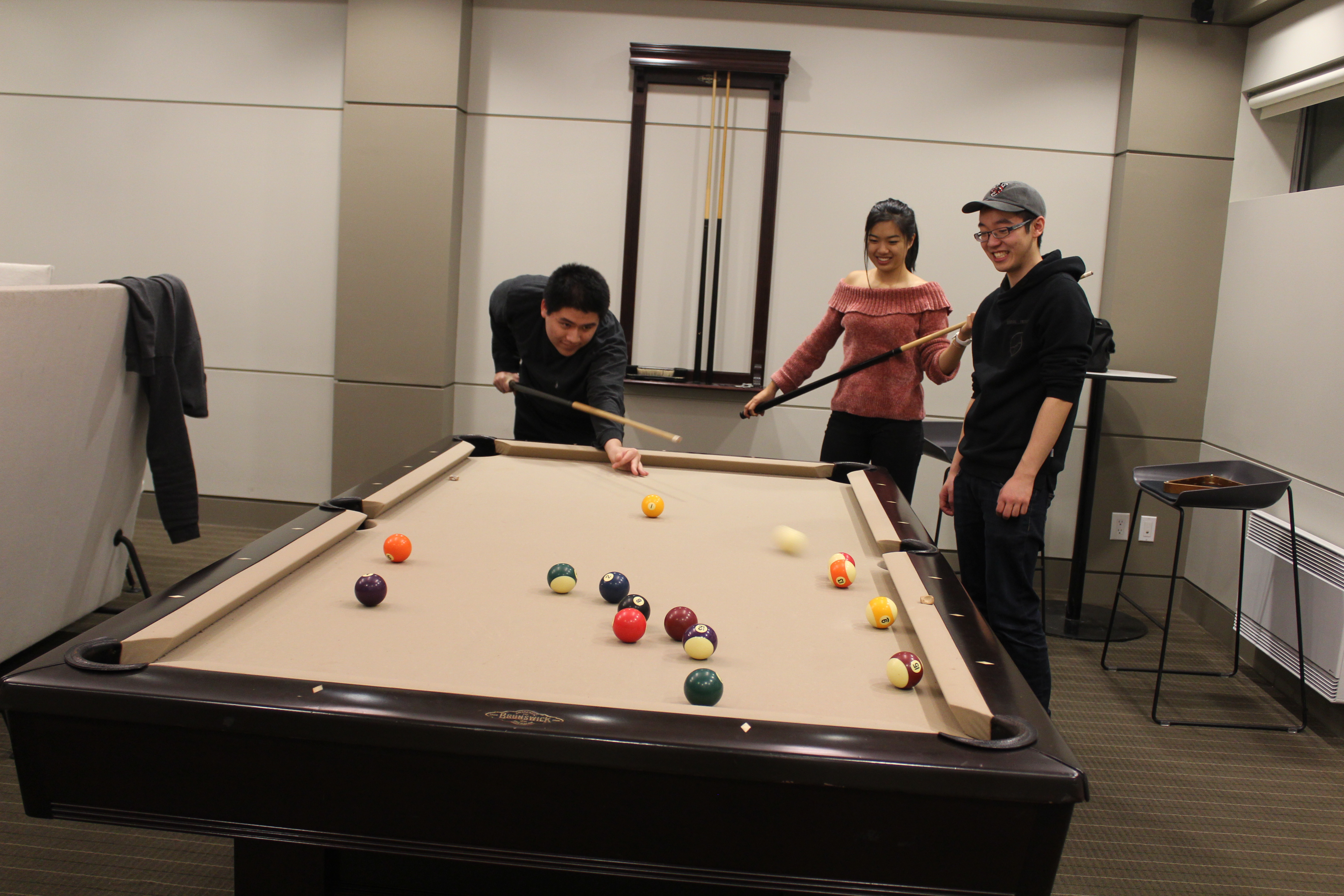
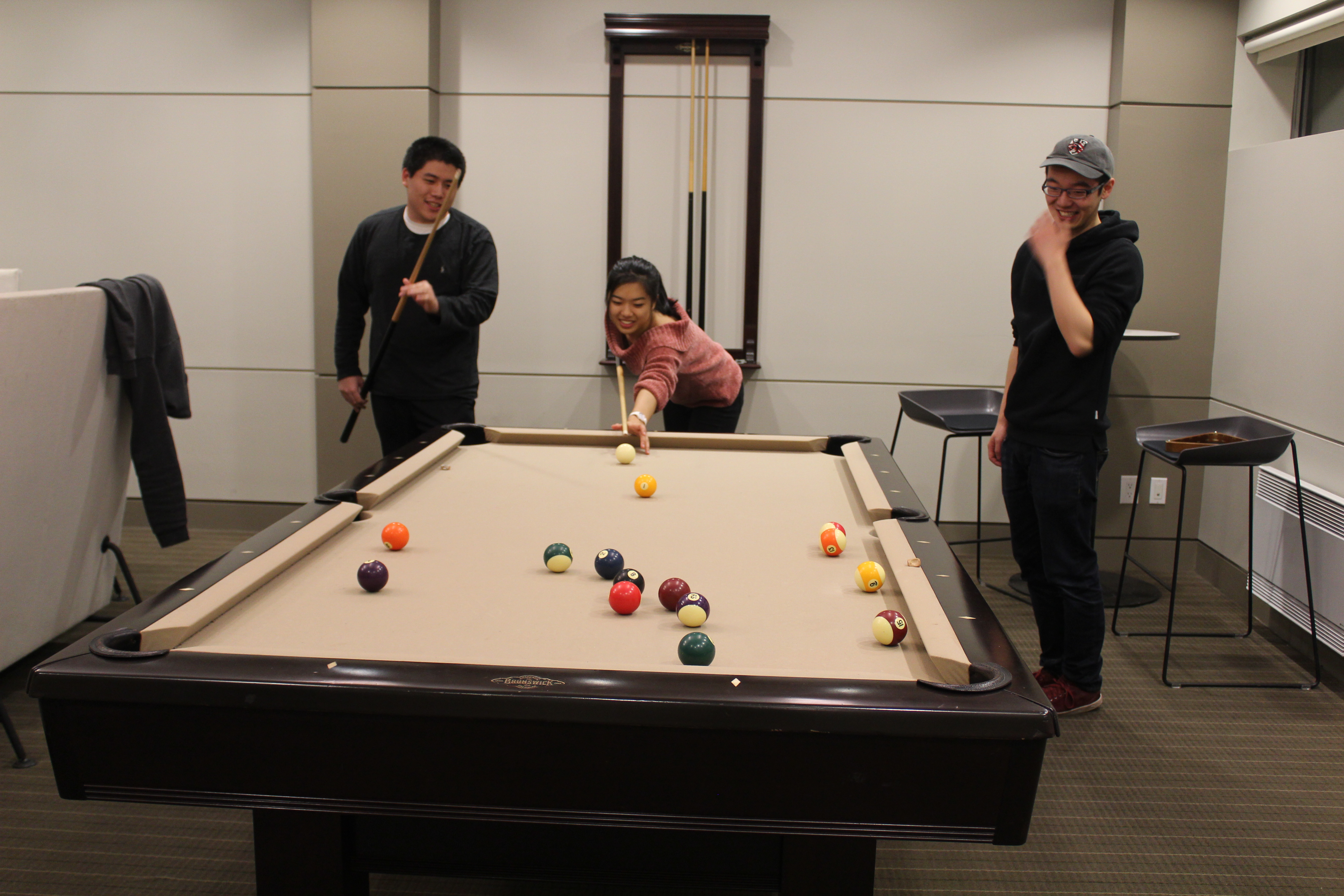
On Day 2, the games continued on the 31stfloor of the Manulife Center and the conditions looked ideal. A bright and spacious room with a beautiful view of the city was made available to the tournament organizers by the Residence Manager and, as though this was not enough, the Concierge gave their permission for setting-up a Skittles room in an adjacent private space, which featured, among other things, a luxury lounge and a pool table. As the games finished, the Skittles Room became livelier and livelier, with players and spectators strolling in to analyze their games and mingle.
The stage is ready for the dramatic moments of Round 3
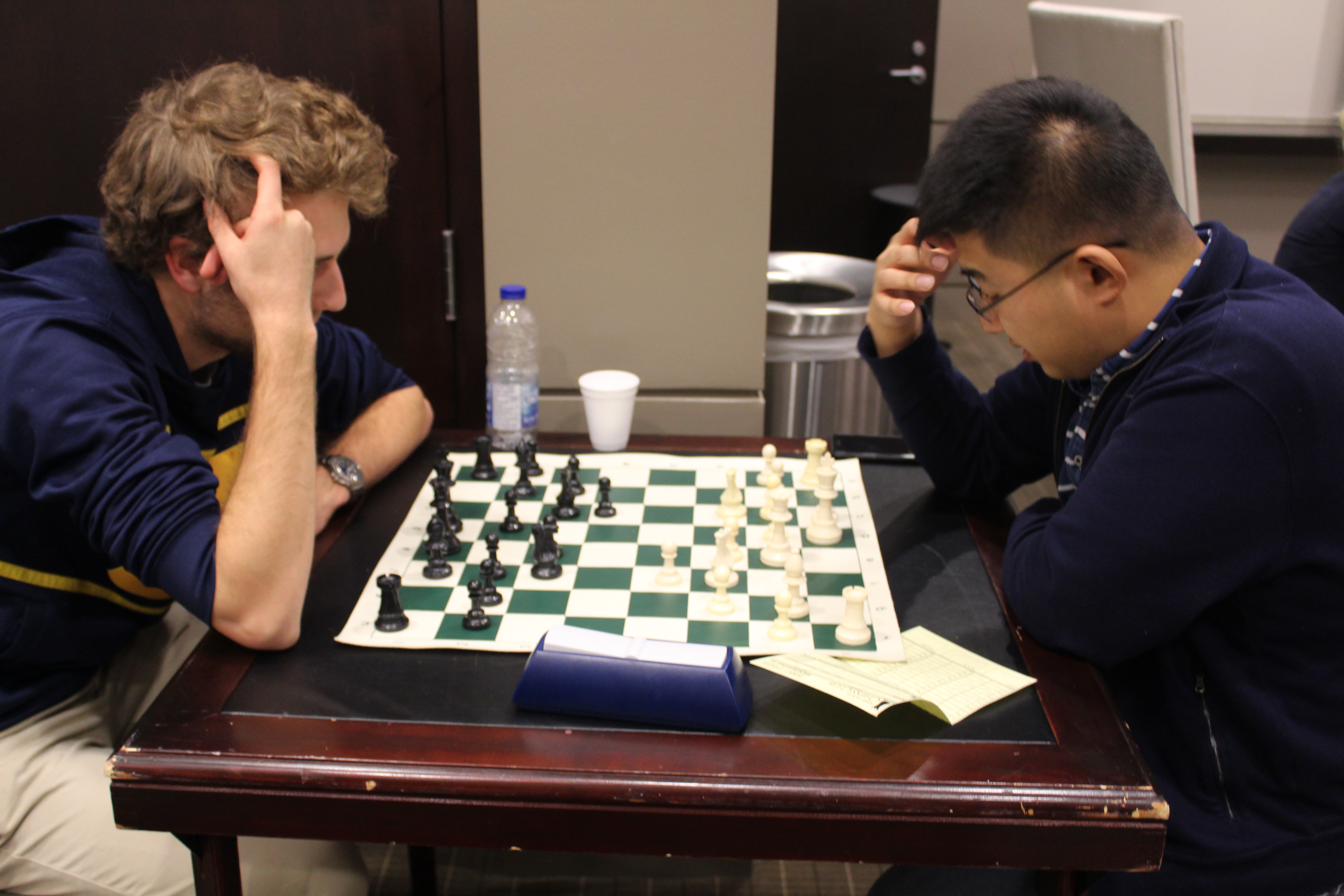
There was, indeed, plenty to analyze as Round 3 saw Michigan lose to Harvard, and Princeton beat Toronto B, setting up the stage for that notoriously tricky situation, in which there is a tie between three teams, each of which has defeated the one but lost to the other. With the three strongest teams already having played each other, it suddenly became clear that the third or fourth tie-breaker could prove decisive and, to make matters even more complicated, Yale defeated Toronto A in Round 3, joining Harvard, Michigan and Princeton in the lead with 2 out of 3 match points and adding itself to the candidates for the prestigious trophy.
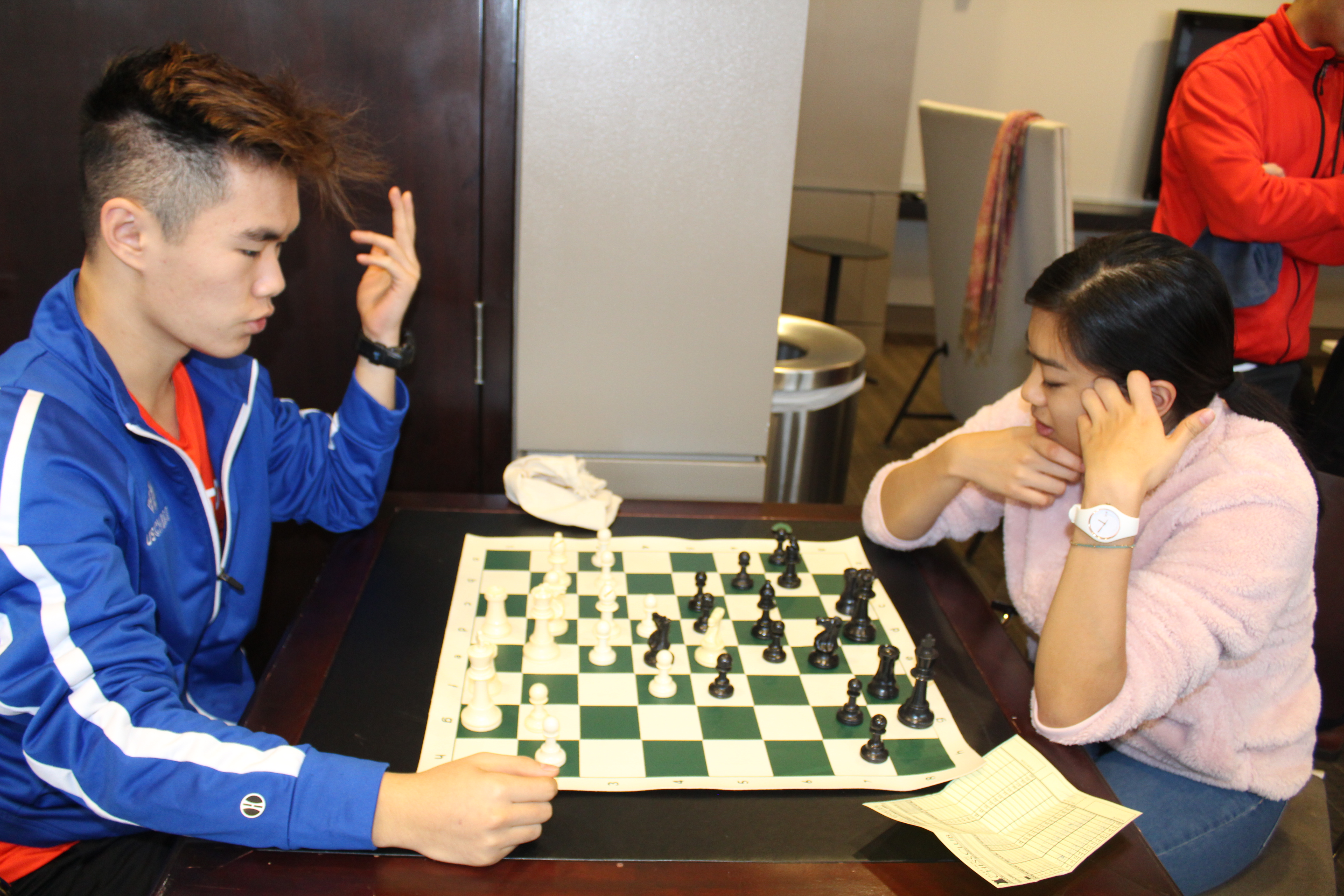
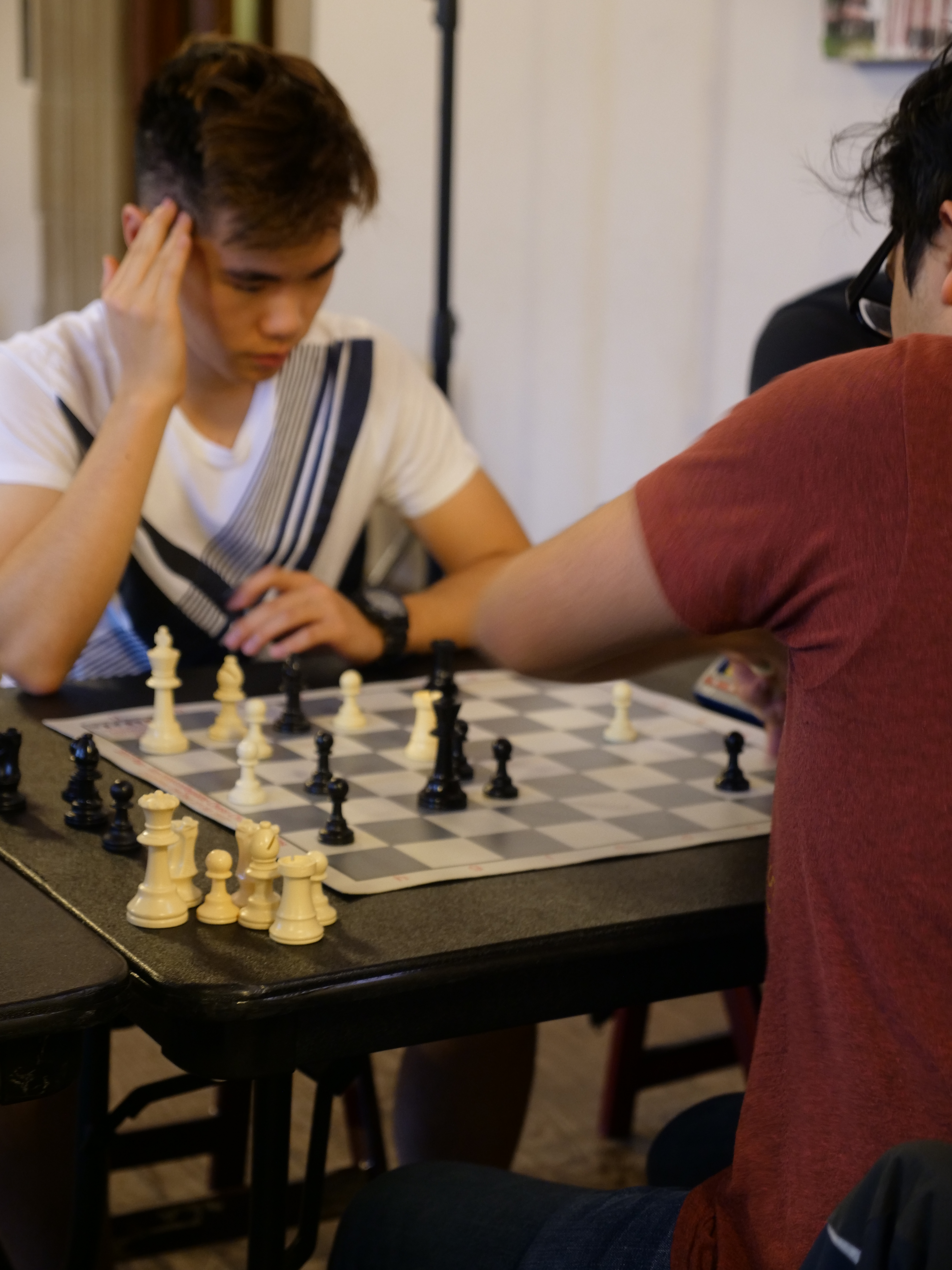
In the critical match for Round 3 Harvard beat Michigan. In a most interesting board 3 game, FM Mark Heimann tried 1…a6 against FM Varun Krishnan’s 1.e4
When Princeton comfortably beat Yale on Round 4, the situation became a bit clearer but the dust had by no means settled, as Harvard and Michigan had also won their Round 4 matches, sharing the lead with the “Tigers”. With just one round left, the fight for first place could not get any closer, as the three leading teams were tied not only in match points but also in their head-to-head results. The third tie-breaker, which was game-points, yielded the slightest edge to Princeton (11 points) over Harvard (10.5 points) and Michigan (10 points).
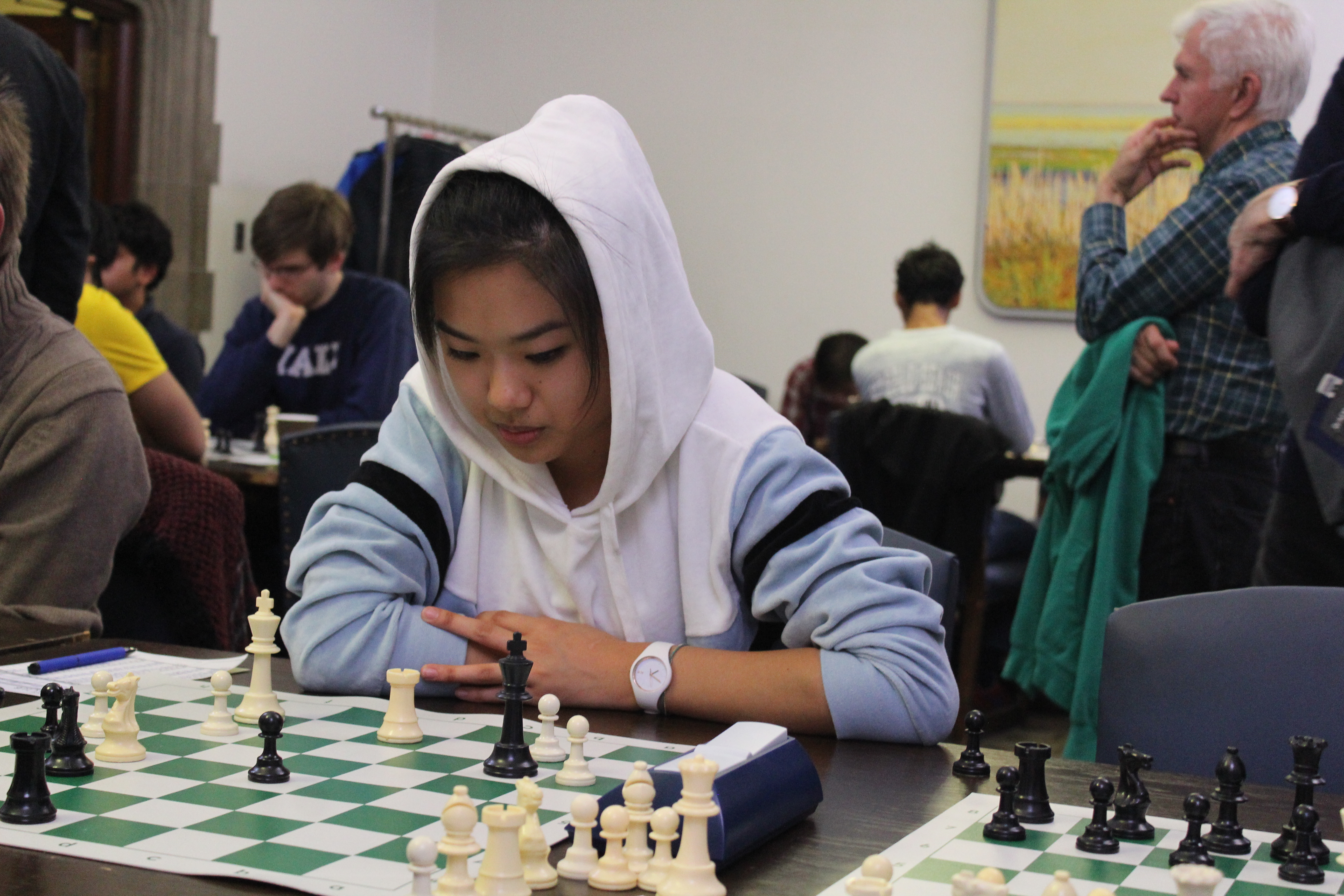
WGM Qiyu Zhou was Toronto’s most solid player, not losing a single game
With the field blown wide open and with every game point having the potential to prove decisive, the last round could easily become very stressful for the contestants. It seemed to be the perfect time for a pause allowing the players to unwind and catch their breath. Thankfully, the organizers had made sweet arrangements for this special occasion: a Saturday chess-pub night was on the tournament schedule, providing the participants with a unique opportunity to socialize in a friendly environment, have some yummy appetizers and relax before the last round.
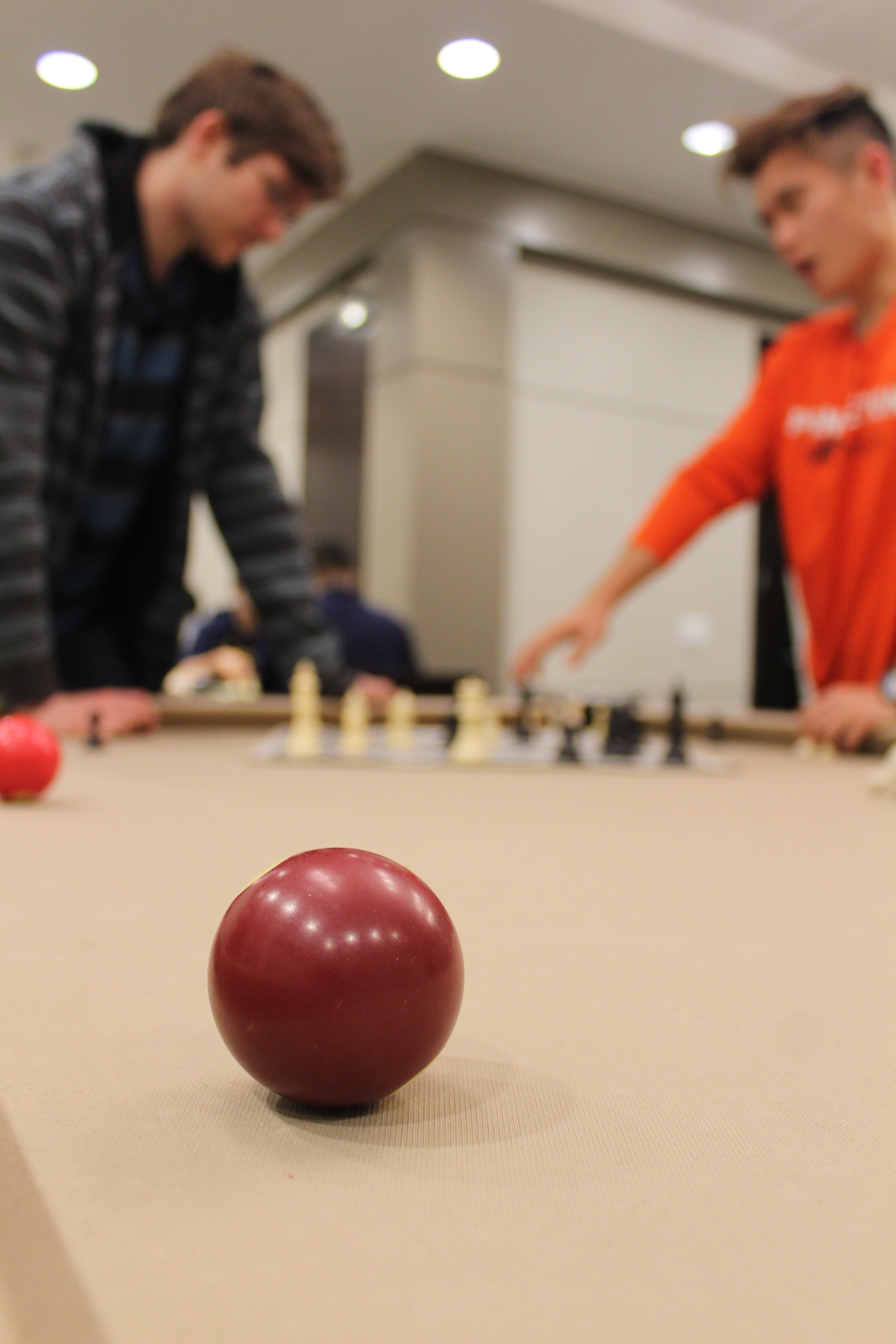
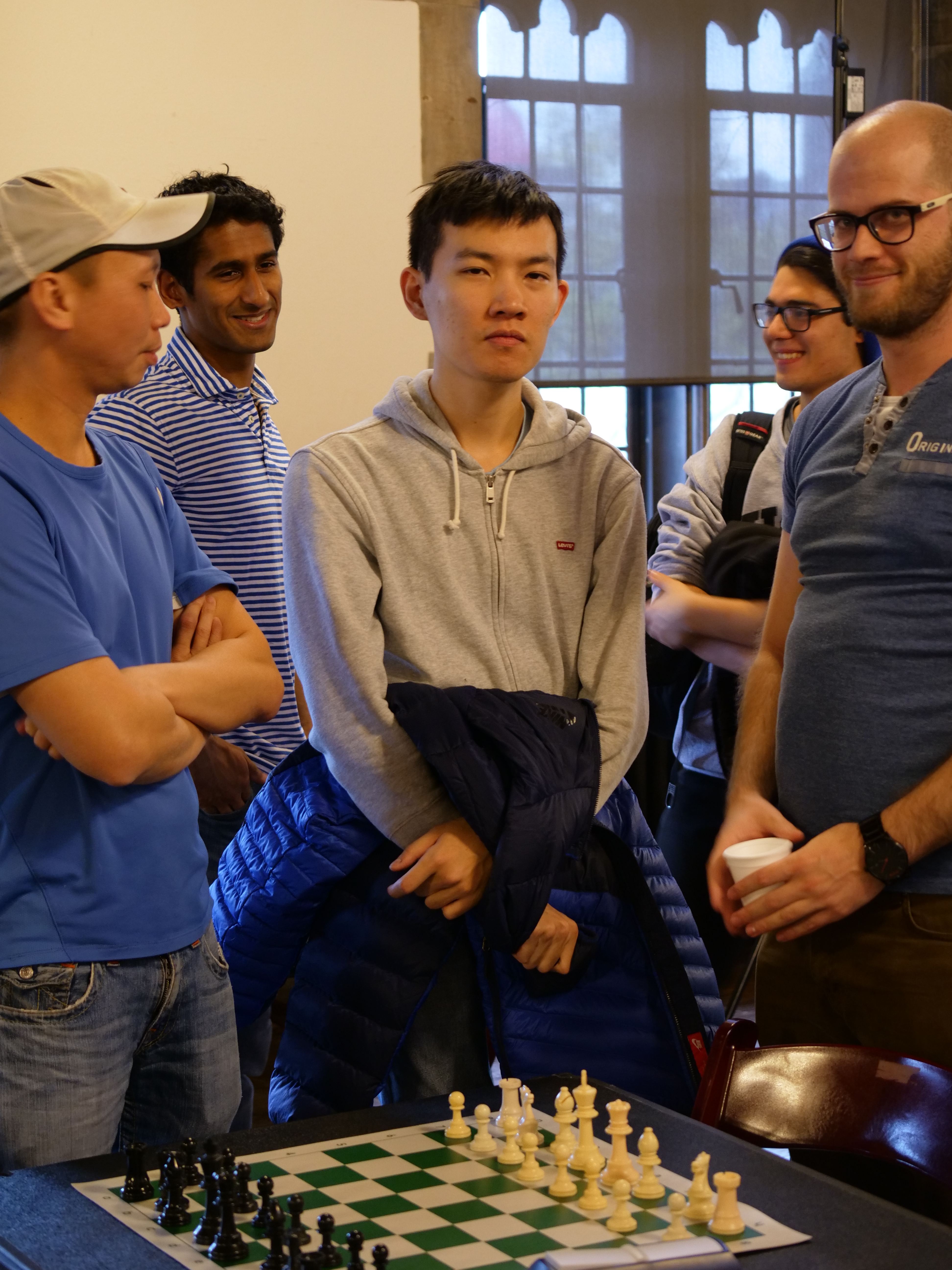
Is this chess analysis happening on a pool table or are we witnessing a new way of playing bowling?
Unfortunately, new problems arose when three of the players were not allowed to enter “The Fortunate Fox” because they were only 18 years-old. When this happened, the rest of the squad, in a really moving gesture, did not just send these first-years back to their beds but decided instead to show solidarity and look for another place, where everybody could enjoy the social event together. But where could such a place be found? Thirty people, walking around the city on a Saturday night are not easy to fit in any restaurant without a prior booking.
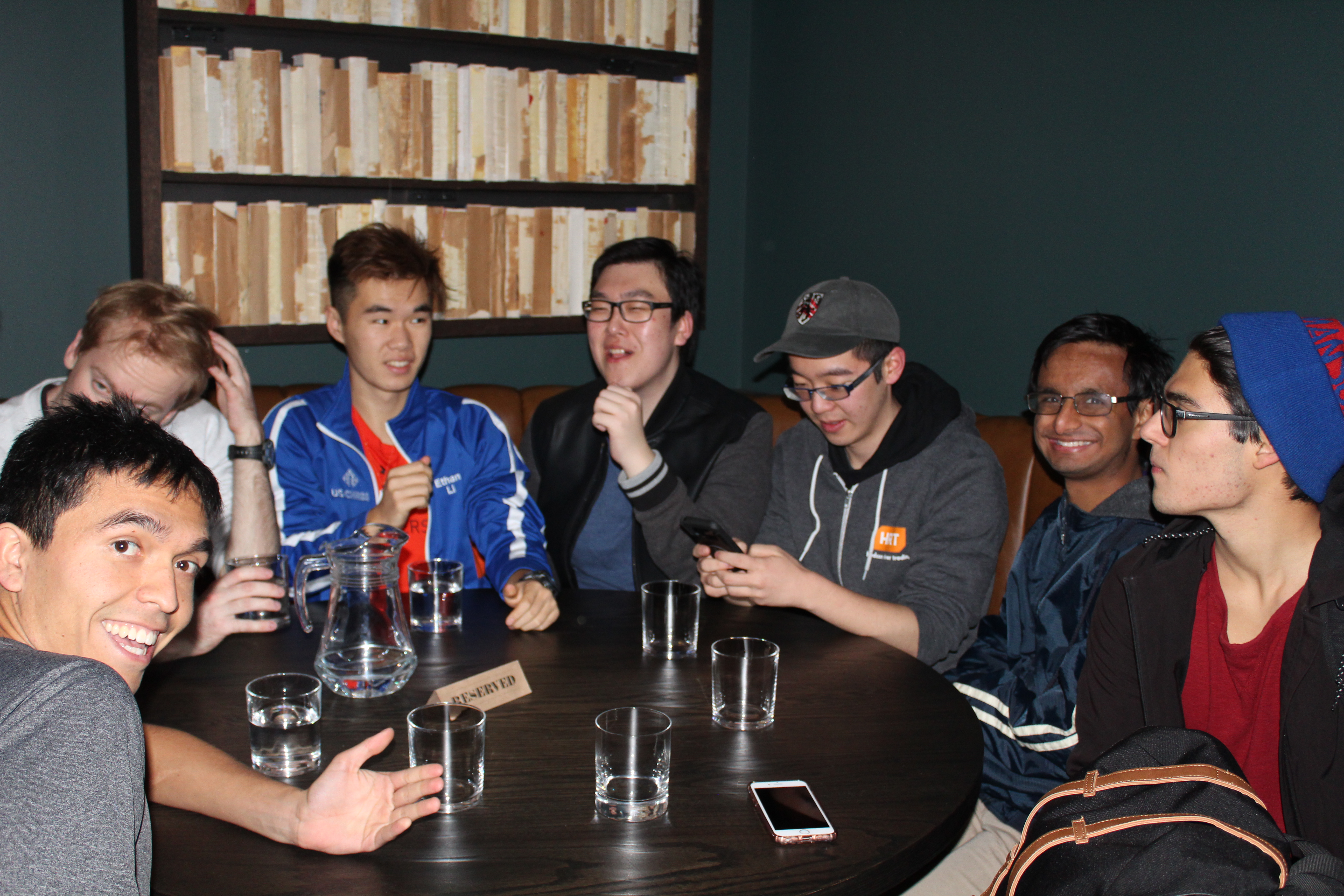
Just to dispel with any suspicion this liquid you see on the table is just H2O
As time went by and no solution was in sight, the players were beginning to split up, leaving the organizers with a sad feeling of hopelessness. “Don’t worry!”, said to me one of my colleagues. “They look very happy! Each of them is doing their own thing! They’re not upset or mad!” “Well, that’s what concerns me, Brett”, I replied. “They are having a good time separately, while we could be having a wonderful time together”.
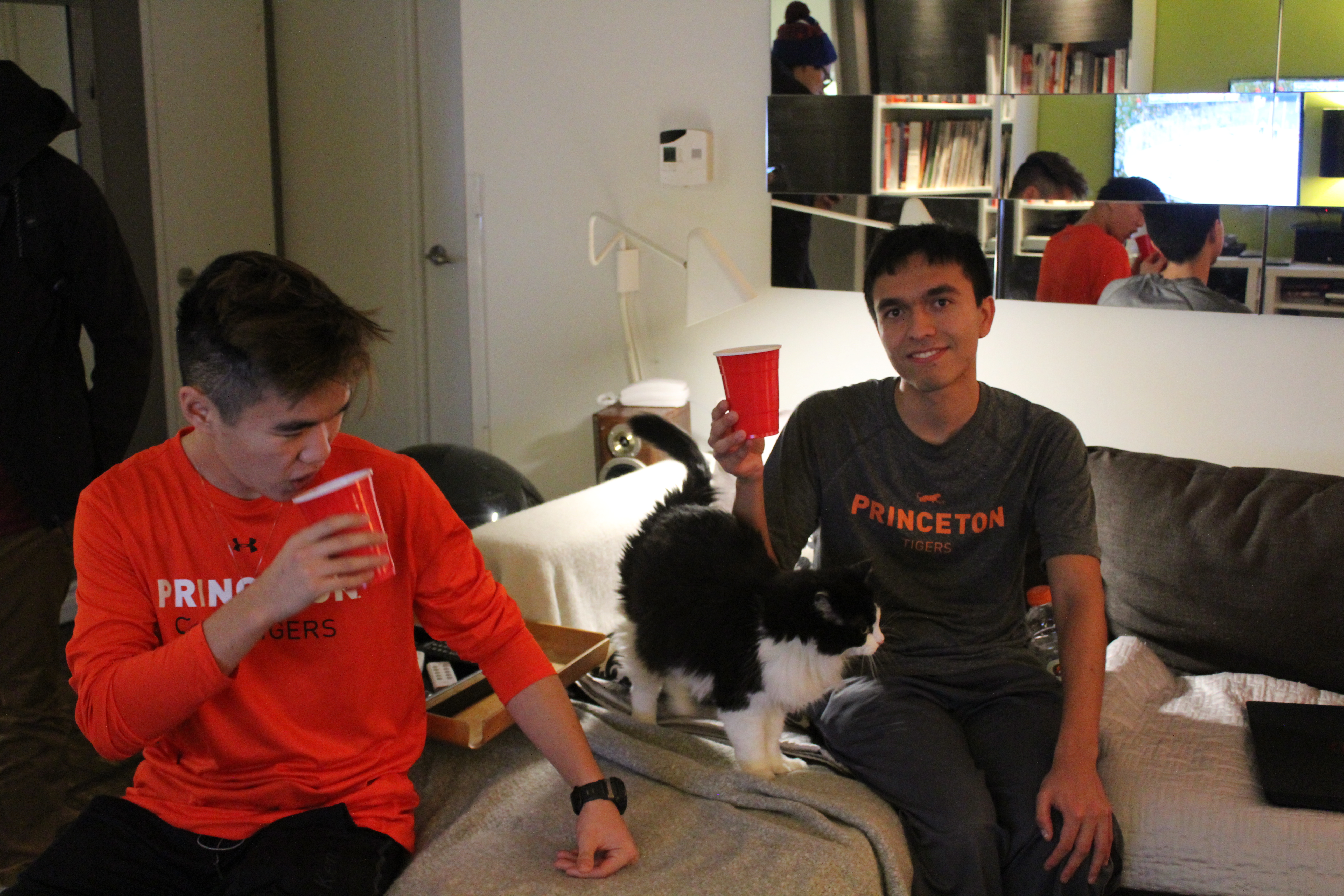
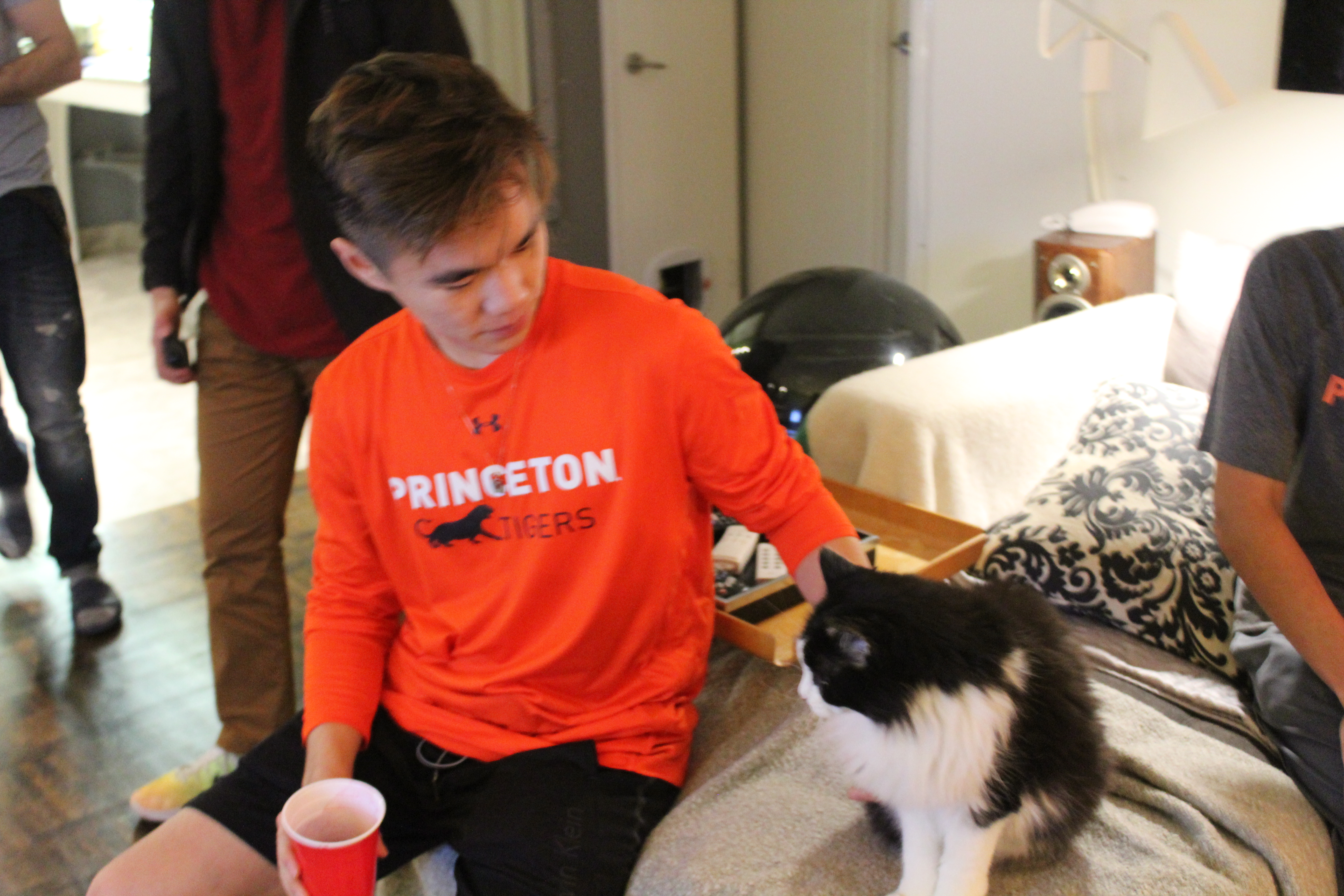
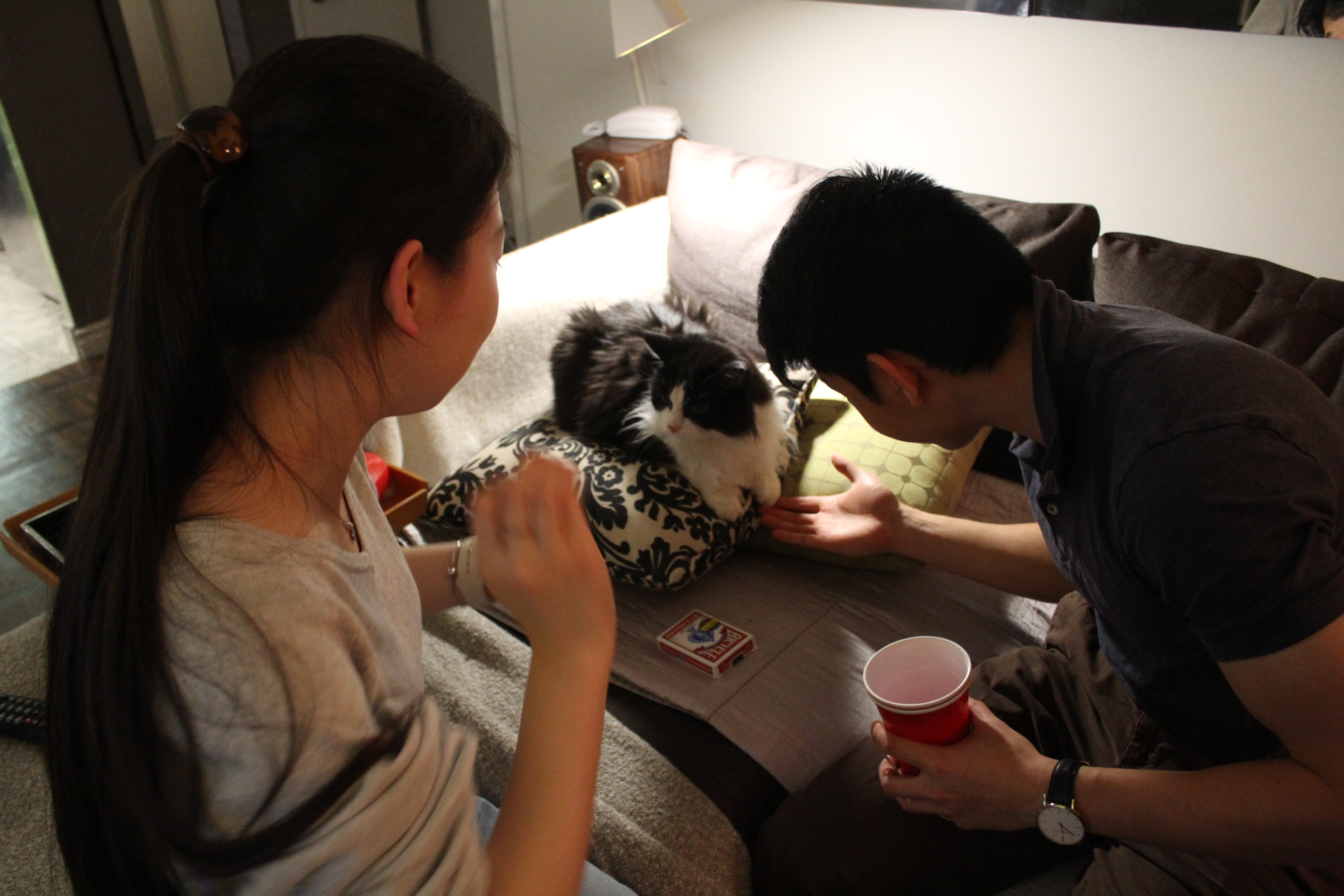
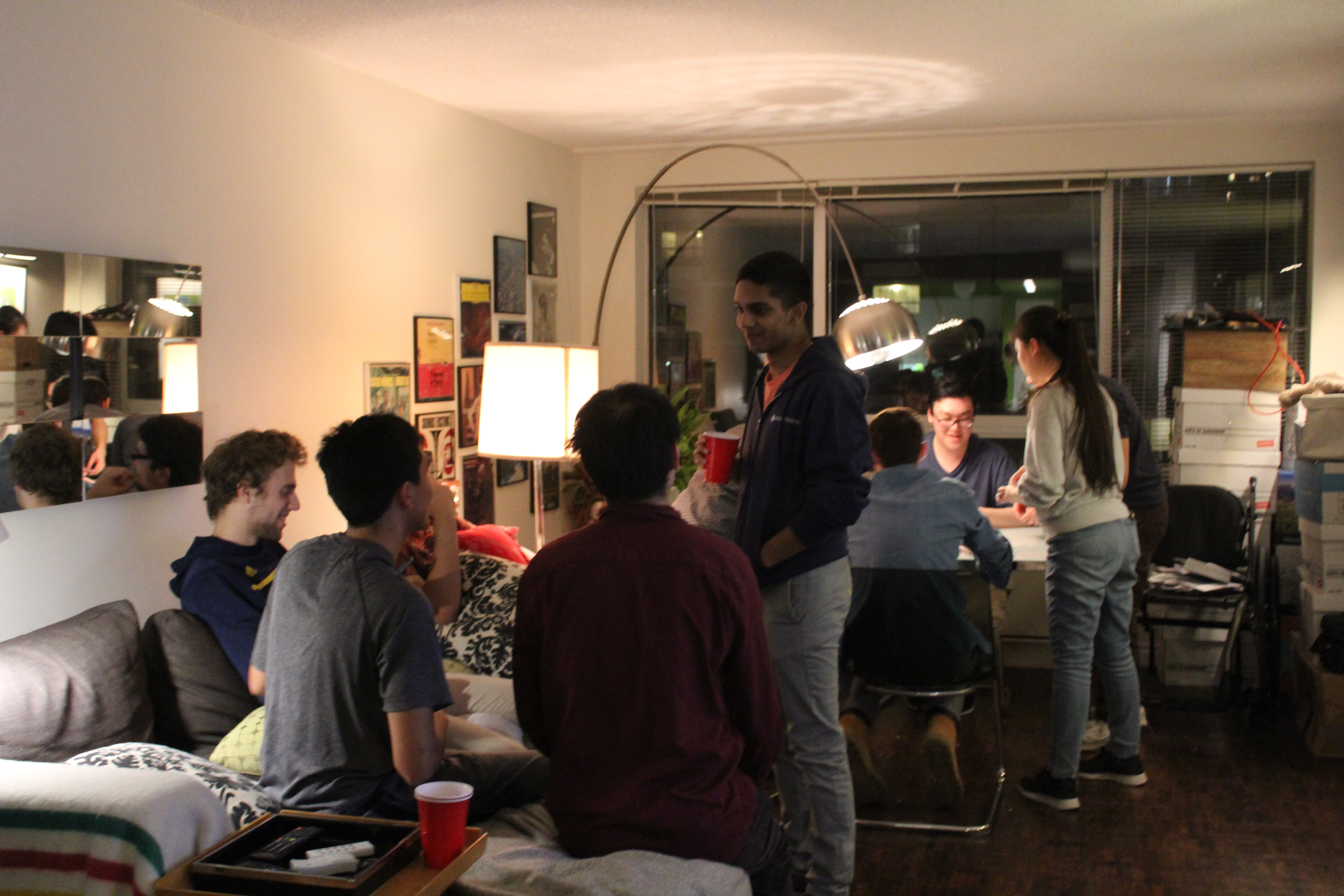
Then a crazy idea dawned on me and it really was irresistible. They say that urgent times require urgent measures and this was definitely one such moment. I had to make up my mind really fast: “How many people do we have”, I asked. There were about 25 players still around. “Okay people. Come over to my house. All of you! Let’s go get some pop and chips and head over to my place.” And so it happened. We took the party to my apartment, where we were joined by my roommate’s two cats, Cleo and Luna!
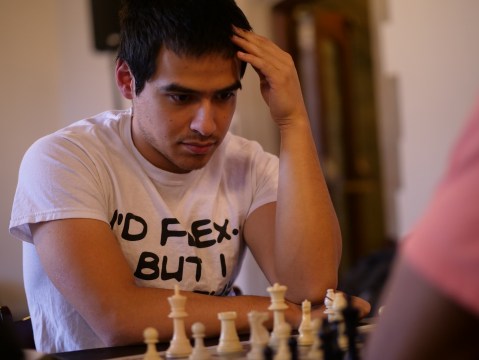
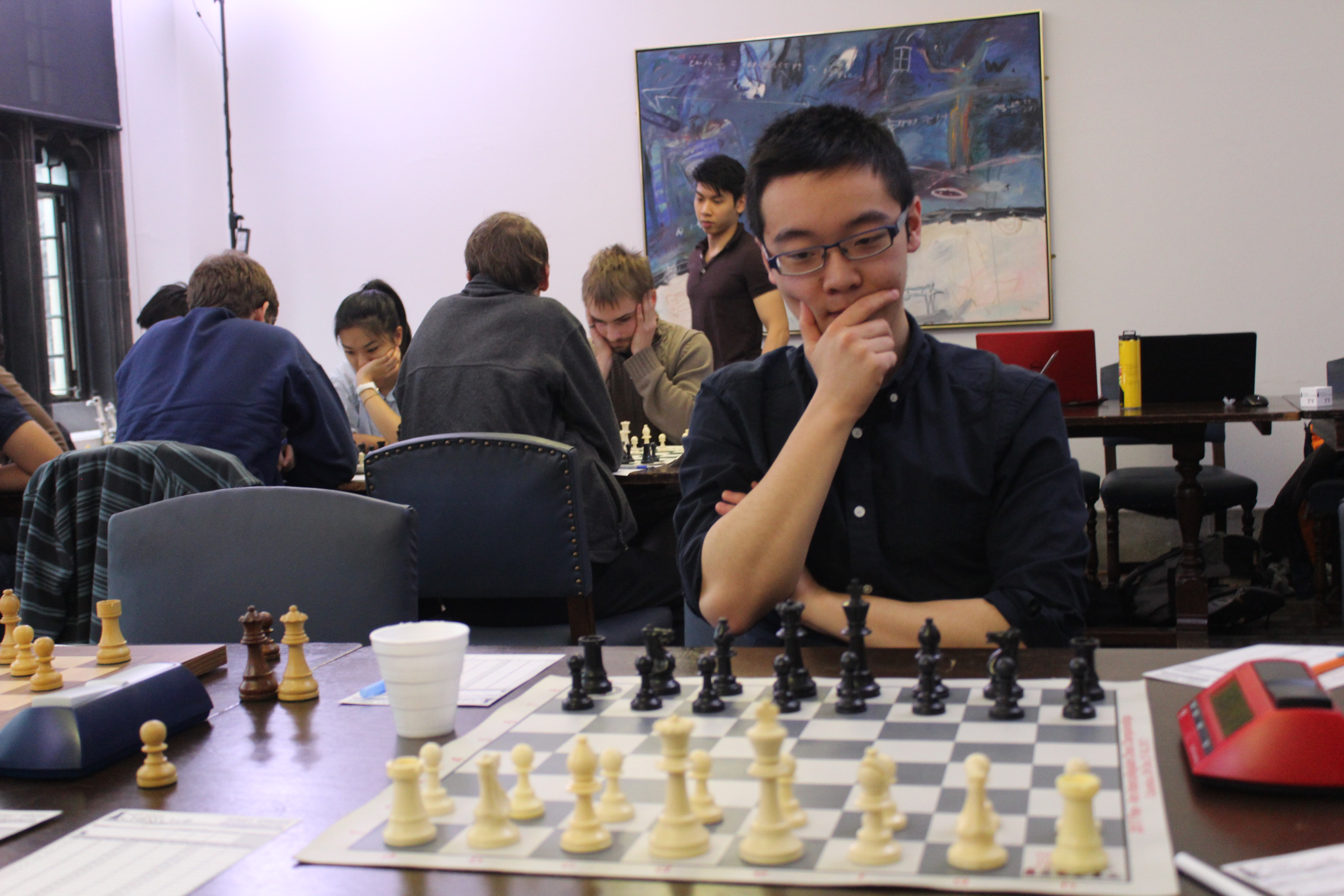
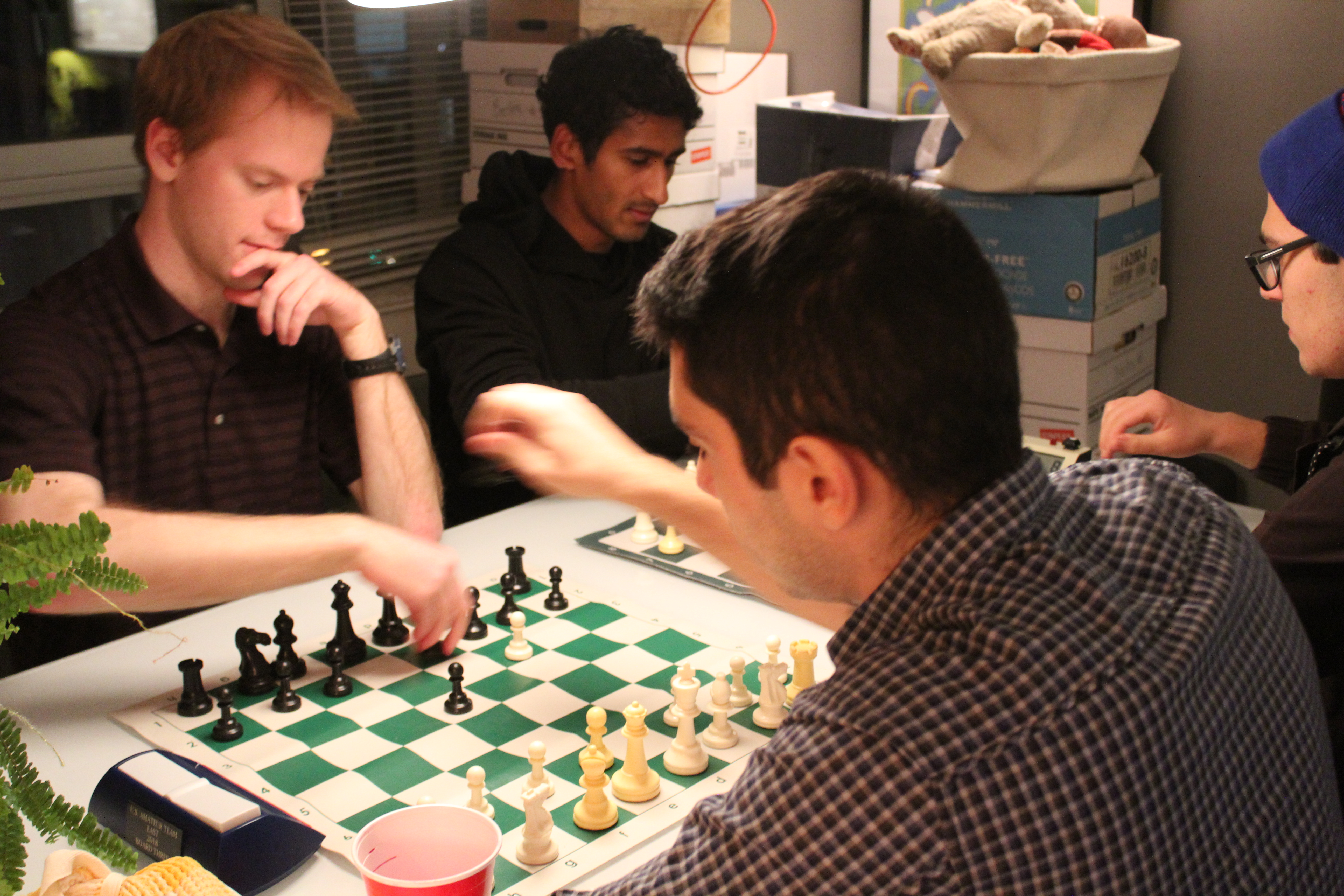
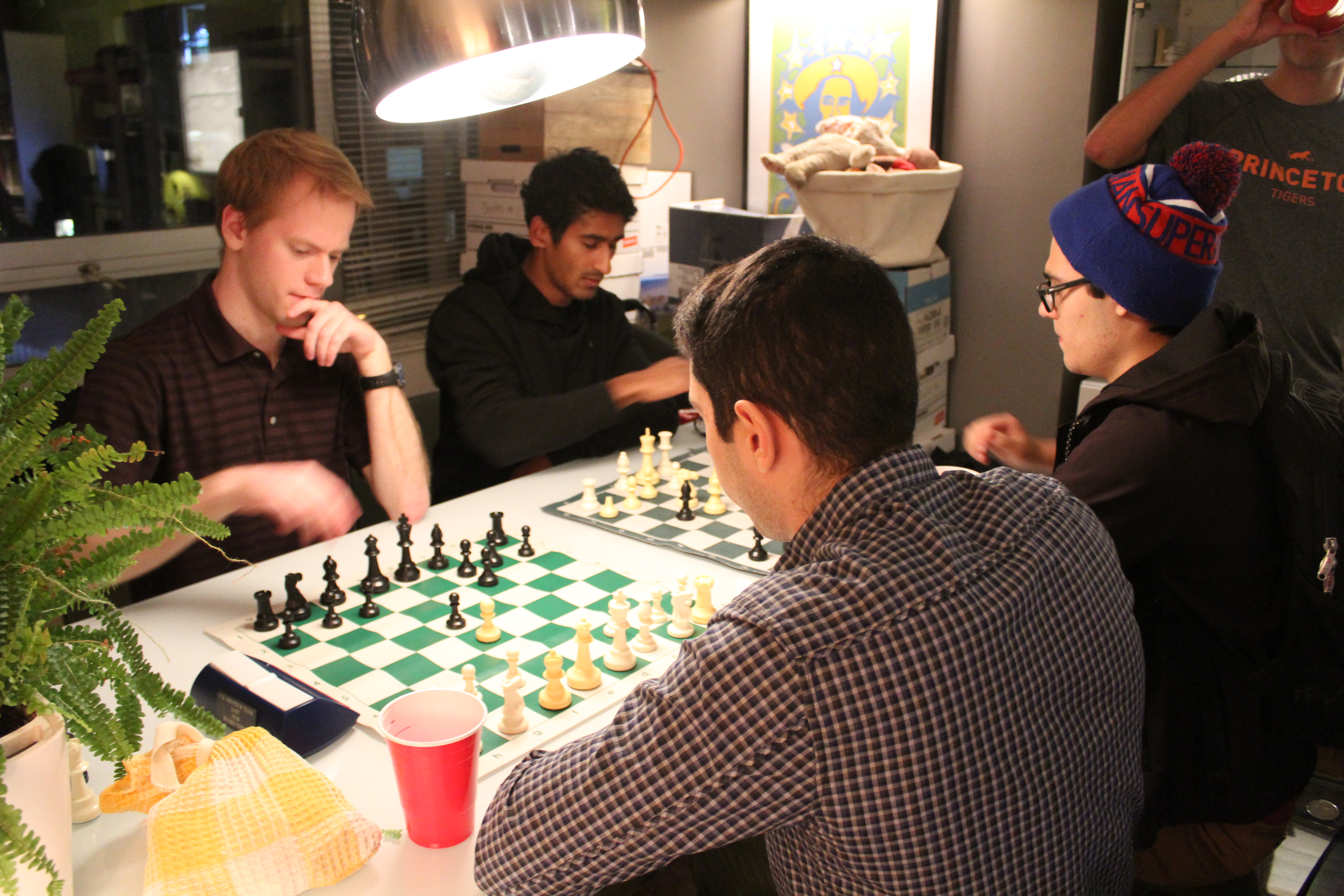
A Queen drop on e7 left Isaac Martinez in awe and anguish
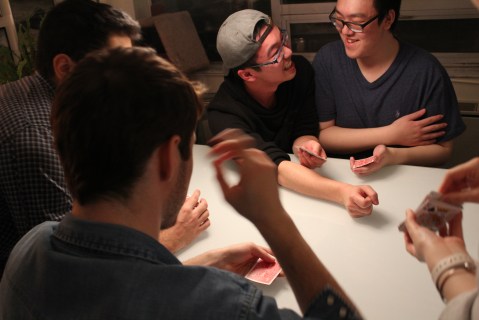
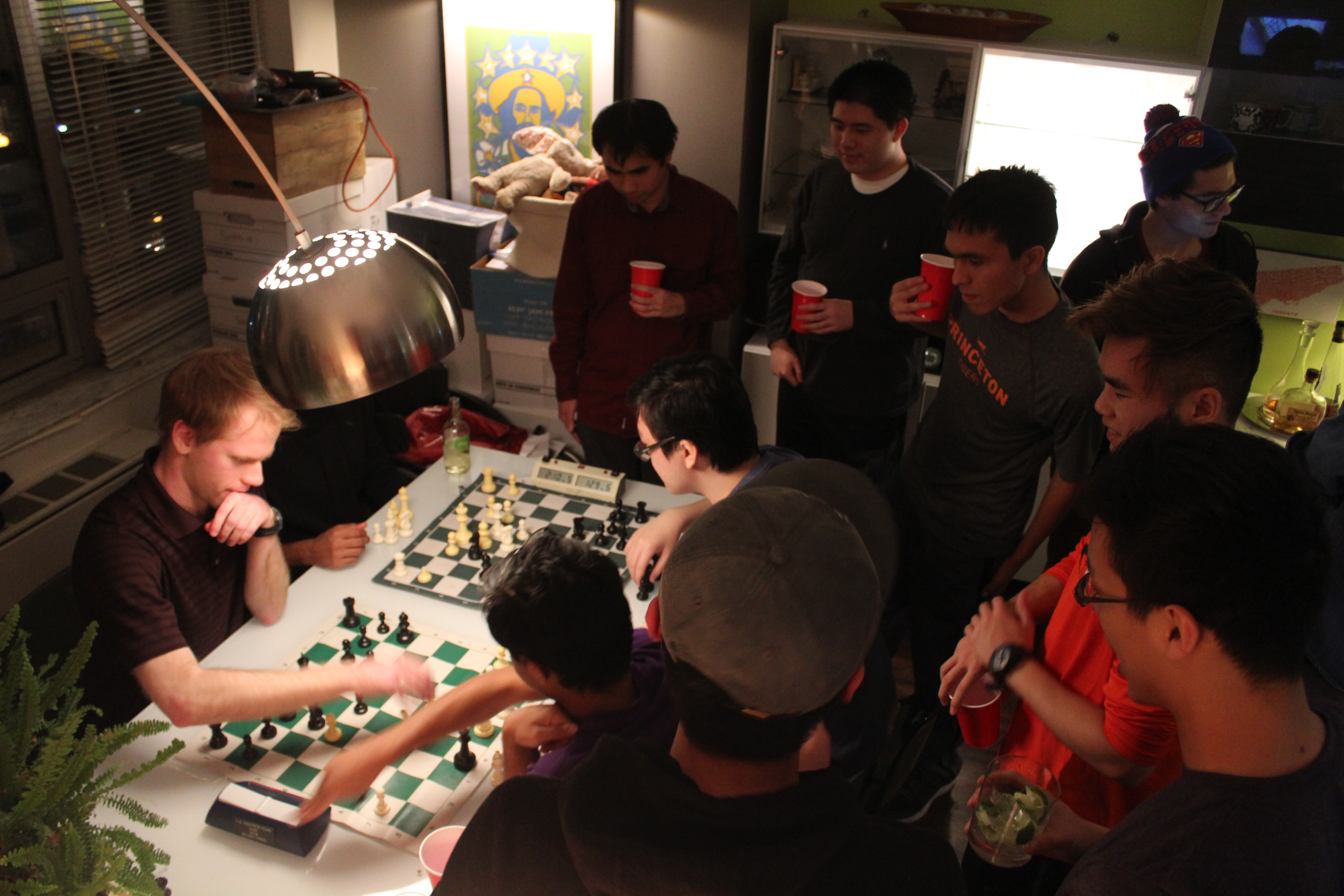
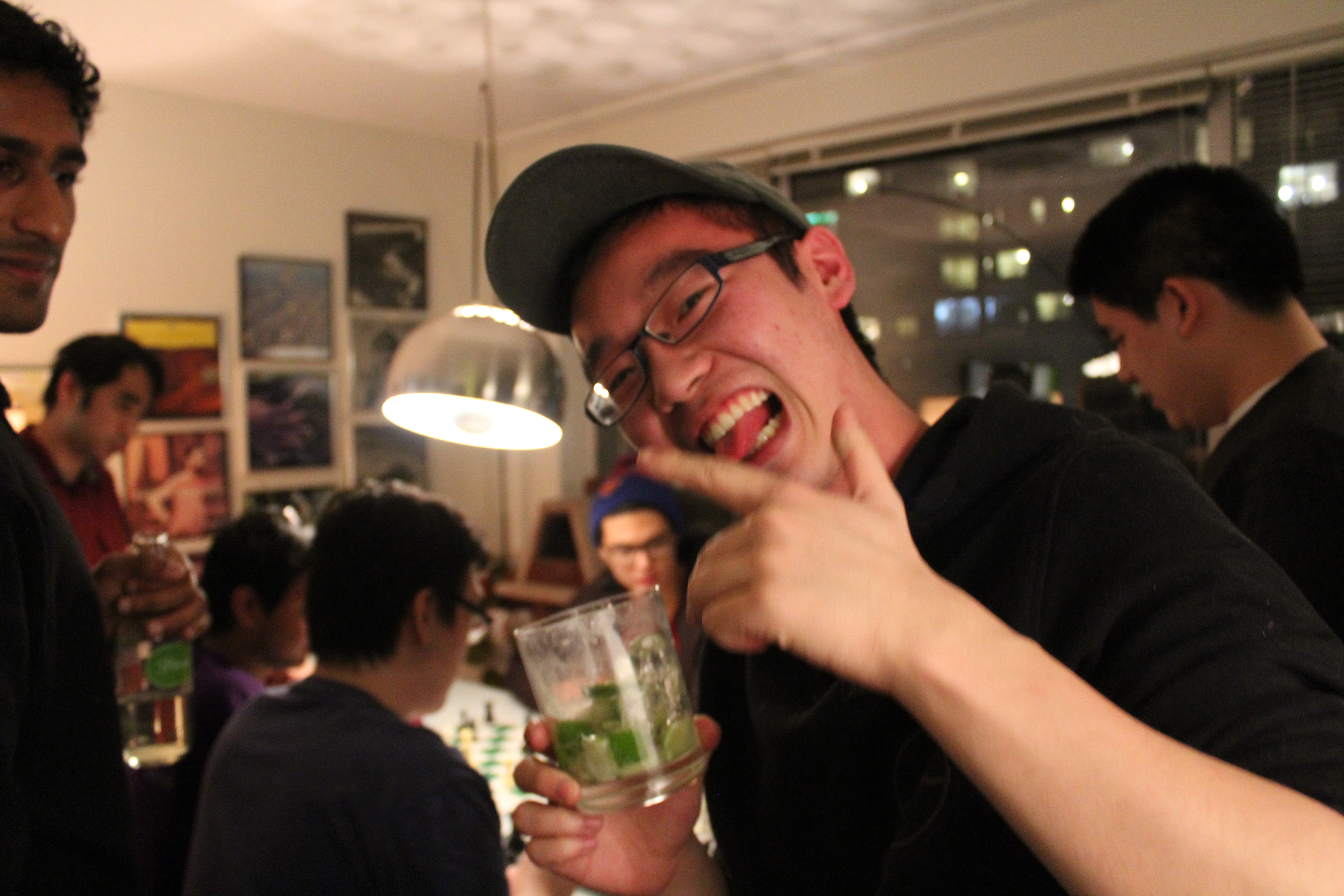
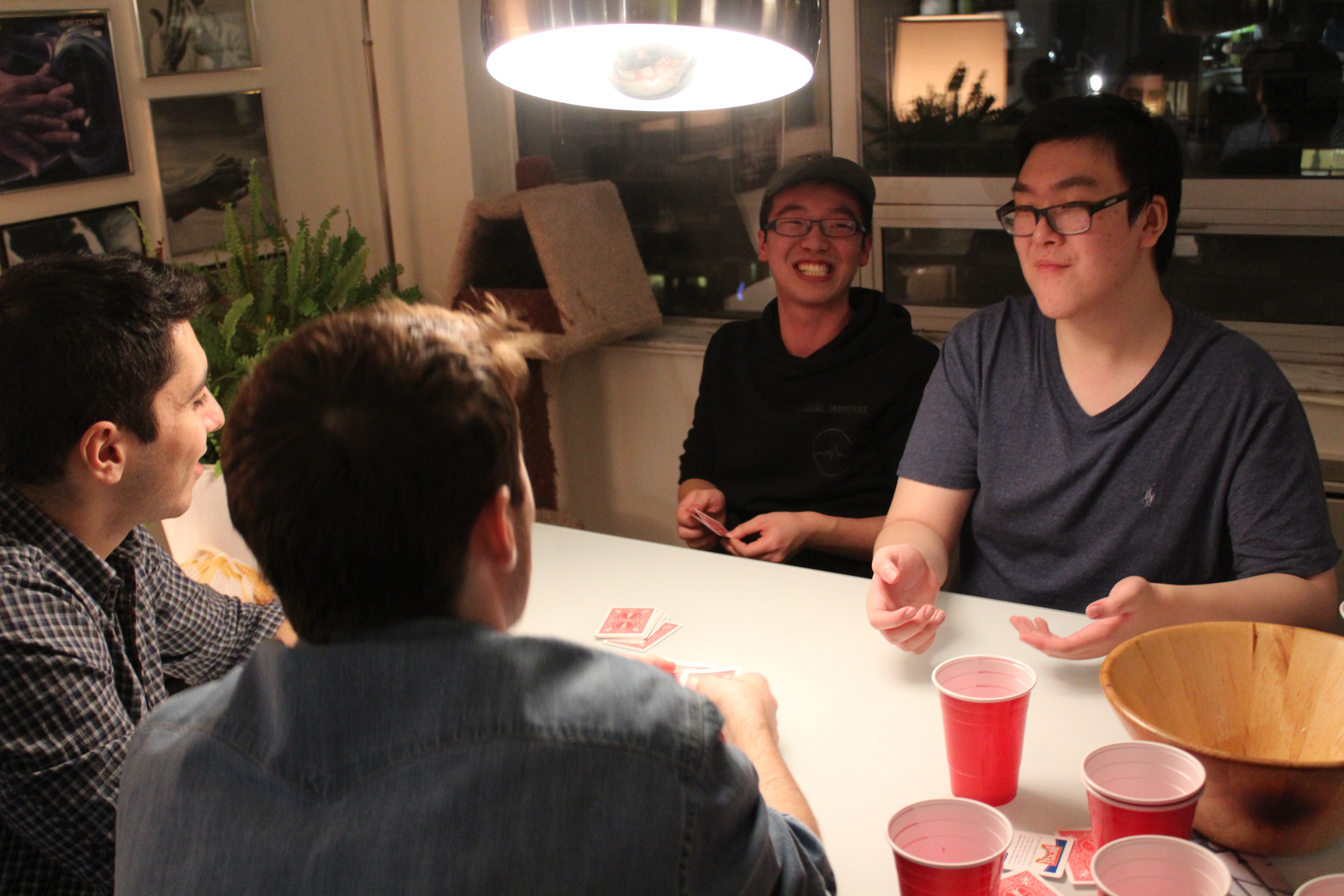
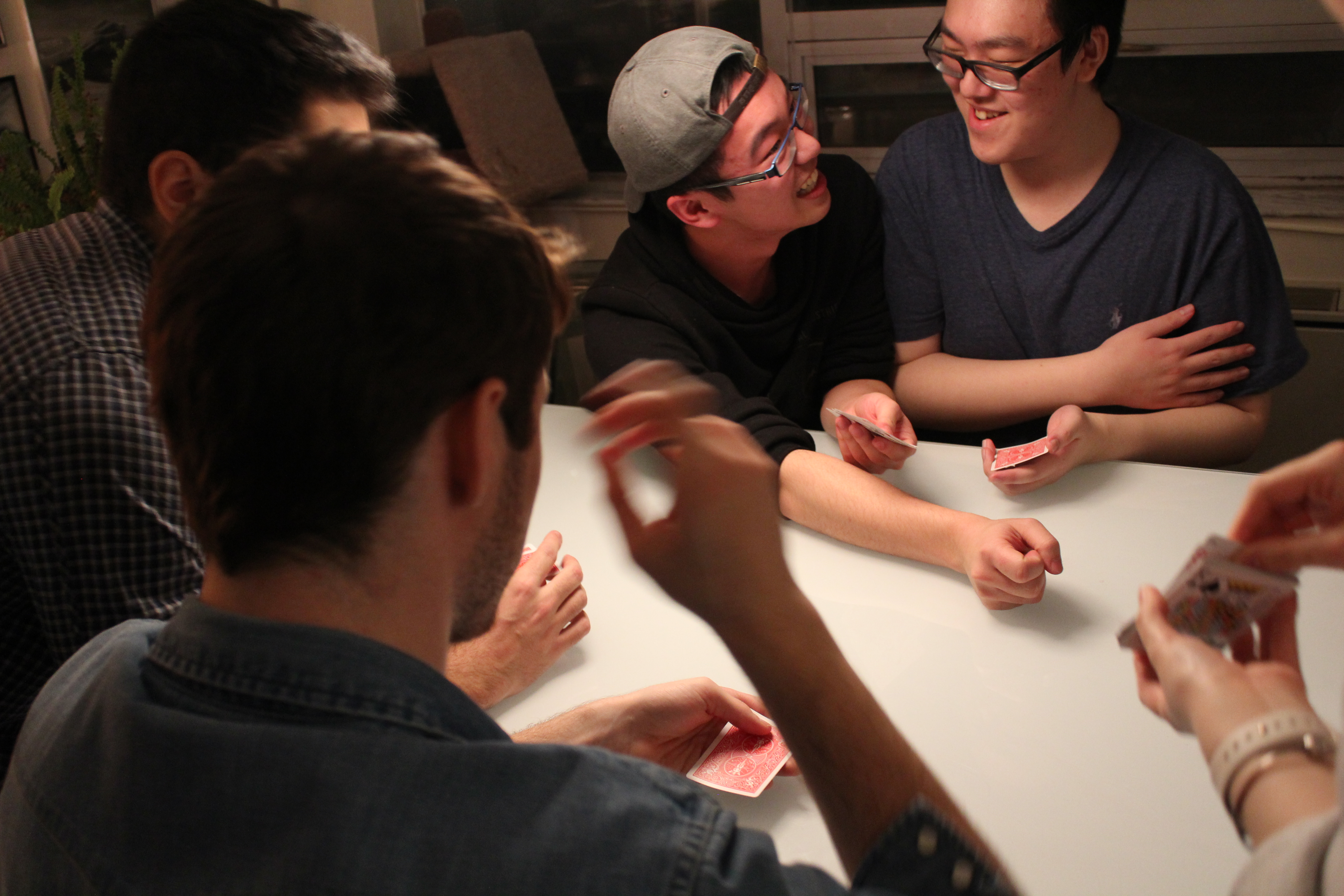
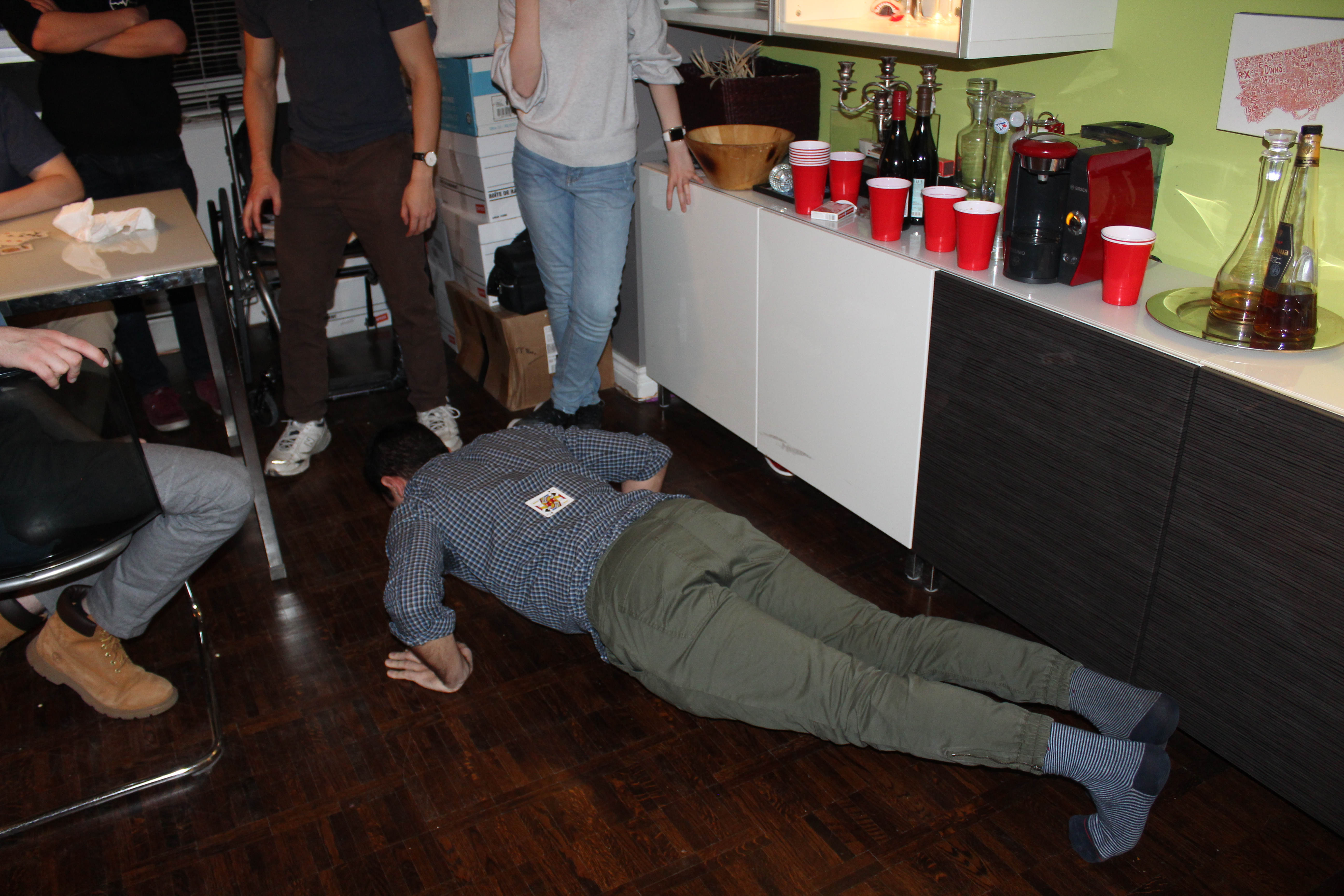
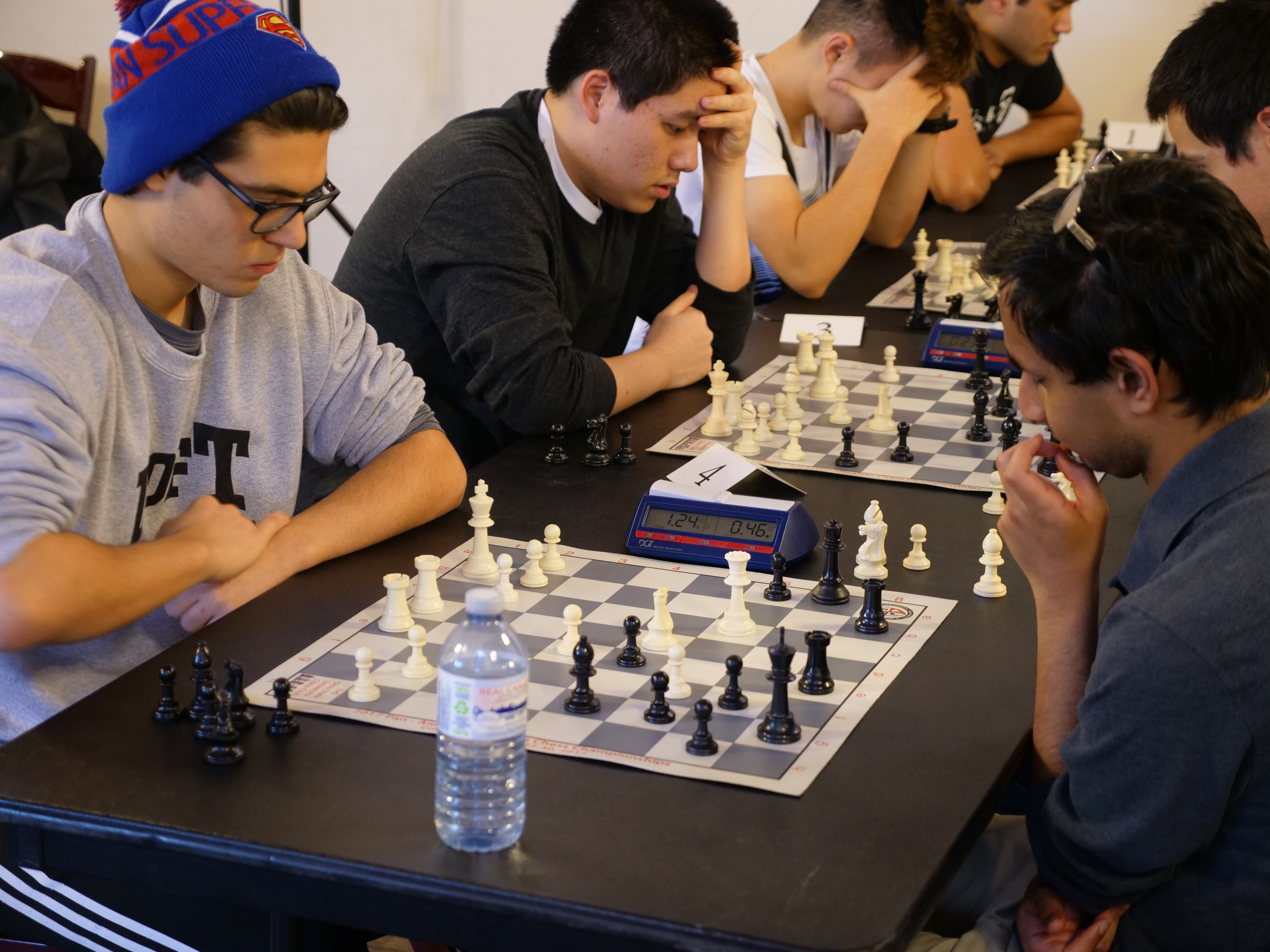
I will not go into details about what took place in my apartment that Saturday night, as what happens in Toronto should stay in Toronto, but I can honestly say that the players were a lot more open and talkative once they had a chance to meet each other in a friendly and casual environment. They played a lot of bughouse, they sang, they joked around and they even played college card games until 2 am.
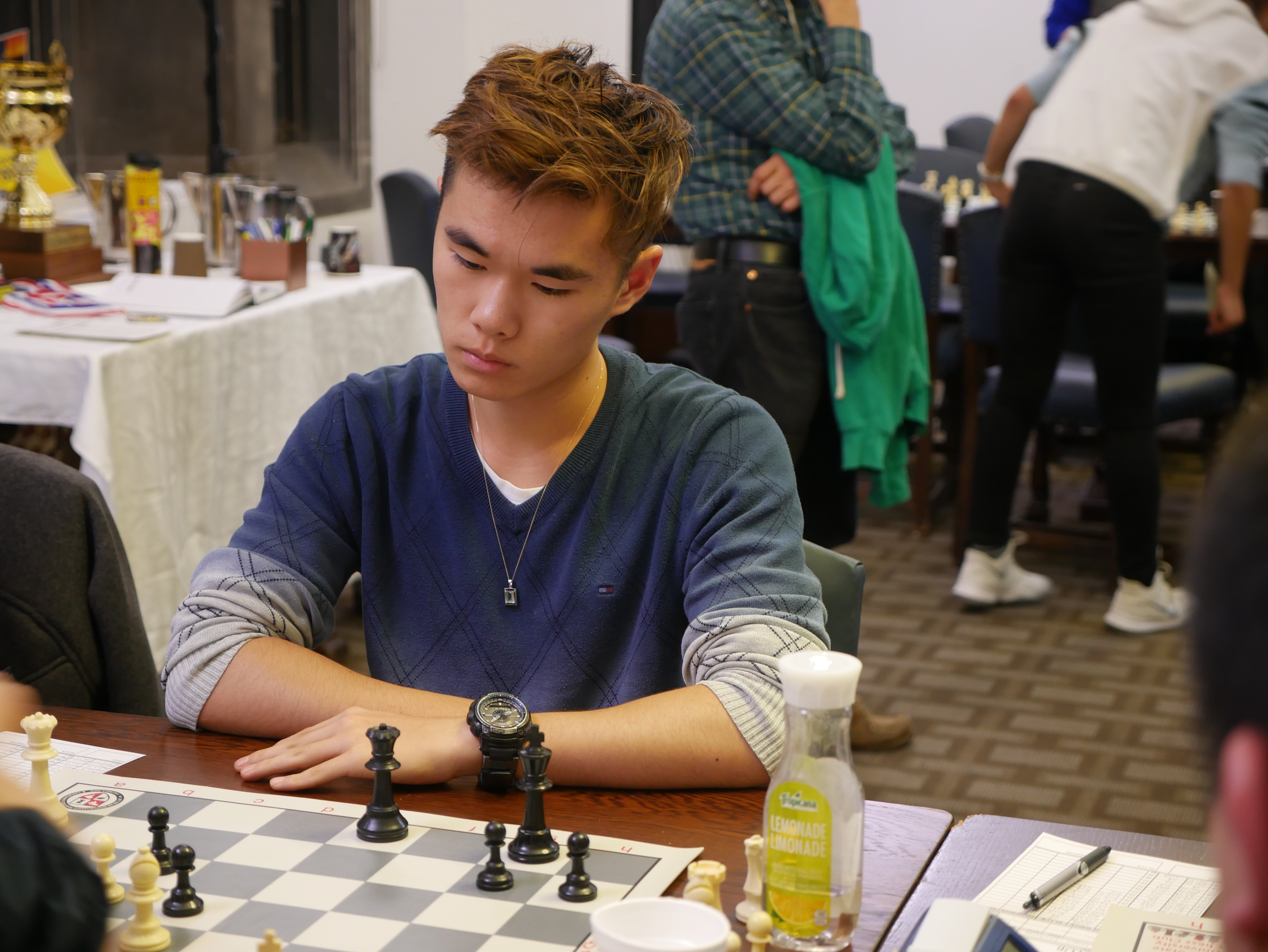
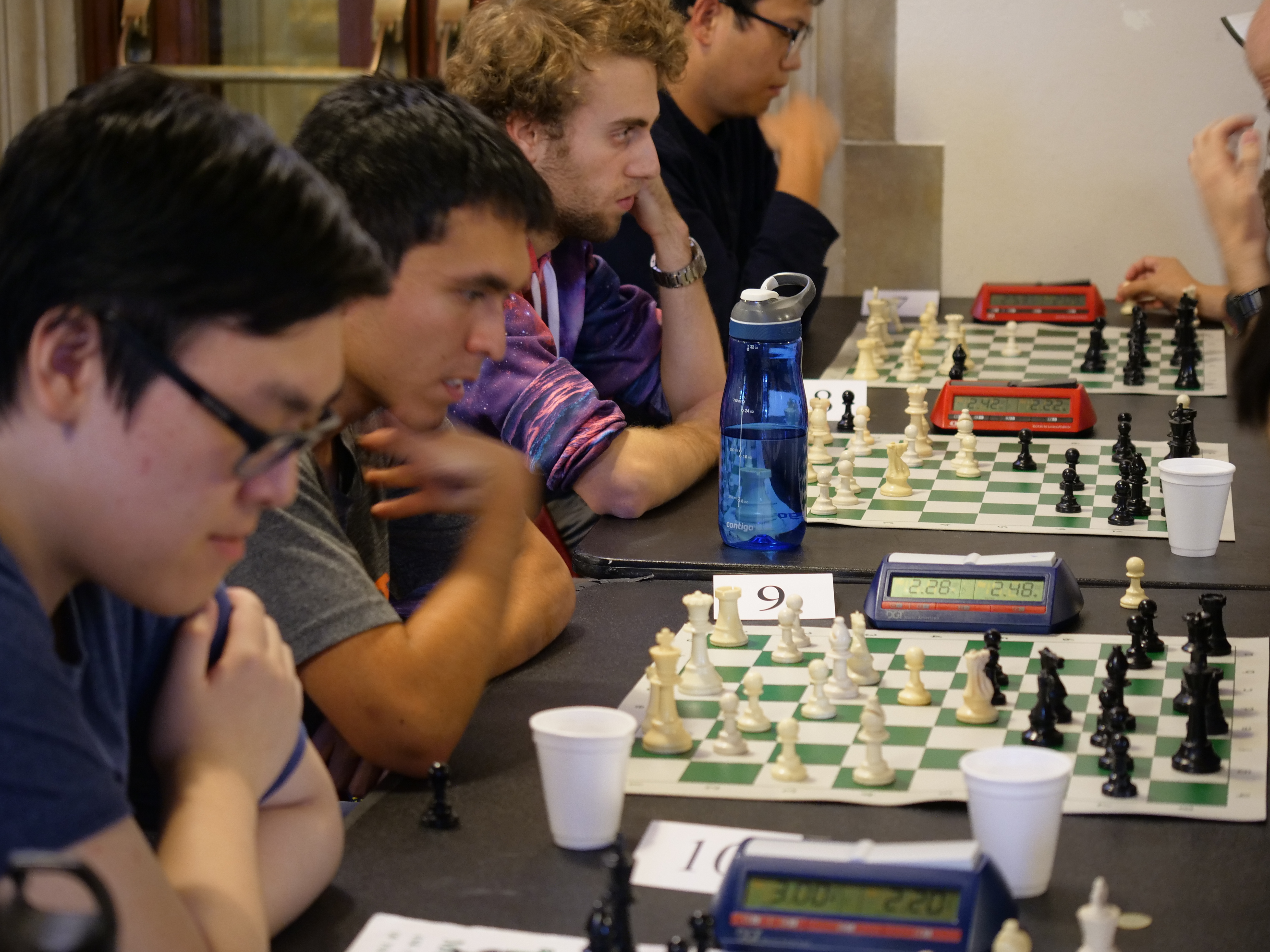
Harvard’s IM Richard Wang clarifies to NM James Fu that he’s not gonna be the last to slap his hand on the table
It was indeed a most rewarding experience and everyone seemed to have a lot fun. Besides, rebuilding a city after an earthquake is still an easier task than cleaning up a house after hosting 25 joyful chess players for a party but that’s a story for another day to tell!
What is the TD shaking there?
Day 3: The Eye of the Tiger(s)
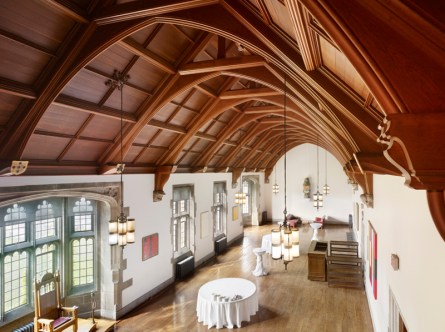
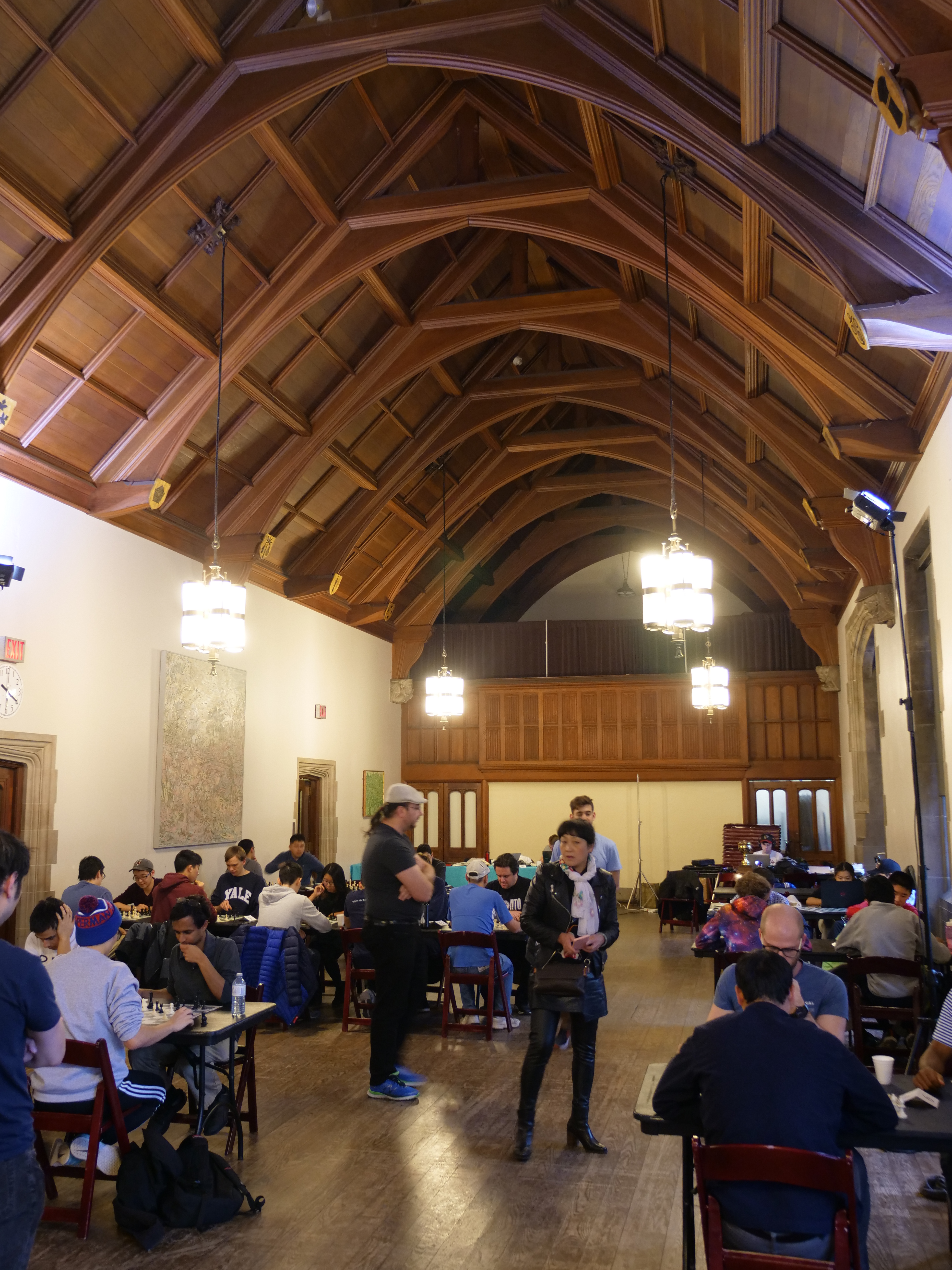
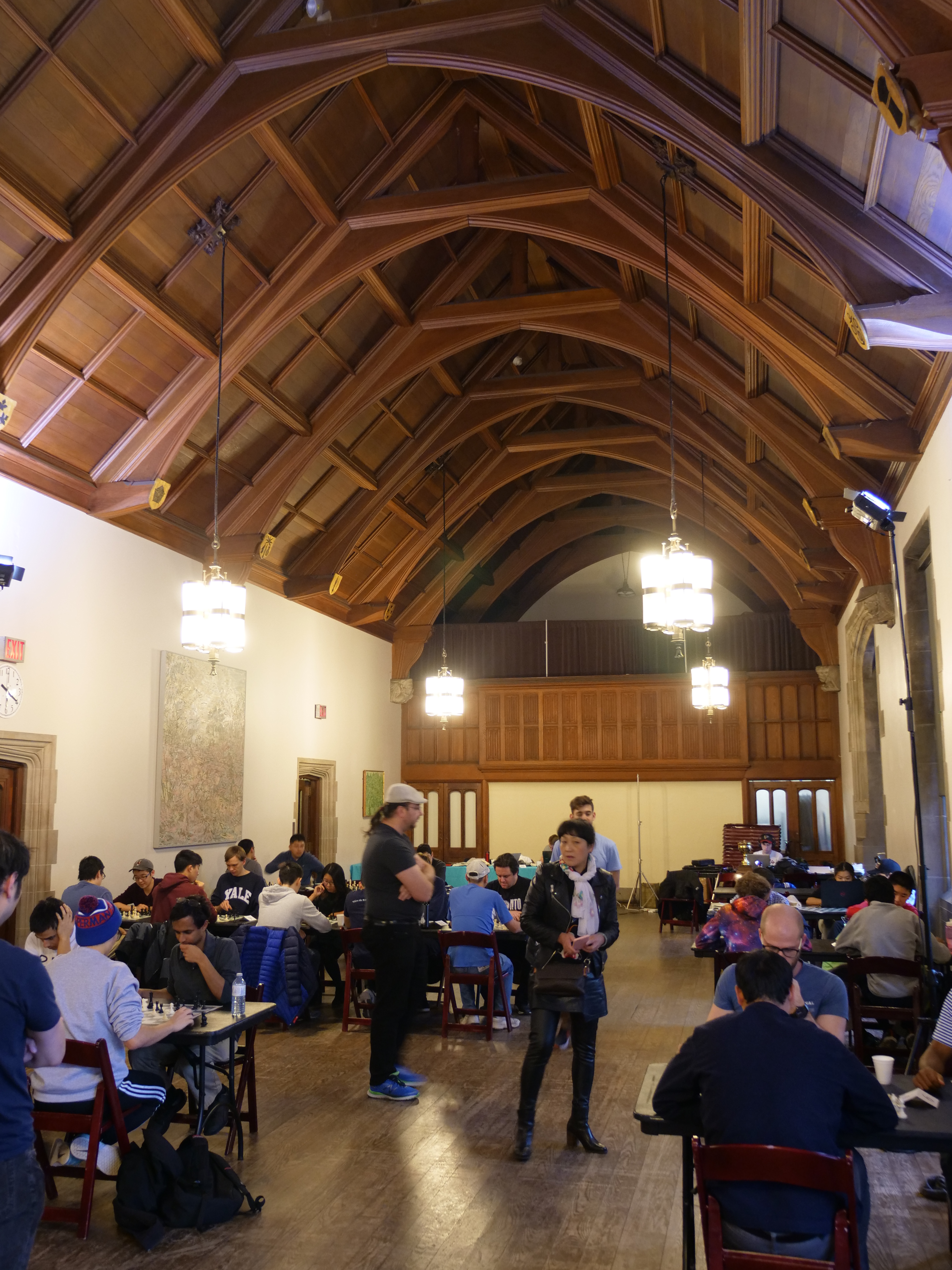
Entering the last day of the tournament, the organizers took the chess party back to Hart House. The final round was held in the famous Debates Room, which is known for its legendary debates, its vaulted ceiling, its impressive size and its elegant atmosphere. As we started the clocks, I could not help but wonder whether the party of the previous night would have any impact on the outcome of the games. We will never know the answer to that but what we do know is that the stakes were high in the final round, as three teams were tied on match points for first place, with Harvard and Michigan having slightly unfavorable tiebreaks compared to Princeton.
Hart House Debates Room stands out with its vaulted ceiling
As the room steadily emptied, the result per round rested on fewer and fewer individuals, with drawn game followed by drawn game. Harvard was left with a one point lead against Yale (2 – 1) with a single game to finish but needed to score at least half a game point more than Princeton to catch up with the “Tigers”. Princeton had a one point margin over University of Toronto A (1.5 – 0.5) with two boards left to play. Finally, Michigan found themselves a point ahead against University of Toronto B with three boards yet to finish (1 – 0) and they needed to score at least one more point than Princeton to catch them in the tie-breakers.
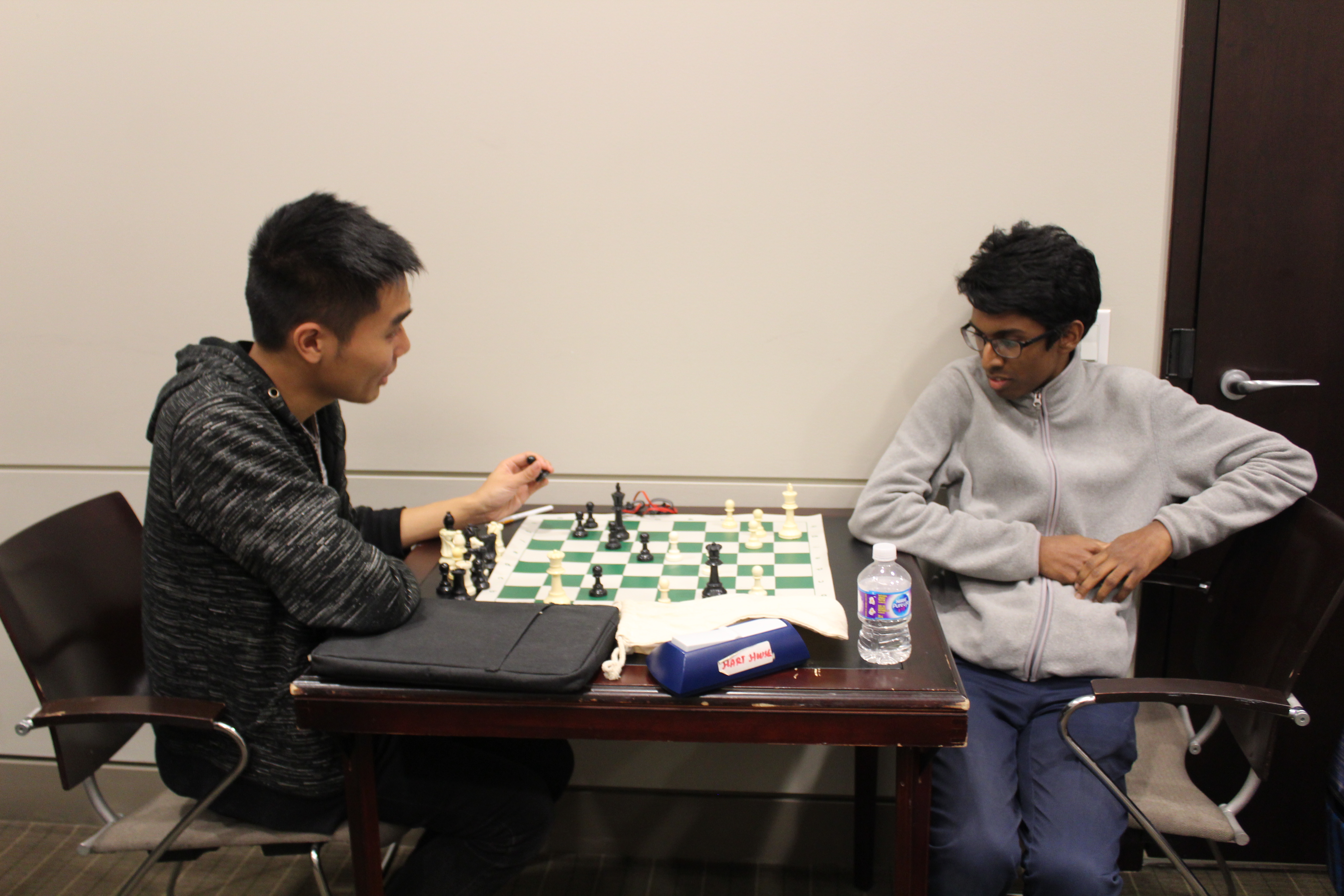
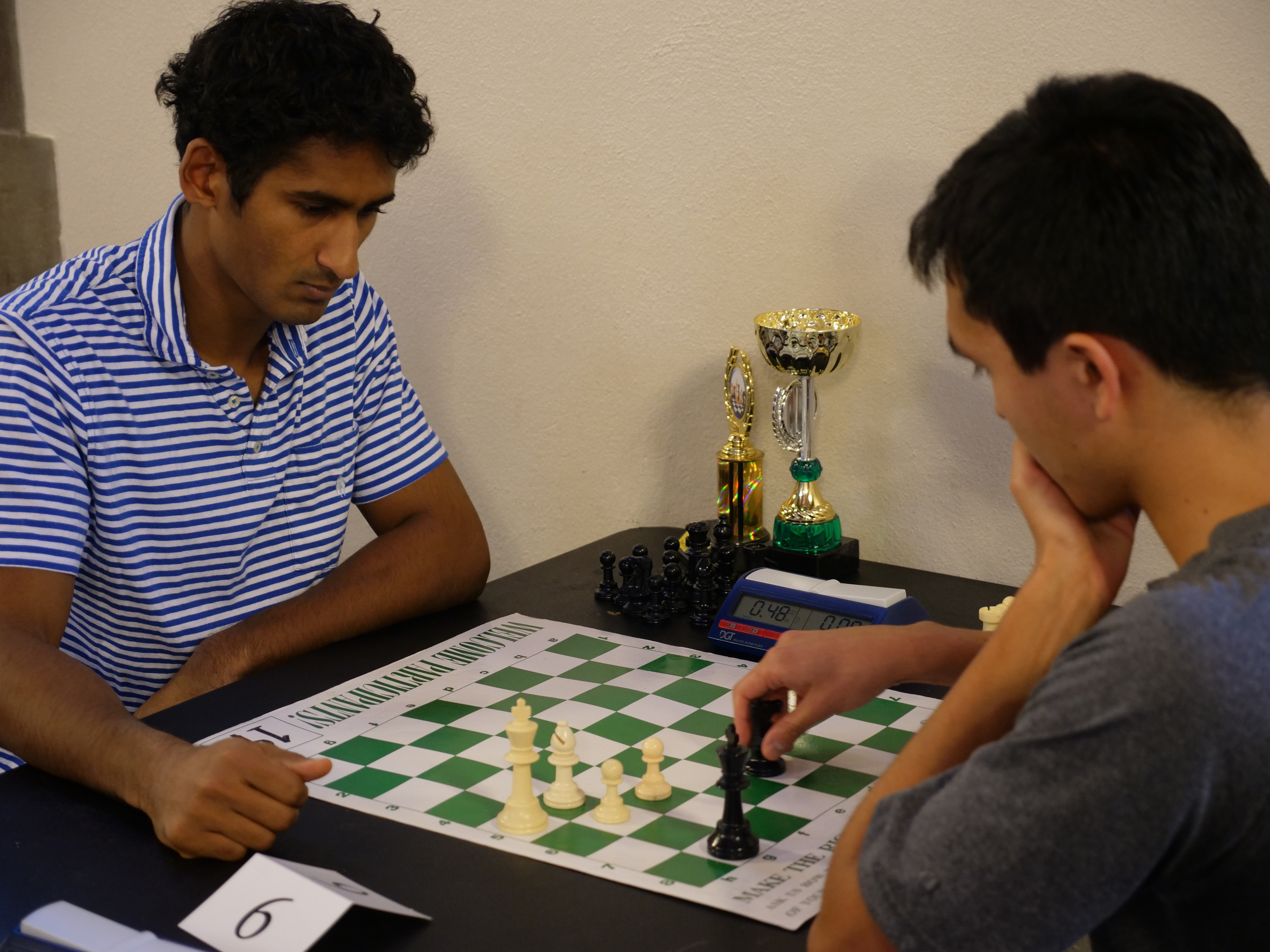
Qiyu Zhou is facing Safal Bora in a game that would determine the winner of the prize for best 2nd board
Then, unbeknown to the players who were all under time pressure, Princeton suddenly clinched its match against Toronto A with a win and a draw in the remaining boards, scoring a 3 – 1 overall victory. This meant that Harvard would have to win by at least 3.5 – 0.5, which was no longer possible at the moment, while Michigan needed to win its match by 4 – 0, a feat which was very hard to achieve. Indeed, when the Crimsonites and the Wolverines won their respective matches, it was to no avail. Princeton was victorious! Michigan and Harvard had to confine themselves to a shared second place, with Michigan having the stronger tie-breakers. Next in the final rankings were Yale, Toronto B and Toronto A. (You can view the results and team standings here).
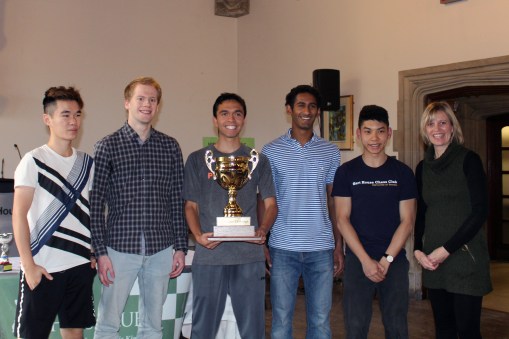
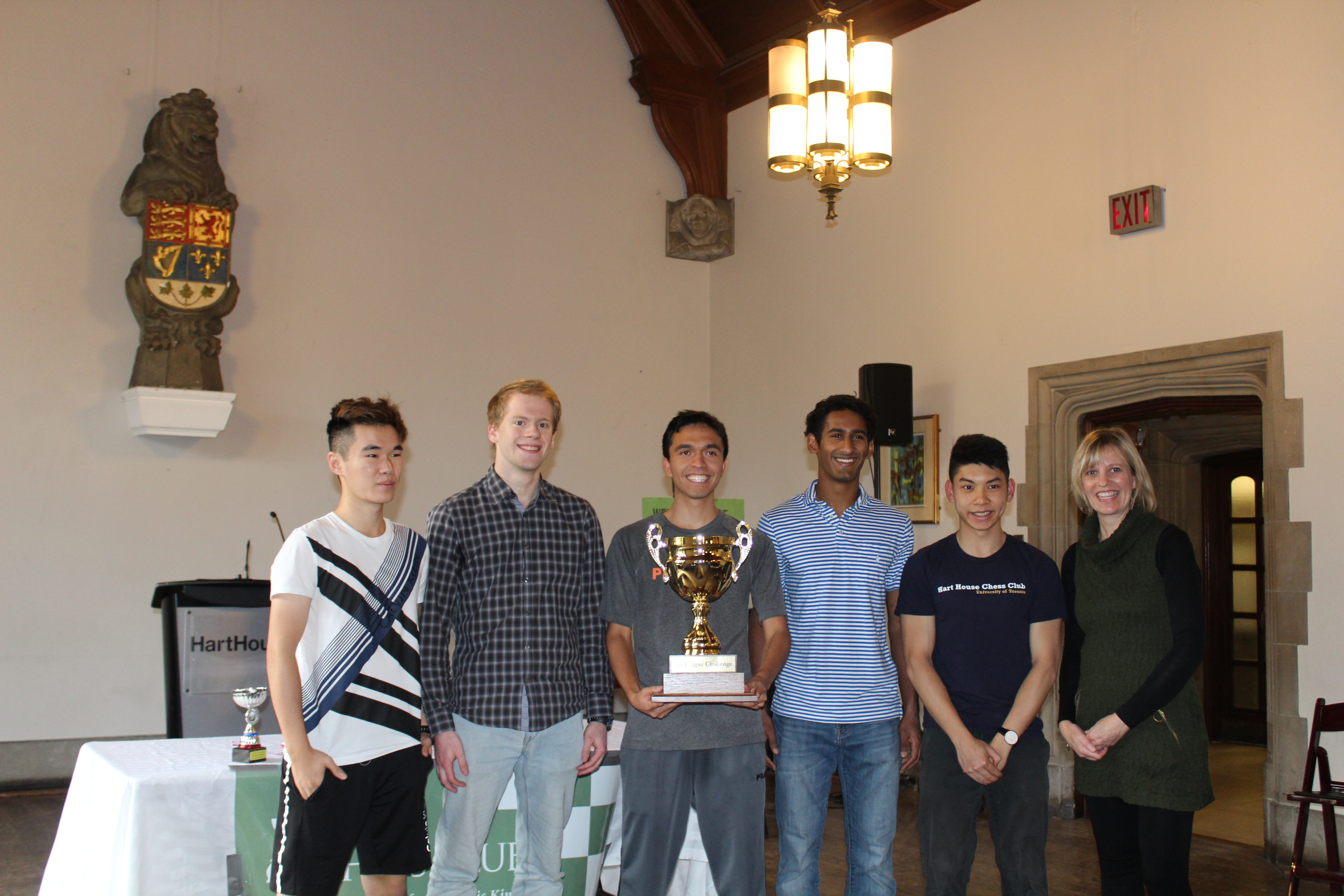
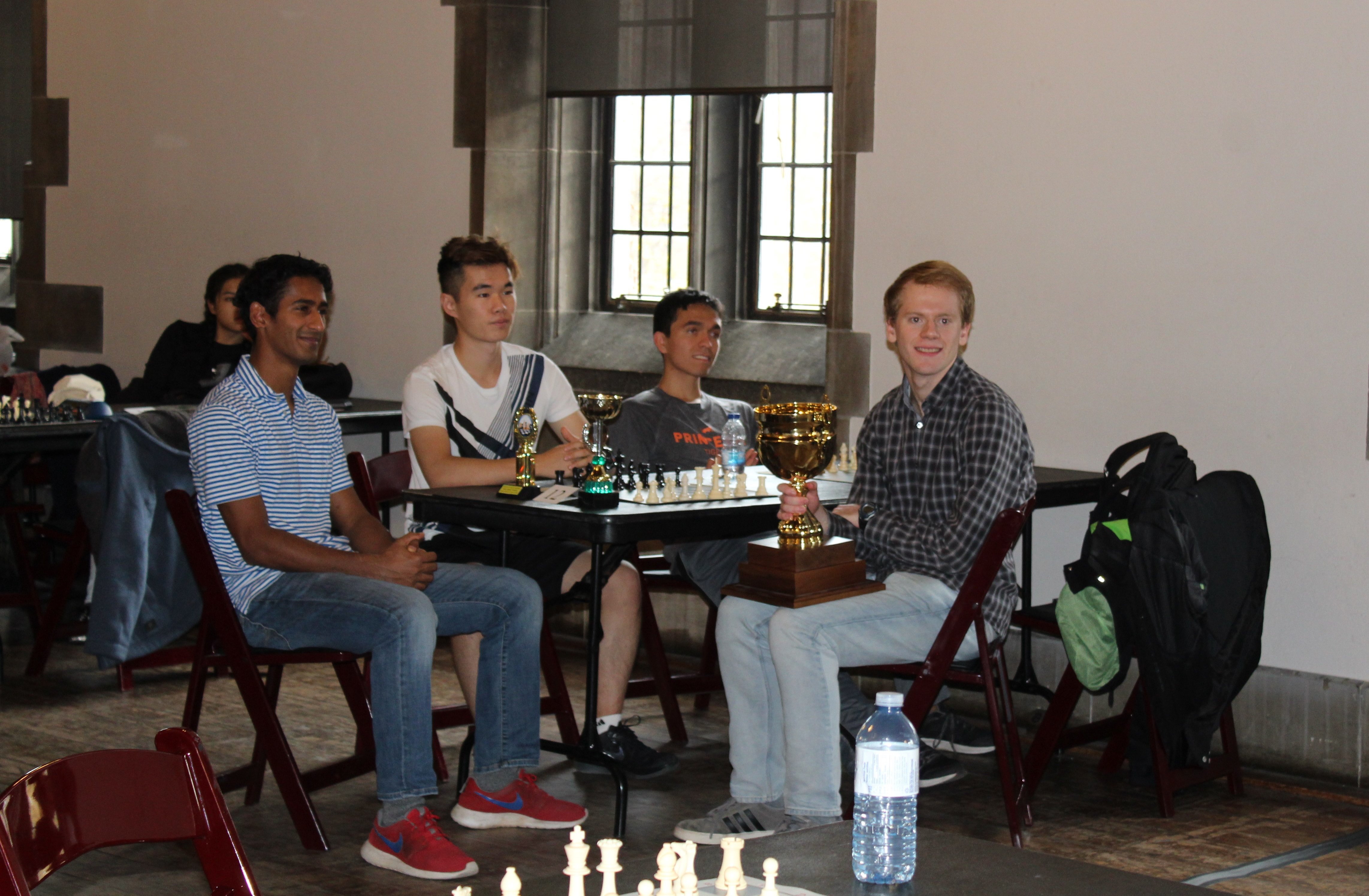
Left to right: Ethan Li, Aaron Balleisen (Co-Captain), Isaac Martinez (Co-Captain), Kapil Chandran, Leslie Tang and Michelle Brownrigg
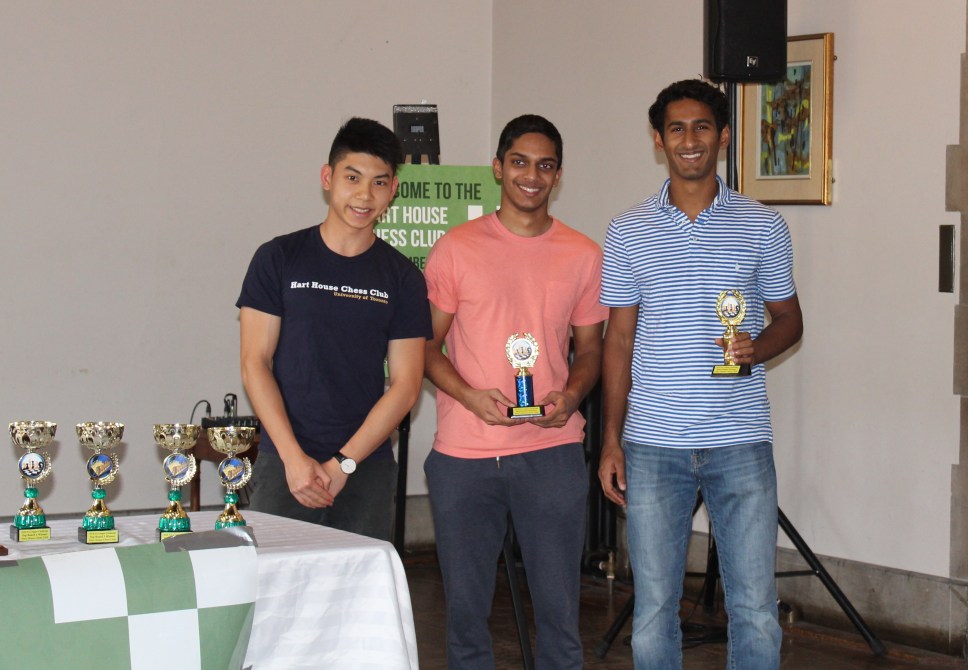
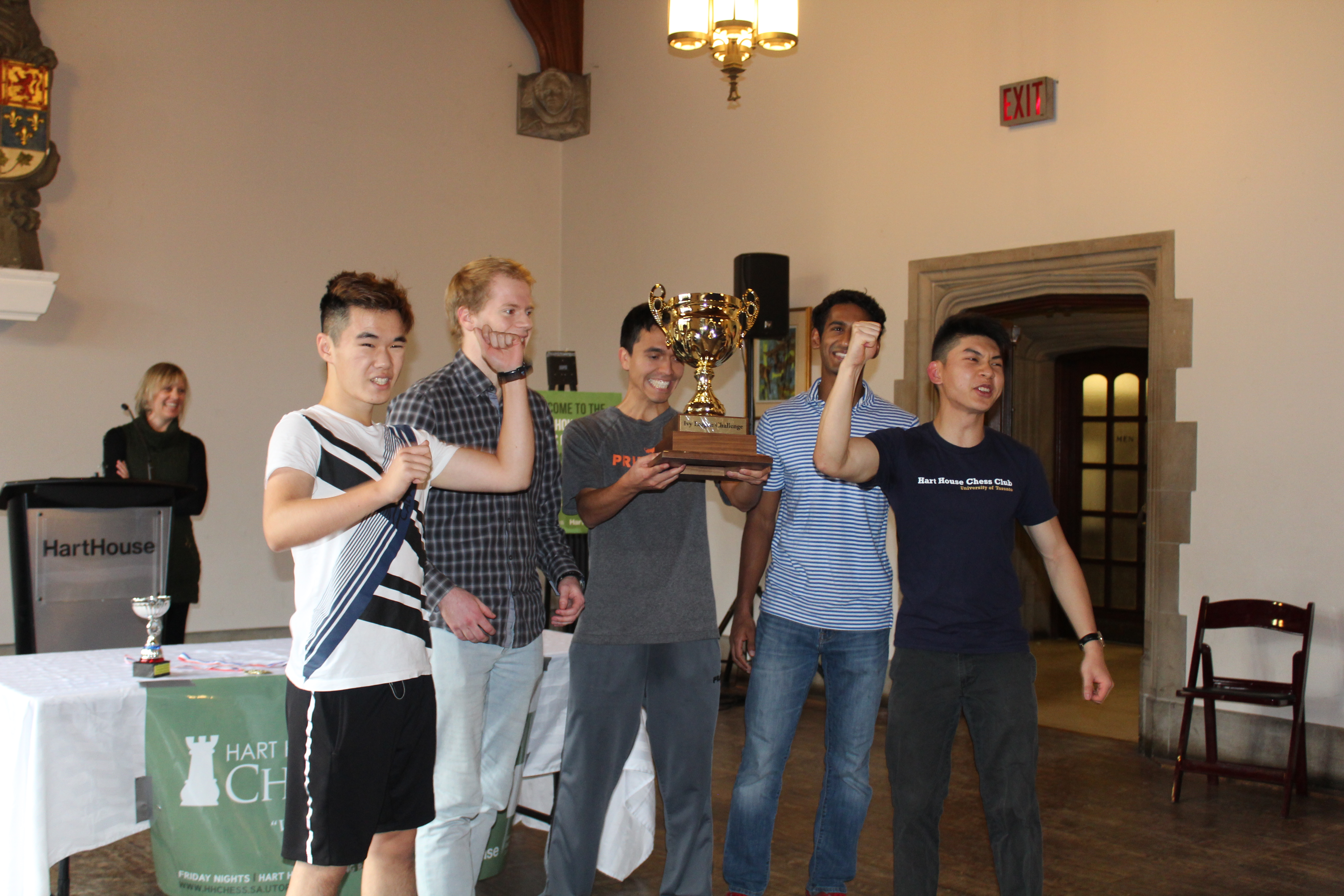
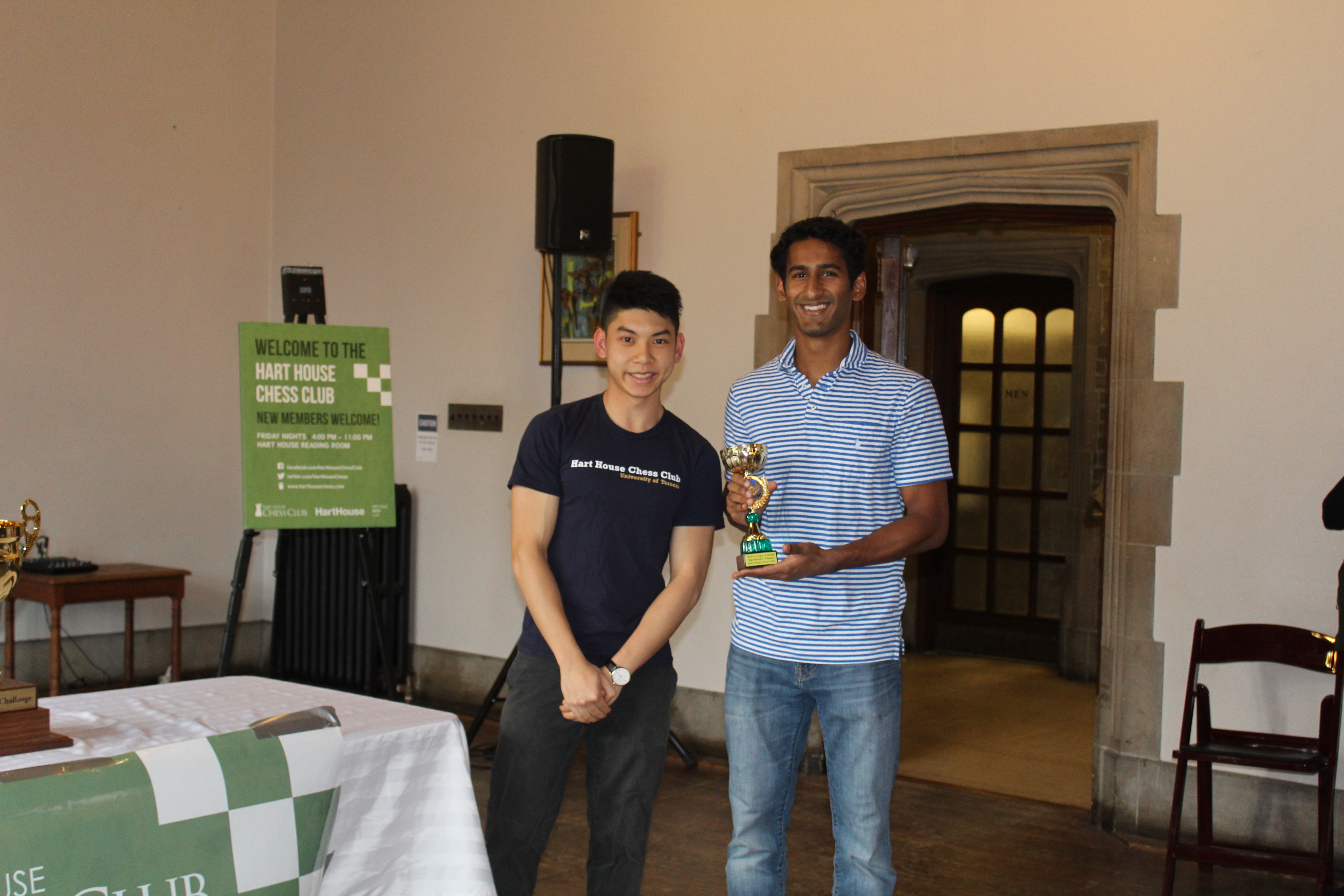
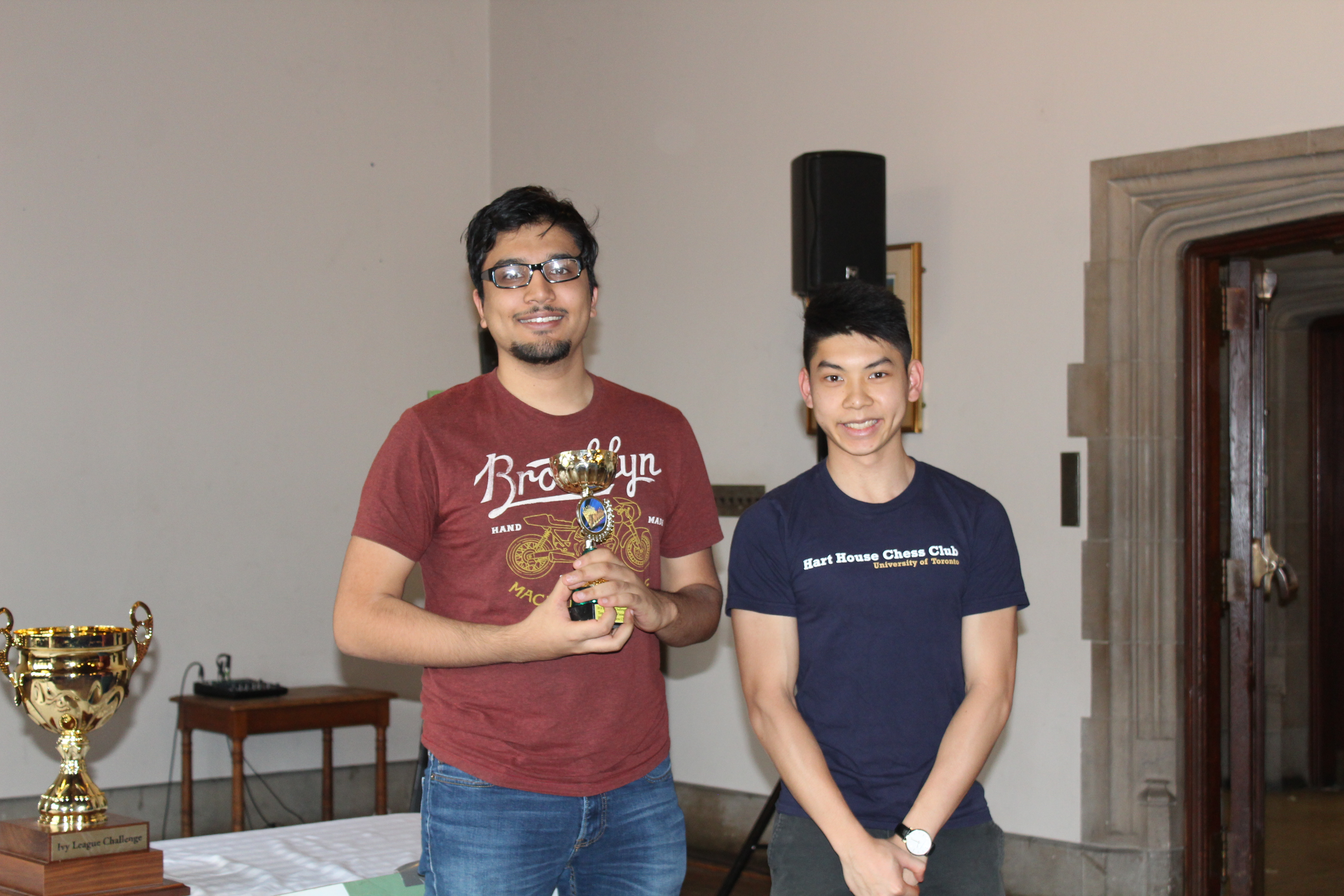
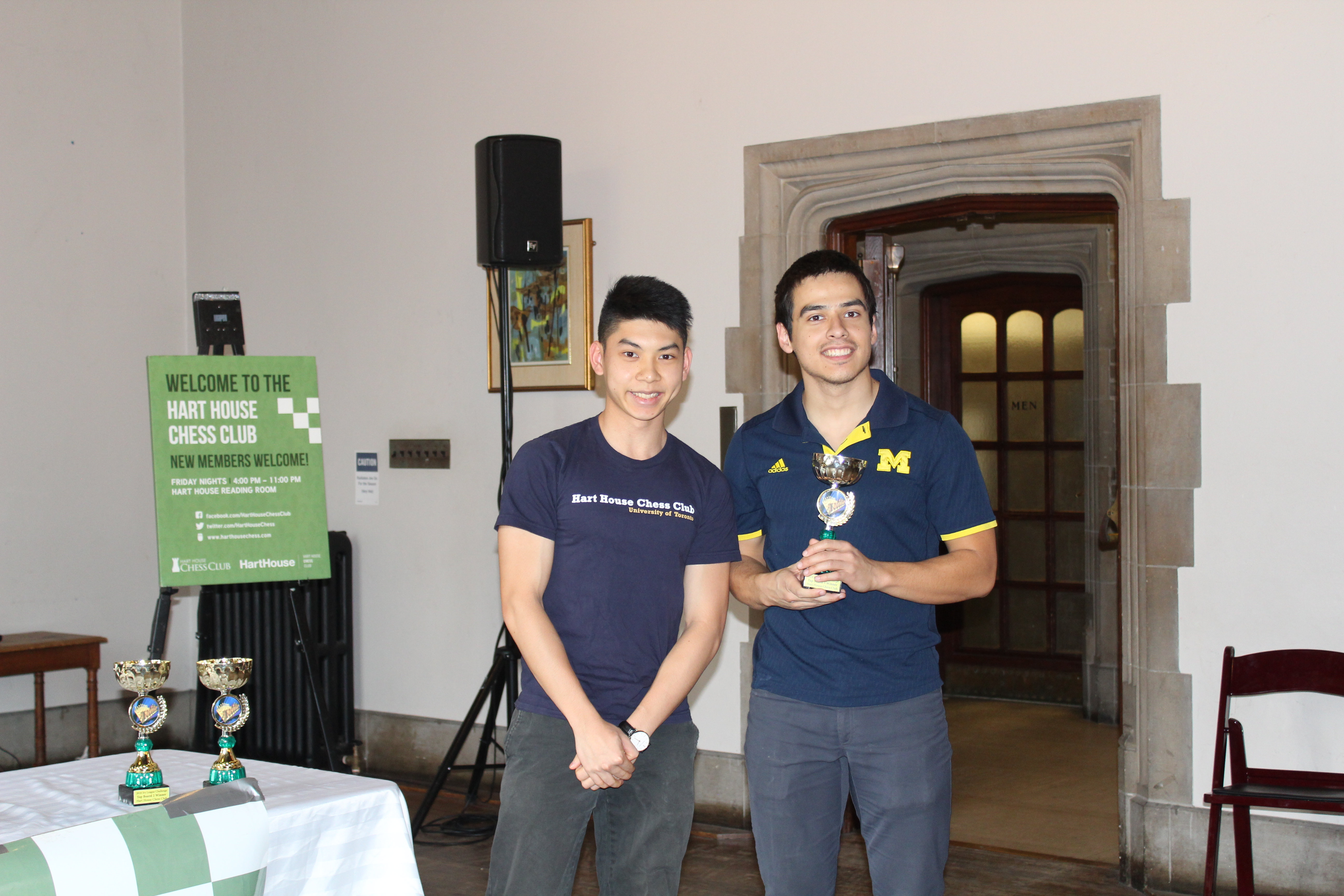
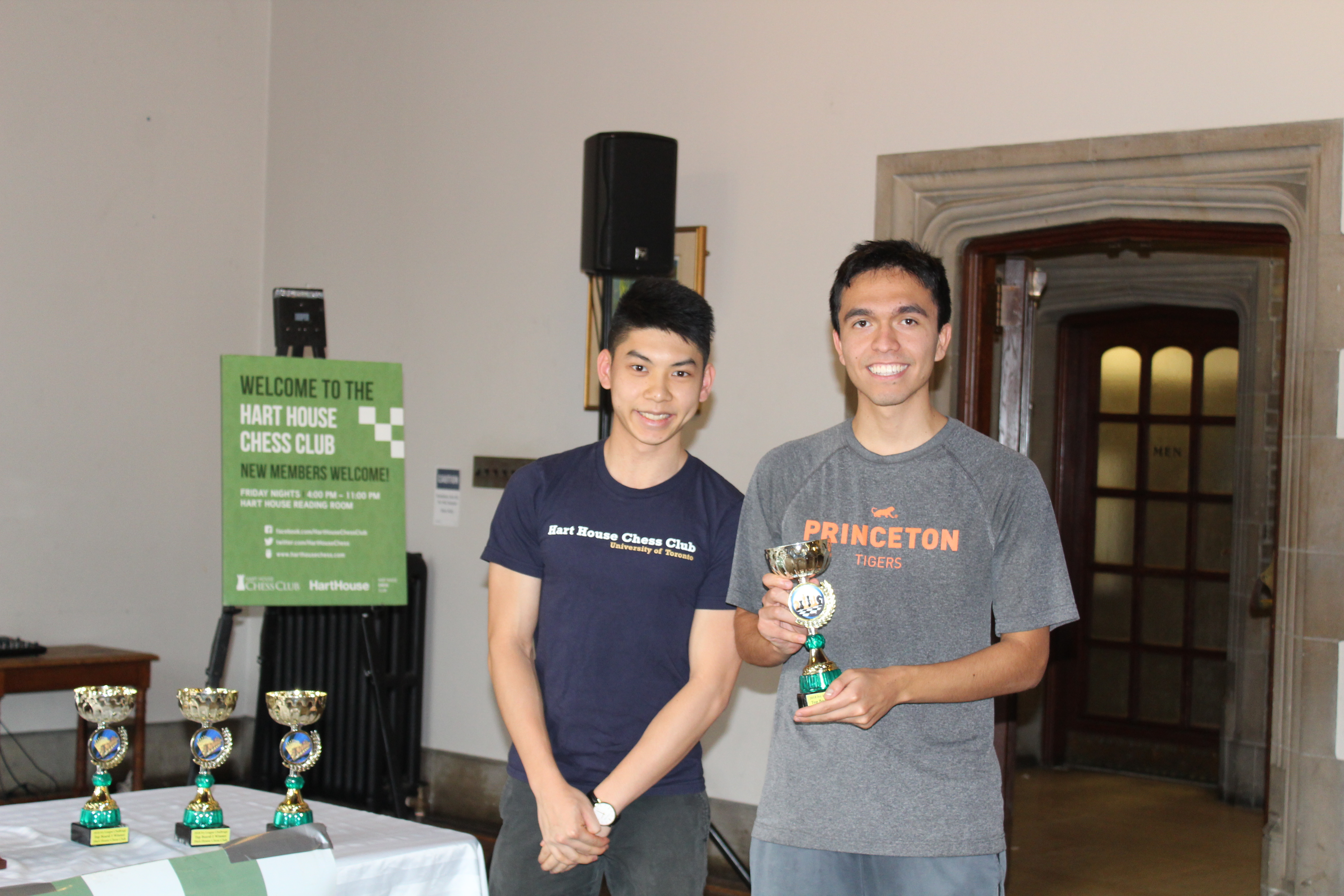
In the award ceremony, the big trophy was presented to the smiling winners by Michelle Brownrigg, Senior Director of Co-Curricular Education and Chief Program Officer for Hart House. Four additional trophies were awarded to the top-individual board winners, that is Princeton’s Isaac Martinez on board 4 (5/5), Michigan’s Mark Heimann on board 3 (4/5), Michigan’s Safal Bora on board 2 (4/5) and Princeton’s Kapil Chandran on board 1 (4/5).
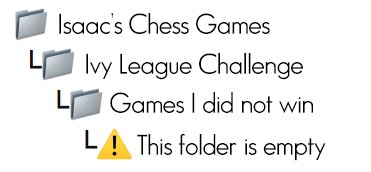
Could that be a screenshot from Isaac Martinez’s laptop?
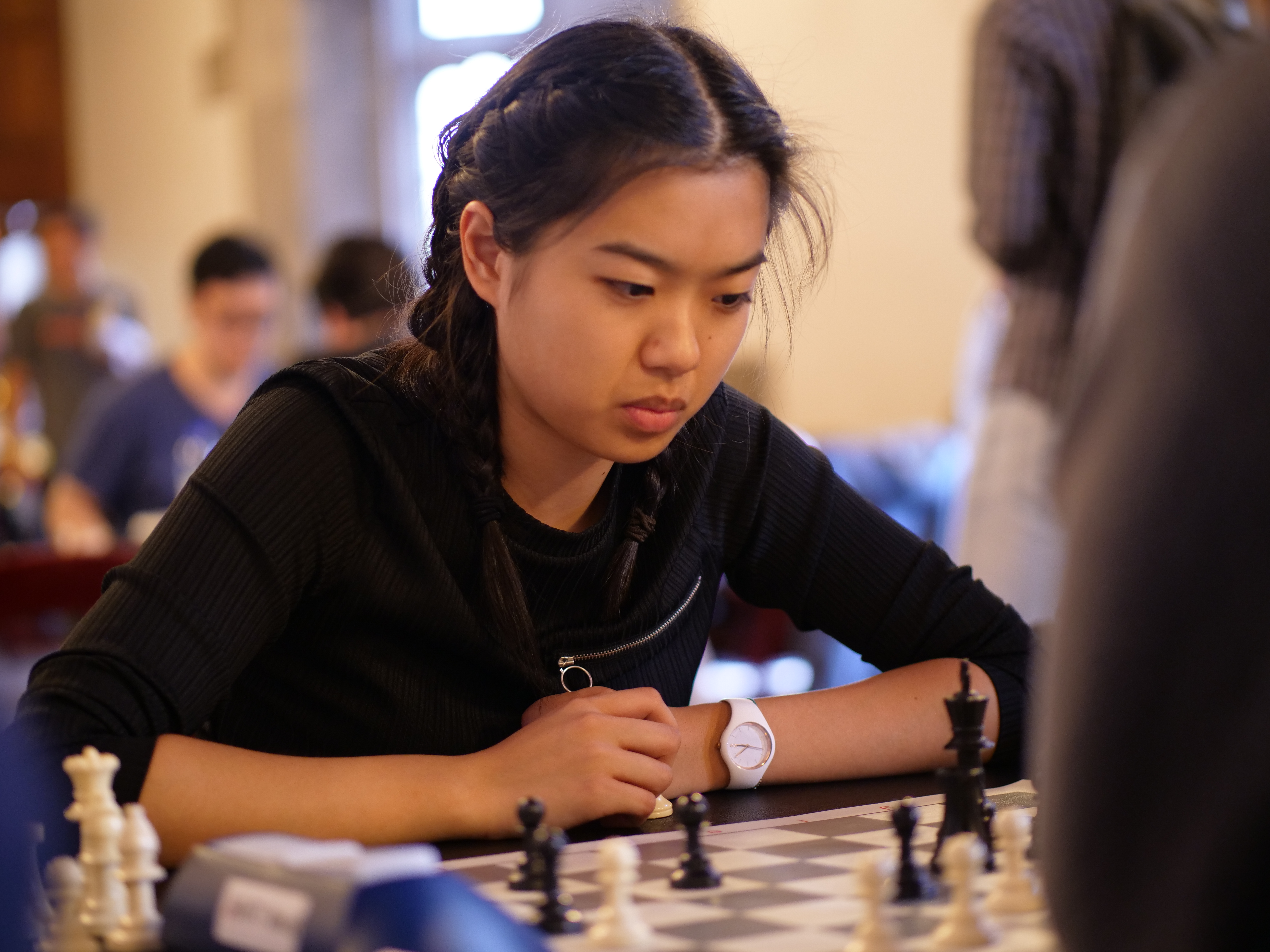
An honorable mention must of course be made to Toronto’s WGM Qiyu Zhou, not only because she was the only female player in the tournament, covering the event for chessbase.com, but, most importantly because she scored a splendid 3.5/5 on board 2 without losing a single game (+2, =3, -0).
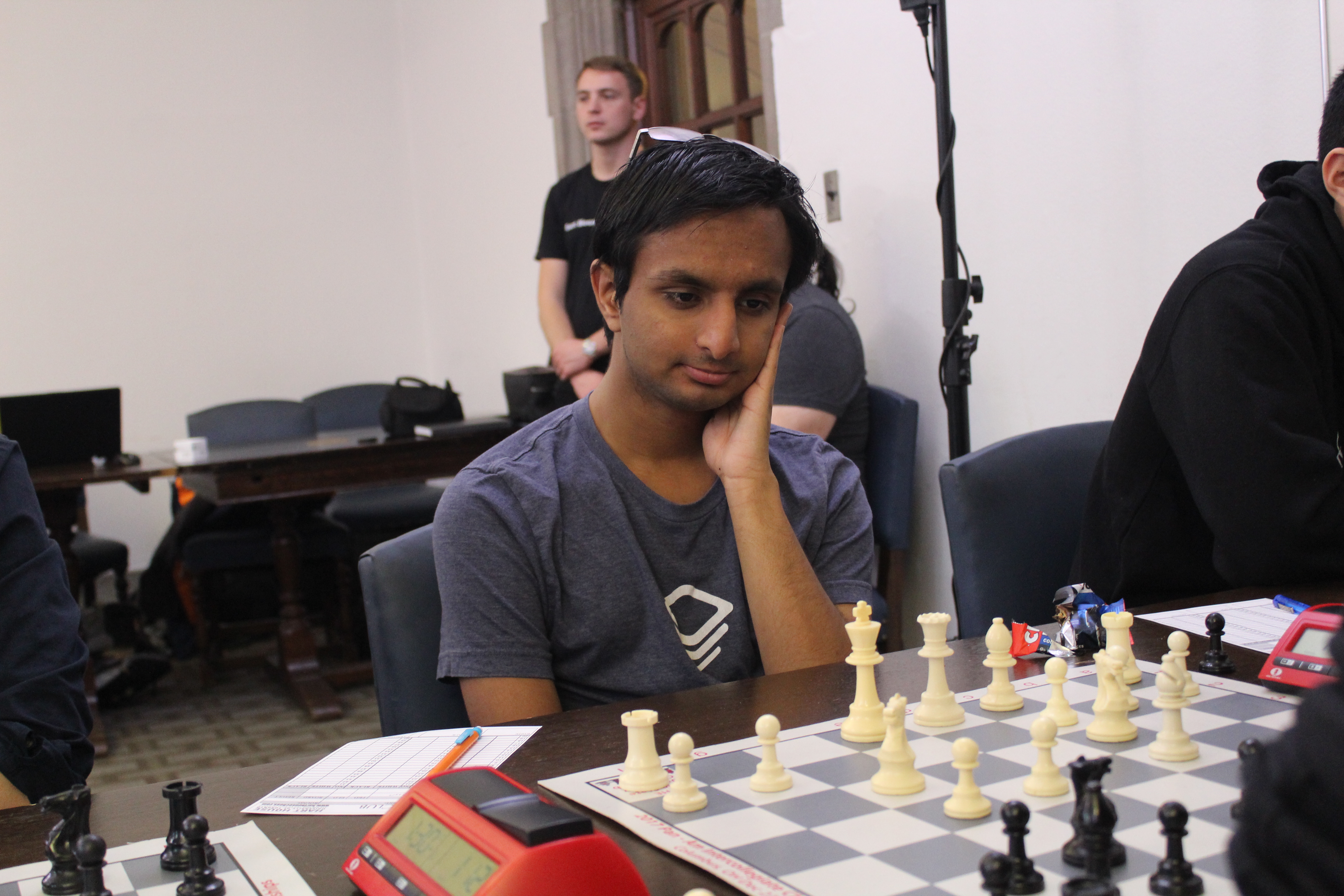
With 4 points in 5 games, Mark Heimann scored higher than anyone else on Board 3
Finally, the award for the most beautiful game of the tournament was won by Princeton’s Kapil Chandran and Michigan’s Atulya Shetty for their board 1 battle on Round 1, a hard-fought draw in a very sharp and double-edged game. You can check out the game here.
A nice creation by Atulya Shetty and Kapil Chandran won them the prize for best game. Clearly, it takes two to tango!
As to the fate of my personal guess about which University would become the tournament winners, I can, without a shred of bias, argue that I probably got it right. Though it did not boast the highest rated players in the starting rank of the tournament, Princeton certainly was the most close-knit team to participate in the event. With 4 match points and 14 game points the Tigers deservedly edged out Harvard and Michigan, even if that was achieved by the tiniest of margins.
Harvard’s GM Darwin Yang was the highest rated player in the tournament
As the tournament progressed from round to round, I watched in admiration how a thoroughly tight-knit group of players remained focused on one single goal. They cracked jokes, they took team walks, they shared analysis, they played bughouse in pairs and they were wearing their Princeton jerseys quite regularly.
For better, for worse, for richer, for poorer, insickness and in health, until checkmate do us part.
They were clearly enjoying being together and I think it was precisely this positive collegial attitude that enabled them to show a level of pride and excellence over the board that equaled and surpassed every other team.
Blitz Battles: A Farewell Tournament
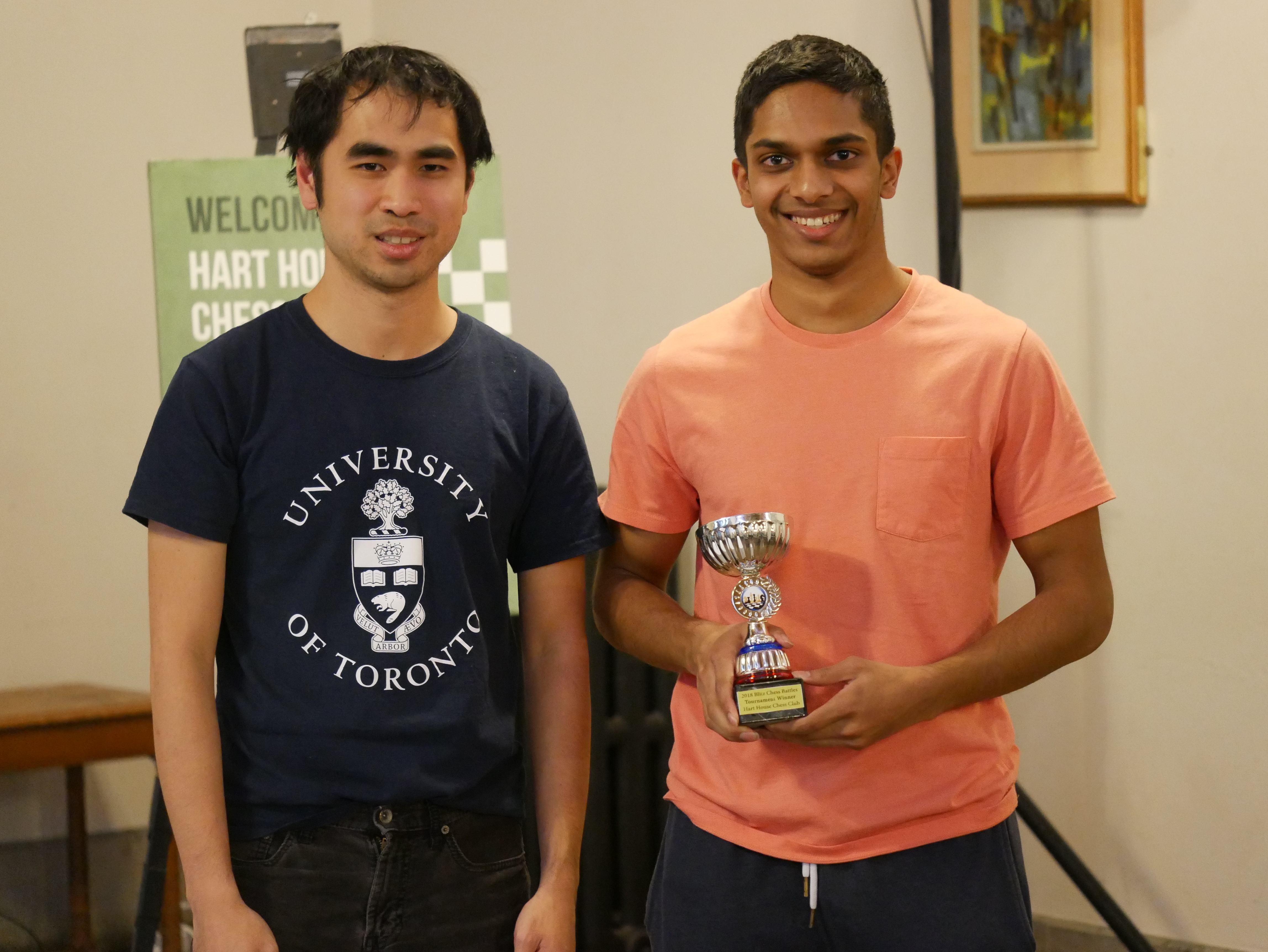
The last day of the event closed with a blitz tournament in which local strong masters from Toronto, such as IM Shiyam Thavandiran and IM Kaiqi Yang, had the opportunity to challenge the American guests but also each other in speed-chess. Chess players tend to be fond of sweets, so giving a Snickers or Bounty bar for first place in the blitz and splitting two Twix fingers between second and third place would likely have provided a powerful incentive, but awarding a trophy and medals to the winners proved more than enough inspiration for all the participants to fight to the best of their abilities.
Kyle Webster is having a great time at the Blitz Tournament
Canadian IM Thavandiran started with some really high quality play in the first half of the tournament, climbing up to the sole lead of the standings with a magnificent 5 out of 5 streak. However, he got unlucky in the second half of the event losing a couple of important games in some of which he seemed clearly better.
Canadian IM Shiyam Thavandiran started off with an astonishing 5 out of 5 but his streak was repelled in the second half of the tournament
Still, with only one round left, five players were tied for first place with 6 out of 8 points, including IM Thavandiran and IM Kaiqi Yang. Unfortunately, in the decisive last round they both lost their critical matches to Princeton’s FM Kapil Chandran and Michigan’s IM Safal Bora respectively. But it was neither Kapil, nor Safal who won the tournament. It was Michigan’s IM Atulya Shetty, who displayed great form and stream-rolled the blitz with a splendid 7 out of 9 points but also with the best tie-breaking criteria. The results and standings in the blitz tournament can be viewed here.
A magnificent 7 out of 9 and a first place in the Blitz Tourney for Michigan’s IM Atulya Shetty
Yours truly also enthusiastically accepted a challenge by National Master Aaaron Balleisen for a casual blitz game, much to the surprise of the Deputy Chief Arbiter of the event, Alex Ferreira, who has recently convinced himself (and a few others) that I no longer enjoy playing the game of chess. I must have eaten something very special for lunch before that game, in which I got nowhere against Princeton’s amazing Captain, who totally outplayed me before I somehow managed to figure out a nasty pin, which allowed me to simplify to a very favorable endgame and then lose on time to my very worthy opponent [upon request, I am happy to send the moves of this game to any person who has time to waste or is simply gifted with a very good sense of humor].
Panayoti Tsialas on his opening advantage (not!): “Right now it’s only a notion, but I think I can get the right moves to make it into a concept, and later turn it into an idea.”
Conclusion: A chess tournament organized by American students for American students
I would like to conclude with an acknowledgement of all the wonderful people who contributed to the success of this purely student event. First of all, the tournament arbiters, Weiwen Leung (Chief Arbiter) and Alex Ferreira (Deputy Chief Arbiter) deserve special recognition for their effort in making sure the pairings, tie breakers, and other details of the competition went smoothly. Hart House Chess Club Execs Leslie Tang, Sahan Karunaratne and Jimmy Bartha coped superbly with the difficult task of broadcasting the games on-line. Andrew MacMillan and Ben Hahn offered a very generous helping hand during setting-up and taking down. Penny Changrong Yu, Stephanie Chen and Alexandra Yao took the beautiful event pictures, which you can view on the Tournament’s Photo Gallery here.
Alex Ferreira (left) and Weiwen Leung (right) were Tournament Arbiters and they administered the event superbly
Finally, Brett Sherman astonished everyone with his incredibly creative filmmaking job, thanks to which this beautiful event could travel beyond the four walls of Hart House and reach a wider audience. It was a real privilege working with each and every one of them as the Tournament Director.
In addition, the organizers would like to thank the Manulife Center, whose discounted rate made it possible to book rooms for the guests and provide the excellent playing venue on the 31st floor of the building (Angela Breaton and Dean Ferguson, in particular, went way beyond the call of duty to provide their indispensable assistance whenever needed). They would also like to thank Hart House for their funding and for their support in providing beautiful rooms as locations for the tournament. Moreover, special thanks are owed to the participating Universities for venturing across the border to Canada. I can attest that from my very first contact with the University reps in late May until the farewell handshakes on November 11th, they communicated very responsibly, displaying a rare level of commitment to this ambitious chess project.
A game of pool in the Skittles Room?
Of course, many thanks are also owed to Tom Moss, Hart House Chess Club’s Supervisor, Michelle Brownrigg, Senior Director of Co-Curricular Education, Sian Layton (Events) and Alain Latour (Digital Communications) who provided their precious assistance to the organizers when needed.
Finally, the organizers incurred a huge debt to Kaitlyn Simpson, the Managing Online Editor of “The Varsity”, who labored tirelessly for three days to cover all the details of the event for UofT’s student newspaper. Several other outlets, including the Chess Federation of Canada’s Page as well as chessbase.com, ran stories about the Ivy League Challenge, which will be published very soon.
IM Matt Larson led Yale’s Chess Team!
However, as this beautiful tournament was mostly self-funded (the external funding was limited to 600 CAD) the organizers would be very grateful to any chess enthusiast or affluent chess Maecenas (?), who would like to support the club by making a donation no matter how small (they may do so on-line here).
* * *
Though UofT’s Team did not manage to win the Ivy League Challenge, the tournament received widespread acclaim and it is to be hoped that thanks to the wide and positive exposure it earned, it will contribute to University of Toronto’s as well as Canada’s chess development. Two Universities have already expressed their tentative interest in continuing this tradition as next year’s hosts and, if their interest is confirmed, University of Toronto will be delighted to offer any assistance it can provide. The Inaugural Ivy League Challenge has been a superb event and I hope that the students from North America, with the support of their Universities, will find the wood to keep this marvelous fire burning.
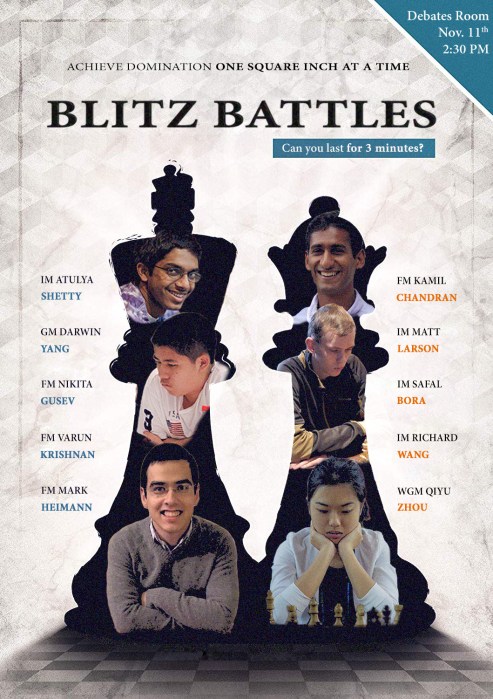
When: Sunday, November 11th, 2018, 2:30 – 4:30 PM Where: Hart House Debates Room
Rules: 0-point-byes are in effect. Forced byes will be awarded 1 point. Ratings will be used for seeding/pairing purposes but the tournament itself will not be rated.
1. One illegal move loses
2. King chopping is allowed
3. Touch clock to complete move (not touch move)
4. Promoting a pawn without replacing it with a piece and pressing the clock is an illegal move
5. Using one hand to move and pressing the clock with another is an illegal move
6. It is fine to castle by moving the rook first
Prizes: Trophy to the top player in the final standings. Medals to the second and third top players.
Arbiter: Mr. Weiwen Leung Deputy Arbiter: Mr. Panayoti Tsialas
Registration:
To reserve a spot in the tournament, please register by sending an e-mail with your full name and FIDE/CFC rating (if you have one) at hhchess@utoronto.ca by no later than November 10th at 9:00 PM. The limited seats will be allocated on a first-come, first-served basis. The deadline to register will be strictly observed. Walk-ins and on-site registrations will NOT be accepted.
Entry Fee:
The entry fee for Hart House Chess Club members will be $5. Members of the guest Teams in the Ivy League Challenge may enter for free. Everyone else will be asked to pay $20. No CFC membership is required.
All money raised will go towards supporting UofT’s Varsity Chess Team in its road to the 2018 Pan-Am Intercollegiate Chess Championship in San Fransisco, California.
Join Hart House Chess Club as it welcomes some of America’s and Canada’s strongest student chess players for a fantastic Blitz Tournament on the 11th of November! The “Blitz Battles” is a fundraising chess competition taking place right after the closing ceremony of the much awaited Ivy League Challenge!
The tournament is open to the chess community at large so everyone is welcome to play but seating is limited and registration is required to secure your spot. To reserve a spot in the tournament, please register by sending an e-mail with your full name and FIDE/CFC rating (if you have one) at hhchess@utoronto.ca as early as possible.
The deadline to register is Saturday, November 10th, at 9:00 PM and it will be strictly observed. Many players need to get to Pearson Airport in time, so we need to make sure that the announced timetable will be followed. For this reason, walk-ins and on-site registrations will NOT be accepted.
We expect a pretty high demand so, if interested in playing, it is advisable to make your move fast. As a courtesy to your fellow students and chess enthusiasts, we would kindly ask that if you register for the tournament and you are no longer able to attend, please cancel your registration to allow for someone to take your spot.
The registration fee for Hart House Chess Club members will be $5. Members of the guest Teams in the Ivy League Challenge may enter for free. Everyone else will be asked to pay $20. All money raised will go towards supporting UofT’s Varsity Chess Team in its road to the 2018 Pan-Am Intercollegiate Chess Championship in San Fransisco, California.
This is sure to be a wonderful event and we hope that you will join us.
IVY LEAGUE CHALLENGE
ROUND 5 – LIVE RESULTS
Nov. 11th – 9:30 AM
I. Toronto A vs Princeton (1 – 3)
1. NM Joseph Bellissimo (2121) – FM Kapil Chandran (2393) 0 – 1
2. NM James Fu (2061) – FM Ethan Li (2248) 1/2 – 1/2
3. NM Sean Lei (1876) – NM Aaron Balleisen (2195) 1/2 – 1/2
4. Gary Huang (1748 CFC) – NM Isaac Martinez (2127) 0 – 1
II. Toronto B vs Michigan (1 – 3)
1. FM Nikita Gusev (2253) – IM Atulya Shetty (2395) 0 – 1
2. FM Qiyu Zhou (2207) – IM Safal Bora (2392) 1/2 – 1/2
3. NM Haizhou Xu (2116) – FM Mark Heimann (2368) 0 – 1
4. NM Zehn Nasir (2081) – Kyle Webster (1902) 1/2 – 1/2
III. Yale vs Harvard (1.5 – 2.5)
1. IM Matthew Larson (2408) – GM Darwin Yang (2488) 1/2 – 1/2
2. Alex Fabbri (2067) – IM Richard Wang (2332) 0 – 1
3. Ram Vishwanathan (1893) – FM Varun Krishnan (2253) 1/2 – 1/2
4. Harish Vemuri (1887 USFC) – NM Bryan Hu (2240) 1/2 – 1/2











































 Hart House Chess Club